
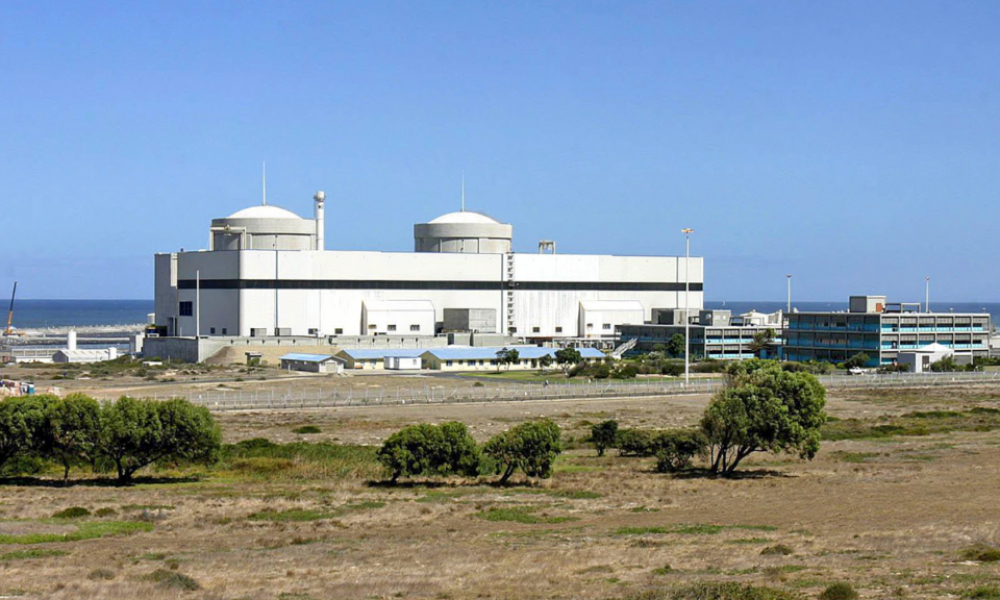
CAPE TOWN — September 17, 2025 — Momentum is building behind Eskom’s proposed nuclear build at Duynefontein in the Western Cape, with GTFSolutions Inc. saying it has been appointed secondary financial advisor and that the New Development Bank (NDB, the BRICS Bank) is expected to anchor the debt package. The advisory mandate provides clarity on how a potential capital stack might come together if the project clears the remaining regulatory and procurement hurdles.
South Africa’s environment minister last month upheld the environmental authorisation for a 4,000-MW plant at Duynefontein, dismissing appeals lodged by environmental groups and allowing Eskom to proceed to subsequent licensing stages. The decision reaffirms Duynefontein, adjacent to the existing Koeberg station, as the frontrunner site for new nuclear capacity near Cape Town.
Regulatory hurdles and political context
Although the environmental authorisation represents a milestone, the project remains at an early stage in regulatory terms. Eskom must still obtain a Nuclear Installation Licence from the National Nuclear Regulator (NNR) as well as a generation licence from the National Energy Regulator of South Africa (NERSA). These steps will require technical submissions, public consultations, and evidence that safety, security, and environmental safeguards meet international standards.
The decision comes amid South Africa’s ongoing energy crisis, with rolling blackouts (“load-shedding”) persisting despite the addition of renewable energy sources and efforts to rehabilitate coal-fired power stations. Policymakers in the Department of Mineral Resources and Energy (DMRE) argue that nuclear power provides a reliable, carbon-free source of baseload generation to complement variable renewable energy sources. Government policy documents have consistently pointed to a 2,500-MW procurement of new nuclear capacity, and the reaffirmation of Duynefontein’s site authorisation gives shape to that ambition.
At the same time, the political backdrop is complex. Nuclear power has been contentious in South Africa since the mid-2000s, when a proposed Russian-led nuclear procurement was cancelled amid concerns over transparency, affordability, and sovereignty. The present government has sought to balance these sensitivities by adopting a phased approach, first extending Koeberg’s life, then slowly advancing groundwork for new capacity.
Financing contours and NDB’s role
In financial terms, GTFSolutions’ appointment marks the first visible sign that Eskom is lining up a structured approach to funding. According to the company, the contemplated capital stack would revolve around a senior debt package led by NDB, supplemented by export credit agencies (ECAs) and potentially commercial banks. NDB has a track record with Eskom, having provided a US$180 million facility in 2019 to finance transmission lines for renewable energy projects. That programmatic exposure could now translate into comfort with the borrower’s risk profile, particularly if sovereign guarantees or other credit support are in place.
NDB’s growing membership base also gives it greater scope to mobilise co-financing. Beyond the original BRICS five, new members include the United Arab Emirates, Egypt, Bangladesh, and Algeria. The bank has increasingly issued bonds in local currencies such as the Chinese renminbi, a precedent that may inform how currency risk is handled in South Africa’s case. One option under discussion in industry circles is a partial rand-denominated tranche to match Eskom’s tariff revenues, thereby reducing exchange-rate volatility.
GTFSolutions’ role as secondary financial advisor is to “map the edges of the stack,” according to one sector analyst examining credit enhancements, such as standby letters of credit (SBLCs), trade-finance lines for imported equipment, and insurance products to manage construction risk. “Their work will sit alongside the multilateral’s lead, essentially filling in gaps and ensuring the deal is bankable,” the analyst said.
Site advantages and system value
Duynefontein’s selection is not arbitrary. The site lies immediately adjacent to Koeberg, Africa’s only nuclear power station, which has been operational since 1984. It benefits from existing transmission infrastructure, a skilled atomic workforce, and an established safety culture, which the NNR monitors. Eskom has already secured a 20-year life extension for Koeberg Unit 1, allowing it to operate until 2044; the application for Unit 2 remains under review but is expected to follow a similar trajectory.
From a system perspective, proponents view new nuclear power as crucial for grid stability. South Africa has added large volumes of renewable energy in recent procurement rounds; however, the intermittency of solar and wind means that grid operators still require firm capacity to balance supply and demand. Nuclear power, with capacity factors exceeding 90%, provides a carbon-free complement that helps reduce reliance on coal while mitigating the volatility of imported gas.
Critics, however, highlight the lengthy construction timelines, upfront costs, and waste management challenges associated with nuclear. Past international experience has shown that atomic projects often run over budget and behind schedule, raising concerns about Eskom’s ability to deliver on time and within budget. Environmental groups that appealed the Duynefontein authorisation have warned that the ruling sets the stage for “another risky and expensive project” at a time when cheaper renewables and storage are available.
Oversight, transparency, and judicial scrutiny
Legal scrutiny is another factor. South Africa’s courts have recently shown their willingness to overturn energy permits if due process is not followed. In early September, the Supreme Court of Appeal annulled environmental authorisation for Eskom’s planned 3,000-MW Richards Bay gas-to-power project, citing inadequate consultation with affected communities. Although unrelated to nuclear, the ruling demonstrates the judiciary’s readiness to intervene in large projects and underscores the importance of procedural compliance for Duynefontein.
Lenders are acutely aware of this dynamic. For any NDB-led package, environmental and social safeguards will be strictly enforced, including transparent consultation with local communities, alignment with International Atomic Energy Agency (IAEA) standards, and compliance with South Africa’s own environmental framework. GTFSolutions has indicated it will work closely with lenders to ensure such requirements are embedded in financing documents.
Currency and sovereign considerations
Beyond project-level risk, sovereign credit considerations will weigh heavily. Eskom’s financial health remains precarious, though Treasury has extended support through a multi-year debt-relief package. Rating agencies have noted incremental improvements in Eskom’s liquidity and governance; however, the utility continues to rely on state backing. Sovereign guarantees are therefore likely to underpin any nuclear financing, ensuring lenders are insulated from direct project risk.
Currency risk is also critical. Eskom earns revenue in rand, while nuclear technology and equipment are priced in dollars, euros, or yen. Past megaprojects in South Africa have faced severe cost overruns due to currency swings. Advisors say a blend of rand-denominated debt and hedging structures will be essential to maintain affordability for consumers. NDB’s recent moves to expand its local-currency portfolio could make it a helpful partner in crafting such a solution.
Community and stakeholder views
Community reaction remains mixed. Supporters argue that nuclear will create high-quality jobs, attract engineering expertise, and support the Western Cape’s economy for decades. Critics, particularly from environmental NGOs, stress the risks of long-lived nuclear waste and the opportunity costs of not prioritising faster, cheaper renewable technologies.
Public engagement will be central in the coming months. The NNR’s licensing process requires extensive community consultation, and financiers will also insist on stakeholder buy-in before final commitments. “Without broad acceptance, the risk premium rises and the project may struggle to close financing,” one Cape Town-based energy lawyer told reporters.
Timeline and outlook
No firm commissioning date has been set for Duynefontein, and the selection of the technology vendor has not yet been announced. Market observers anticipate several years of preparatory work, including front-end engineering, detailed licensing, financing documentation, and procurement. Given global experience, even if approvals proceed smoothly, first power is unlikely before the mid-2030s.
Still, the combination of a reaffirmed environmental authorisation, an identified financing lead in NDB, and the appointment of GTFSolutions to advise on secondary structures marks a shift from policy aspiration to practical planning. “It doesn’t mean the project is certain, but it shows serious groundwork is underway,” one industry analyst said.
For South Africa, the stakes are high. The country must strike a balance between decarbonization, energy security, affordability, and public trust. The outcome of the Duynefontein project will likely shape perceptions of nuclear’s role in Africa’s largest power market for a generation.
Global context and lessons from abroad
Observers note that South Africa’s nuclear ambitions coincide with a period when several countries are reassessing the role of atomic energy in decarbonization. The United Kingdom has doubled down on its Sizewell C project to meet net-zero targets, France is planning new reactors alongside its ageing fleet, and countries such as China and Russia are aggressively building new capacity. By contrast, Germany has completely exited the nuclear power sector, and Japan is cautiously restarting reactors following the Fukushima disaster. South Africa’s decision to pursue Duynefontein places it firmly in the camp of nations that see nuclear as a long-term pillar of energy security.
The financing model will also be closely watched. Nuclear megaprojects in Europe and North America have been plagued by overruns that strained public finances. South Africa’s reliance on a multilateral institution such as the NDB, paired with secondary financial advisory services from GTFSolutions, signals an effort to blend international capital discipline with domestic political priorities. If successful, it could become a template for other African nations considering nuclear power.
Supply chain and localisation
Another critical issue is localisation. South African energy policy typically emphasises local content requirements to stimulate industrial development and job creation. For nuclear, this means finding a balance between importing highly specialised equipment such as reactor vessels and control systems, and creating local opportunities for civil works, component fabrication, and long-term operations. Eskom and its advisors will need to align procurement with industrial policy, a factor lenders will weigh when assessing execution risk.
Localisation also extends to skills. South Africa has a long-standing nuclear engineering base, thanks to Koeberg and its past atomic research programs; however, scaling up to deliver a new build will require significant investment in training, certification, and partnerships with international vendors.
Conclusion
The Duynefontein project sits at the intersection of policy ambition, financial engineering, and community trust. Its success will depend on Eskom’s ability to navigate a rigorous licensing process, secure affordable and stable financing, and convince the public that nuclear is a safe and cost-effective solution to South Africa’s energy woes. With NDB expected to lead the funding and GTFSolutions tasked with structuring secondary supports, the contours of a feasible deal are beginning to emerge. However, with years of permitting, design, and negotiation still ahead, Duynefontein remains as much a vision of the future as it is a present-day reality.




