
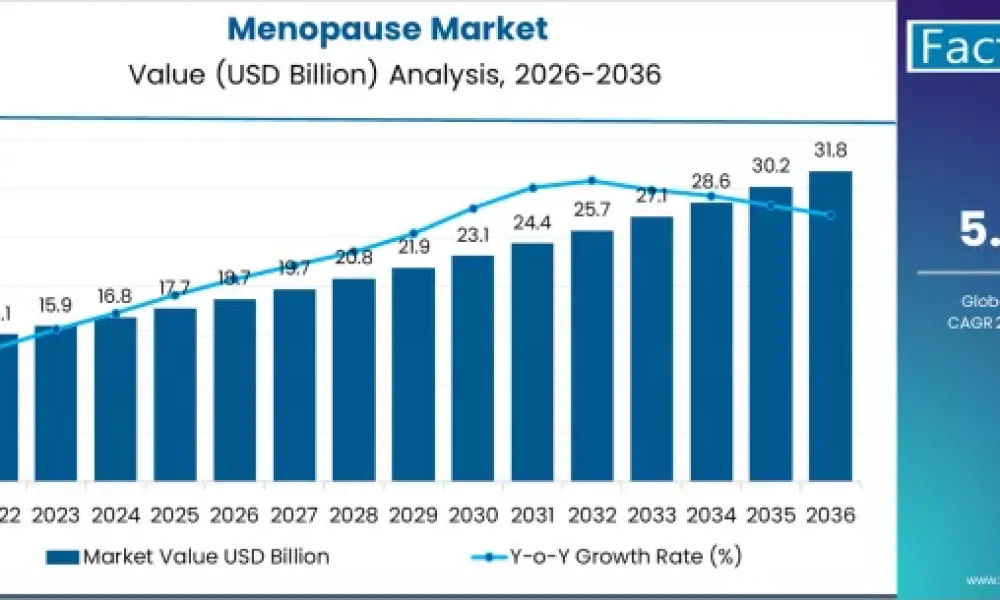
The global menopause market is anticipated to experience robust growth over the next decade as increasing awareness of menopausal symptoms, expanding treatment options, and rising healthcare access drive demand for effective interventions. In 2026, the menopause market is valued at USD 9.2 billion, and it is projected to reach USD 16.4 billion by 2036, reflecting an absolute growth of USD 7.2 billion over the forecast period. This growth corresponds to a compound annual growth rate (CAGR) of approximately 6.0% between 2026 and 2036.
Menopause, a natural biological transition marking the end of a woman’s reproductive years, is associated with a wide array of symptoms including hot flashes, night sweats, mood changes, sleep disturbances, and increased risk of osteoporosis and cardiovascular disease. As the global population ages and women’s health becomes a focal point of clinical intervention, demand for both pharmacological and non-pharmacological menopause treatments is increasing across developed and emerging markets.
Market Overview
The menopause market encompasses various therapeutic avenues, including hormone replacement therapies (HRT), non-hormonal pharmacological treatments, nutraceuticals, complementary and alternative medicine, and digital health solutions tailored to symptom tracking and management. Hormone replacement therapies remain the backbone of clinical menopause management due to their effectiveness in alleviating vasomotor symptoms and improving quality of life. However, rising concerns regarding hormone therapy side effects have spurred demand for safe non-hormonal alternatives and personalized treatment regimens.
Evolving patient preferences, increasing health literacy, and expanding insurance coverage are fostering greater acceptance of menopause healthcare solutions. Comprehensive approaches that integrate lifestyle modifications, behavioral support, and medical intervention are gaining traction, particularly in regions with well-developed healthcare infrastructure.
Quick Market Snapshot (2026–2036)
Market Value (2026): USD 9.2 billion
Market Forecast Value (2036): USD 16.4 billion
Market Forecast CAGR: 6.0%
Leading Treatment Type: Hormone Replacement Therapies
Top Applications: Vasomotor Symptom Management, Bone Health, Mental Well-Being
Key Growth Regions: North America, Europe, Asia Pacific
Primary Drivers: Aging female population, awareness of menopause management, expanded treatment availability
To Access the Complete Data Tables & in-depth Insights, Request a Discount on this report: https://www.factmr.com/connectus/sample?flag=S&rep_id=12909
Drivers of Market Growth
Rising Aging Population and Life Expectancy
Global demographic trends indicate a steadily increasing population of women aged 45 and above — the typical age bracket for menopause onset. As life expectancy rises, women are spending a greater proportion of their lives in the post-menopausal phase, driving demand for long-term symptom management and preventive care associated with menopause.
Expanding Awareness and Patient Education
Healthcare campaigns, patient advocacy, and digital information platforms are increasing awareness of menopause and its associated health impacts. Improved health literacy enables women to recognize symptoms early and seek professional intervention, supporting market expansion for both clinical and holistic treatment options.
Advances in Therapeutic Options
The menopause market has diversified beyond traditional hormone replacement therapies to include non-hormonal pharmacological agents, selective estrogen receptor modulators, and bioidentical hormone formulations. These alternatives cater to women seeking customized treatment plans with favorable safety profiles. Additionally, complementary therapies such as nutraceuticals, botanicals, and lifestyle support programs are gaining popularity.
Integration of Digital Health and Telemedicine
Digital health solutions are increasingly integrated into menopause care, offering symptom tracking, teleconsultations, and personalized care plans. Telemedicine platforms have improved access to specialist care, especially in remote and underserved regions, further boosting the adoption of menopause management services.
Market Segmentation Insights
By Treatment Type
Hormone Replacement Therapies (HRT): Continues to dominate due to well-established clinical efficacy in vasomotor symptom relief and bone health support.
Non-Hormonal Pharmacological Treatments: Gaining traction as alternatives for women who cannot or choose not to use hormone therapy.
Nutraceuticals and Dietary Supplements: Popular among health-conscious consumers for symptom relief and overall well-being.
Complementary and Alternative Medicine (CAM): Includes herbal remedies, acupuncture, and lifestyle interventions.
Digital Health Solutions: Symptom tracking apps, telehealth consultations, and personalized care platforms.
By Application
Vasomotor Symptom Management: Largest segment driven by demand for relief from hot flashes and night sweats.
Bone Health and Osteoporosis Prevention: Significant due to increased fracture risk in post-menopausal women.
Mental and Emotional Well-Being: Growing focus on mood disorders, anxiety, and sleep issues related to menopause.
Cardiovascular Health: Increasing recognition of menopause-associated cardiovascular risk supports demand for targeted care.
By End User
Hospitals and Specialty Clinics: Largest users of clinical menopause treatments and therapies.
Outpatient and Ambulatory Care Centers: Growing adoption due to convenience and access.
Home Healthcare Services: Enhanced by telemedicine integration.
Pharmacies and Retail Outlets: Key distribution points for over-the-counter supplements and nutraceuticals.
Regional Demand Dynamics
North America
North America holds a significant share of the menopause market due to high health awareness, widespread clinical adoption of hormone therapies, and advanced healthcare infrastructure. Robust insurance coverage and established patient support systems also foster market growth. The United States represents the largest contributor within this region.
Europe
Europe demonstrates steady growth backed by comprehensive healthcare systems and a strong focus on women’s health initiatives. Rising adoption of personalized and non-hormonal therapies in Western European countries further strengthens market demand.
Asia Pacific
Asia Pacific is expected to witness rapid growth due to expanding healthcare access, increasing awareness of menopause management, and rising disposable incomes. Emerging markets in China, India, Japan, and Southeast Asian nations are experiencing enhanced medical infrastructure and greater utilization of both clinical and holistic treatments.
Competitive Landscape
The menopause market is moderately competitive, with a mix of pharmaceutical companies, healthcare providers, and nutraceutical manufacturers offering diverse therapeutic options. Leading participants focus on research and development of safer, more effective formulations, strategic partnerships, and clinical evidence generation to differentiate products.
Product portfolios are expanding to include combination therapies, extended-release formulations, and bioidentical hormone options. Educational initiatives aimed at clinicians and patients are also central to competitive strategies, as they enhance treatment adoption and patient adherence.
Future Outlook
The menopause market is poised for continued expansion through 2036 as demographic shifts, therapeutic innovation, and growing patient empowerment converge to create strong demand for advanced care solutions. Personalized treatment regimens, integration of digital health technologies, and growing acceptance of non-hormonal options will further shape the future landscape.
As healthcare systems adapt to serve the needs of an aging female population, menopause management is set to become an increasingly important segment of women’s health, fostering improved quality of life and broader access to effective care worldwide.
Have specific requirements or need assistance on report pricing or have a limited budget? Please contact [email protected]
About Fact.MR:
Fact.MR is a global market research and consulting firm, trusted by Fortune 500 companies and emerging businesses for reliable insights and strategic intelligence. With a presence across the U.S., UK, India, and Dubai, we deliver data-driven research and tailored consulting solutions across 30+ industries and 1,000+ markets. Backed by deep expertise and advanced analytics, Fact.MR helps organizations uncover opportunities, reduce risks, and make informed decisions for sustainable growth



