
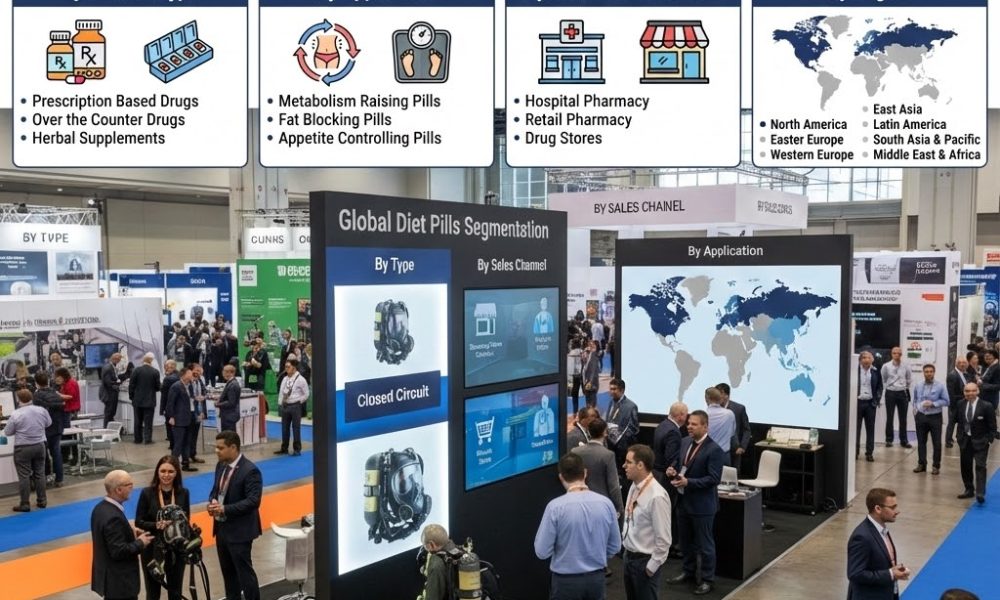
The Global Diet Pills Market is on a strong growth trajectory, driven by rising obesity prevalence, expanding health consciousness, and continuous innovation across product classes. The market is estimated at approximately USD 1.8 billion in 2024, with a double‑digit CAGR of ~12.6% from 2024 to 2034, forecasting it to reach around USD 5.9 billion by 2034.
This forecast indicates strong investor and consumer interest in weight‑management solutions that span from prescription drugs to herbal supplements. The market includes multiple consumption purposes such as metabolism‑raising, fat blocking, and appetite control pills.
Regional dynamics also show diverse growth patterns:
North America holds a leading growth rate with a projected CAGR of 15.1% over the forecast period.
East Asia accounts for a significant share (~17.6% in 2024).
Emerging markets in Southeast Asia and Latin America are gaining traction due to rising obesity rates and growing healthcare awareness.
To access the complete data tables and in-depth insights, request a Discount On The Report here: https://www.factmr.com/connectus/sample?flag=S&rep_id=868
2. Key Drivers of Market Growth
2.1 Escalating Obesity & Health Awareness
The fundamental growth driver of the global diet pills market is the rapid rise in obesity worldwide. Population groups affected by weight‑related health risks are turning to pharmacological and supplement‑based approaches for weight management.
This widespread health challenge extends beyond developed countries, with urban populations across Asia, Latin America, and the Middle East showing accelerated lifestyle‑related weight gains. Growing health awareness and proactive individual spending on wellness solutions are pushing diet pills into mainstream consumer choices.
2.2 Broader Consumer Base Across Demographics
Consumers across all age groups and socio‑economic strata are increasingly adopting diet pills due to larger disposable incomes, ease of use, and perceived effectiveness. Many individuals seek non‑invasive, convenient alternatives to surgical or long‑term medical interventions for weight management.
In developed economies, busy lifestyles and sedentary work patterns contribute to higher demand, while in developing regions, urban dietary transitions and modernization drive adoption. Health‑focused social media influence, wellness trends, and celebrity endorsements further shape consumer behavior toward diet solutions.
2.3 Innovation & Product Diversification
The industry is witnessing extensive product innovation. Manufacturers increasingly invest in research and development to improve safety, efficacy, and product appeal. This includes the integration of natural and plant-based ingredients such as green tea extract and garcinia cambogia in formulations to attract health-conscious consumers who prefer “clean” or herbal alternatives.
Prescription diet pills are also evolving with enhanced delivery methods like chewable and sublingual formats to improve compliance and effectiveness. Meanwhile, herbal and OTC segments are gaining market share as more consumers seek affordable and perceived safer options without medical oversight.
3. Disruption Signals & Emerging Trends
The diet pills market is not insulated from industry disruptions. Several signals highlight how the landscape could shift significantly in the coming years:
3.1 Competitive Pressure from Advanced Obesity Drugs
A growing disruption factor is the rise of next-generation weight-loss drugs, particularly injectable therapies that have demonstrated high efficacy in clinical settings. These products are projected to redefine obesity treatment standards and influence consumer expectations, potentially reshaping R&D strategies for diet pills.
Although these drugs currently command high prices and limited insurance coverage, extended adoption could reshape value perceptions for weight-management pharmaceuticals, influencing how diet pills are positioned in therapeutic regimens.
3.2 Digital Health & Personalized Nutrition
Emerging technologies in digital health—such as personalized nutrition platforms, mobile health trackers, and predictive analytics—are enabling tailored weight-management programs that complement dietary supplements. While not specific to diet pills alone, this trend could shift consumer purchase behavior toward integrated lifestyle solutions instead of single-product dependence.
The rise of AI-driven monitoring and feedback systems may accelerate personalized pill recommendations, potentially affecting sales channels and product design.
3.3 Regulatory Scrutiny & Safety Concerns
Despite growth, safety concerns and regulatory oversight remain headwinds. Overuse or misuse of diet pills can trigger adverse side effects such as increases in blood pressure or other health complications, prompting stricter regulatory standards.
Prolonged scrutiny could slow down approvals, constrain marketing claims, and raise compliance costs for manufacturers, especially in regions with stringent pharmaceutical regulations.
4. Competitive Landscape
The market features a mix of pharmaceutical firms, nutraceutical producers, and natural supplement brands. Key players include:
GlaxoSmithKline Pharmaceuticals Ltd.
Iovate Health Sciences Inc.
Zoller Laboratories
Vivus, Inc.
Orexigen Therapeutics
Cortislim
Nanjing Chang’ao Pharmaceutical Co.
These companies compete on product innovation, brand differentiation, and distribution network expansion. Many are enhancing their portfolios by introducing herbal supplements, leveraging online retail channels, and targeting niche segments.
5. Industry Scenarios & Strategic Outlook
Based on current trends, the future of the diet pills market can unfold along several plausible scenarios:
5.1 Base Growth Scenario (2024-2034)
In this scenario, continued obesity prevalence, consumer demand, and product innovation sustain the ~12.6% CAGR, with new formulations and natural product lines strengthening global sales across all regions. Investments in online channels and global distribution infrastructure support broad accessibility.
5.2 Disruption-Led Paradigm Shift
Here, advanced medical therapeutics and digital health platforms could cannibalize traditional diet pills, especially in clinical settings. While OTC and herbal segments remain strong, prescription products may need to incorporate technology or adjunctive support (e.g., digital adherence tools) to stay relevant.
5.3 Regulation-Constrained Balance
Heightened regulatory restrictions could limit less-effective or unsafe products, elevating market quality and increasing consumer trust. This may result in premiumization of approved diet pills, favoring firms with strong safety data and robust compliance infrastructure.
6. Conclusion
The global diet pills market is positioned for substantial growth over the next decade, propelled by rising obesity rates, expanding consumer health awareness, and vigorous innovation across product types. Nevertheless, robust competition from advanced obesity drugs, evolving regulatory landscapes, and shifting consumer expectations present both challenges and transformative opportunities for stakeholders.
Market participants should prioritize innovation, regulatory compliance, and value-based positioning to thrive in a landscape increasingly shaped by health technology, personalized wellness, and evidence-based therapeutic standards.
Have a specific Requirements and Need Assistant on Report Pricing or Limited Budget please contact us – [email protected]
To View Related Report :
Europe Diet Pills Market https://www.factmr.com/report/europe-diet-pills-market
Powder Dietary Supplements Industry Analysis in the UK https://www.factmr.com/report/united-kingdom-powder-dietary-supplements-industry-analysis
Dysphagia Diet Thickening Agent Market https://www.factmr.com/report/dysphagia-diet-thickening-agent-market
OTC Vitamins and Dietary Supplements Market https://www.factmr.com/report/61/otc-vitamins-dietary-supplements-market



