
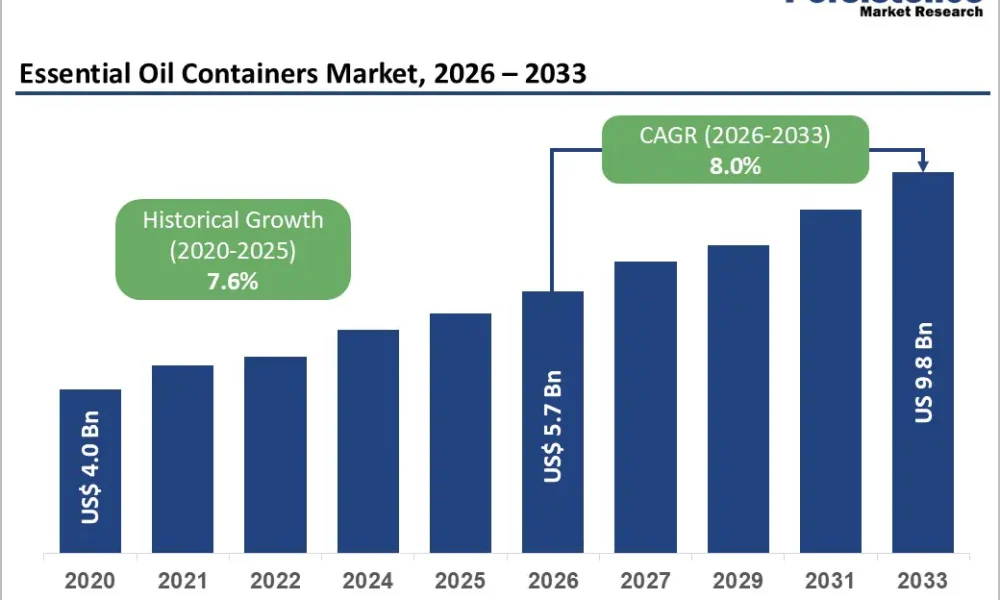
The global Essential Oil Containers Market is poised for steady expansion, supported by the accelerating popularity of aromatherapy, herbal wellness, and plant based personal care solutions. According to Persistence Market Research, the market size is likely to be valued at US$5.7 billion in 2026 and is expected to reach US$9.8 billion by 2033, growing at a CAGR of 8.0% during the forecast period from 2026 to 2033. The surge in demand for essential oils across therapeutic, cosmetic, and household applications has directly influenced the need for high quality, protective packaging solutions that preserve volatile botanical compounds.
Growth is primarily driven by rising consumer adoption of natural personal care products and essential oil based formulations. The rapid scaling of direct to consumer and e commerce distribution models has further increased the requirement for secure and visually appealing packaging formats. Among product types, glass containers remain the leading segment due to their superior chemical stability and ability to maintain oil purity. Geographically, North America leads the market, supported by strong aromatherapy adoption, established wellness brands, and advanced online retail infrastructure.
Claim Your Free Sample & Stay Ahead of Competitors : https://www.persistencemarketresearch.com/samples/35990
Key Highlights from the Report
➤ The essential oil containers market is projected to expand from US$5.7 billion in 2026 to US$9.8 billion by 2033 at an 8.0% CAGR.
➤ Rising consumer preference for aromatherapy and plant based personal care products is accelerating demand for premium packaging formats.
➤ Glass containers dominate due to their protective properties and compatibility with volatile botanical compounds.
➤ E commerce and direct to consumer distribution channels are reshaping packaging design and logistics strategies.
➤ Sustainable and recycled packaging materials are gaining strong traction among environmentally conscious brands.
➤ North America remains the leading regional market driven by mature wellness ecosystems and high essential oil consumption.
Market Segmentation
The essential oil containers market is segmented based on product type, material type, and end use applications. By product type, bottles represent the most widely used format, particularly in aromatherapy and cosmetic packaging. Dropper bottles and roller bottles are preferred for controlled dispensing, while small vials cater to travel and sample size packaging. Closure types such as tamper evident caps and child resistant closures are also increasingly incorporated to enhance product safety and compliance.
From a material perspective, glass remains the dominant segment due to its non reactive nature and ability to protect essential oils from light and oxidation. Amber and cobalt blue glass variants are particularly popular as they preserve volatile compounds. Recycled materials and sustainable packaging solutions are gaining adoption, reflecting growing environmental awareness among consumers. In terms of end users, personal care and cosmetic brands account for a major share, followed by aromatherapy practitioners and wellness product manufacturers.
Make This Report Fit Your Needs – Customize Now : https://www.persistencemarketresearch.com/request-customization/35990
Regional Insights
North America holds a leading share in the global essential oil containers market, supported by widespread consumer adoption of aromatherapy and natural wellness products. The region benefits from established direct to consumer brands and strong online distribution channels. Demand for premium glass packaging and sustainable materials is particularly strong across the United States and Canada, where consumers prioritize product quality and eco friendly packaging.
Europe represents another significant market driven by increasing interest in botanical extracts and clean label beauty products. Meanwhile, Asia Pacific is witnessing steady growth due to rising disposable incomes and expanding awareness of essential oil based therapies. Regional manufacturers are increasingly focusing on cost effective and sustainable packaging formats to cater to both domestic and export demand.
Market Drivers
The primary driver of the essential oil containers market is the growing consumer shift toward natural and plant based wellness solutions. Aromatherapy has gained mainstream acceptance, increasing the consumption of essential oils across households and professional therapy settings. As essential oils are highly sensitive to light and air exposure, demand for protective packaging such as amber glass bottles continues to rise. Brands are prioritizing container integrity to ensure product stability and shelf life.
Another important growth driver is the rapid expansion of e commerce and direct to consumer sales channels. Online platforms require durable and secure packaging that minimizes leakage and breakage during transit. This has encouraged manufacturers to innovate in closure systems and protective designs. The shift toward sustainable and recycled materials also supports market growth, as environmentally conscious consumers demand eco friendly packaging alternatives.
Market Restraints
Despite strong growth prospects, the market faces challenges related to raw material costs and supply chain volatility. Glass production and recycled material sourcing can be influenced by fluctuating energy prices and logistical disruptions. These factors may impact overall production costs and profit margins for packaging manufacturers. Smaller companies may struggle to maintain competitive pricing while adhering to sustainability standards.
Additionally, stringent packaging regulations and quality compliance requirements can create operational complexities. Essential oil containers must meet safety and labeling standards, especially for export markets. Manufacturers must invest in quality assurance systems and testing processes to ensure compatibility with volatile compounds. Such regulatory obligations may slow down product launches and increase development timelines.
Market Opportunities
Significant opportunities lie in the growing emphasis on sustainable and recyclable packaging solutions. Brands that integrate recycled glass and eco conscious materials into their packaging portfolios are likely to gain competitive advantage. Consumers increasingly associate sustainability with product authenticity and brand credibility, creating new growth avenues for innovative container designs.
The expansion of wellness tourism and holistic therapy centers also presents new opportunities. As aromatherapy becomes more integrated into spa and therapeutic experiences, bulk packaging and customized container formats are gaining traction. Emerging markets with rising awareness of natural personal care products offer untapped potential for container manufacturers looking to expand their geographic footprint.
Confirm Your Purchase & Access Full Insights : https://www.persistencemarketresearch.com/checkout/35990
Company Insights
Key players operating in the essential oil containers market include:
- Gerresheimer AG
- AptarGroup, Inc.
- Berlin Packaging
- Amcor plc
- Berry Global Group, Inc.
- Piramal Glass Limited
- SGD Pharma
- Vetropack Group
- Ardagh Group
- Stoelzle Glass Group
- Quadpack Industries
- TricorBraun
- HCP Packaging
- Alpha Packaging
- Comar, LLC
- Bormioli Pharma
- Heinz-Glas Group
- Verescence
Recent Developments
In March 2024, leading packaging manufacturers expanded their sustainable glass container portfolios to cater to rising demand from natural personal care brands.
In October 2023, major industry participants introduced enhanced protective closures designed specifically for volatile essential oil formulations to support e commerce distribution.
Future Opportunities and Growth Prospects
The future of the essential oil containers market remains promising as global consumers continue to prioritize natural wellness and sustainable living. With the market projected to reach US$9.8 billion by 2033 at an 8.0% CAGR, innovation in protective and eco friendly packaging will define competitive positioning. Manufacturers that align with evolving e commerce logistics, sustainable material trends, and premium branding requirements are expected to capture long term growth opportunities.




