
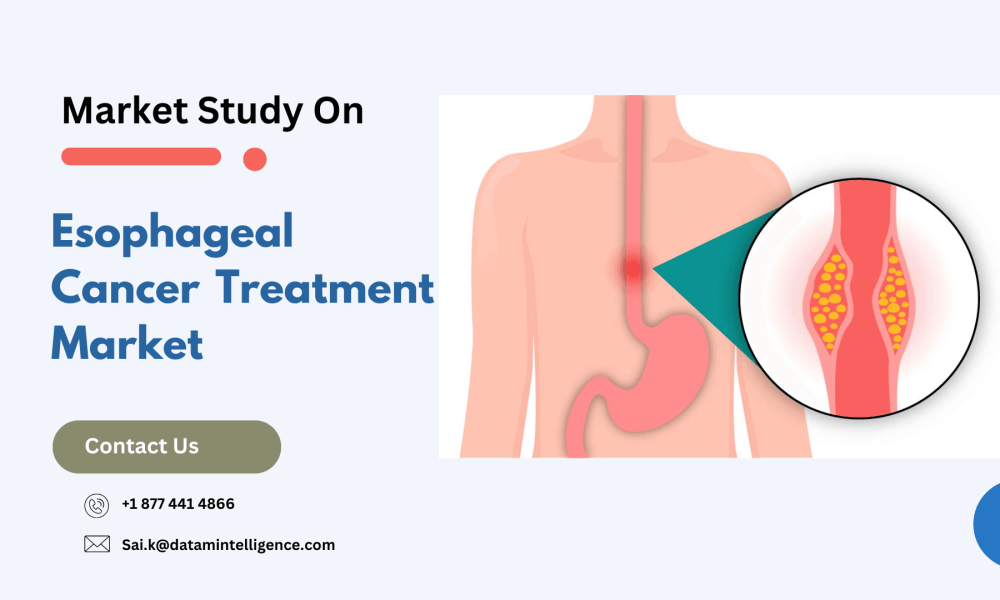
Latest Research Study on Esophageal Cancer Treatment Market
The Global Esophageal Cancer Treatment Market reached US$ 1.31 billion in 2024 and is expected to reach US$ 2.66 billion by 2033, growing at a CAGR of 8.2% during the forecast period 2025-2033.
Esophageal Cancer Treatment involves various medical approaches to manage and eliminate cancerous cells in the esophagus. The treatment plan depends on the cancer stage, overall health of the patient, and tumor location, often combining surgery, radiation therapy, chemotherapy, targeted therapy, or immunotherapy.
Esophageal cancer is a serious condition that affects the food pipe, making swallowing difficult and causing discomfort. Early detection is crucial for effective treatment, which may include surgery to remove the tumor, chemotherapy to shrink cancer cells, radiation therapy to destroy malignant growths, and immunotherapy to boost the body’s natural defenses. Targeted therapies are emerging as promising solutions, especially for advanced-stage cases. With ongoing research and innovative treatments, survival rates are improving, offering hope to patients worldwide.
Download Free Sample PDF: https://www.datamintelligence.com/download-sample/esophageal-cancer-treatment
Market Dynamics
Rising advancements in treatment options
In March 2024, BeiGene, Ltd. announced that the U.S. Food and Drug Administration (FDA) granted approval for TEVIMBRA (tislelizumab-jsgr) as a standalone treatment for adults with unresectable or metastatic esophageal squamous cell carcinoma (ESCC). This approval applies to patients who have previously undergone systemic chemotherapy that did not include a PD-(L)1 inhibitor, offering a new immunotherapy option for advanced ESCC cases.
Side effects associated with certain medications
Chemotherapy remains a key treatment for esophageal cancer, particularly in advanced stages. However, commonly used drugs like cisplatin, carboplatin, and fluorouracil often cause severe side effects, impacting patients’ quality of life and treatment adherence. Research shows that 30-40% of patients may discontinue chemotherapy due to these adverse effects, potentially reducing its effectiveness.
Meanwhile, immunotherapy has transformed esophageal cancer treatment, with drugs like Pembrolizumab (Keytruda) and Nivolumab (Opdivo) improving survival rates. However, they can also lead to immune-related side effects, where the body’s immune system mistakenly attacks healthy tissues, resulting in conditions like colitis, pneumonitis, and hepatitis, adding complexity to treatment management.
Market Segments:
- By Cancer Type: Squamous Cell Carcinoma, Adenocarcinoma, Surgery, Chemotherapy, Radiation Therapy, Targeted Drug Therapy, Immunotherapy, Combination Therapy, Others
- By End-User: Hospitals, Specialty Clinics, Ambulatory Surgical Centers, Academic and Research Institutes, Others
- By Region: North America, Latin America, Europe, Asia Pacific, Middle East and Africa
Top Key Players:
- Merck & Co., Inc.
- Bristol-Myers Squibb Company
- BeiGene, Ltd.
- F. Hoffmann-La Roche Ltd.
- Eli Lilly and Company
- Daiichi Sankyo, Inc.
- Taiho Oncology, Inc.
- Astellas Pharma Inc.
- Novartis AG
- Amgen, Inc
Customize Your Scope: https://www.datamintelligence.com/customize/esophageal-cancer-treatment
Regional Growth
North America is expected to hold a significant position in the esophageal cancer treatment market share
North America boasts a highly advanced healthcare system, equipped with cutting-edge medical facilities, specialized cancer centers, and the latest treatment technologies. This robust infrastructure supports early diagnosis, advanced therapies, and access to innovative treatments. Leading institutions like MD Anderson Cancer Center, Johns Hopkins, and Memorial Sloan Kettering Cancer Center are spearheading groundbreaking research and treatment for esophageal cancer.
The incidence of esophageal cancer is rising across North America, particularly in the United States, due to lifestyle factors such as obesity, acid reflux, and tobacco use. This increasing prevalence is driving the demand for more effective treatments. According to the National Institutes of Health (NIH), an estimated 20,640 new cases of esophageal cancer were diagnosed in the U.S. in 2022, with 16,410 related deaths, highlighting the urgent need for continued innovation in treatment options.
Asia-Pacific is growing at the fastest pace in the esophageal cancer treatment market
Esophageal cancer is a major health concern in Asia Pacific, with China accounting for nearly 50% of global cases and deaths annually, according to the National Institutes of Health (NIH). In India, the incidence rate remains high due to factors like tobacco use, alcohol consumption, and dietary habits. The increasing burden of esophageal cancer across the region is driving demand for early diagnosis and advanced treatment options, fueling rapid market growth.
In China, the National Medical Products Administration (NMPA) has recently approved immunotherapies like Toripalimab (Envafolimab), making cutting-edge treatments more accessible to patients. The growing availability of locally approved immunotherapies and targeted therapies is revolutionizing esophageal cancer care, positioning Asia Pacific as a key driver of market expansion.




