
Crowding backlash, predictable travel patterns, and the market for quiet over content.
WASHINGTON, DC, January 31, 2026.
The most telling travel flex in 2026 is not a beachfront suite or a first-class boarding photo. The decision to go somewhere does not need to be posted.
Dark-sky tourism and secluded havens are rising because they solve three problems at once. They offer a real sense of escape, they reduce the social pressure to perform a trip for an audience, and they quietly lower the risk that comes with predictable, broadcast travel patterns. Travelers are not only chasing stars. They are chasing silence, distance from crowds, and a life that does not feel constantly indexed.
In a world where platforms reward repetition, the same photo angles, the same “must do” lists, the same five neighborhoods in every major city, dark-sky destinations are the opposite. They are harder to capture, harder to replicate, and harder to turn into a viral checklist. That is precisely why they are winning.
The new itinerary has a different priority order. Quiet first. Space second. Signal last.
Why the crowding backlash finally hit travel culture
For years, overtourism was framed as a civic issue. Residents complained, cities debated restrictions, and travelers mostly shrugged and kept booking. What changed is that the crowding problem became personal. People started paying premium prices for experiences that felt like standing in line inside someone else’s content.
The modern traveler is also more aware of how predictable travel has become. The algorithm does not just influence what you see, it influences where you go, when you go, and what you do when you get there. Destination discovery has turned into destination convergence. When the feed points millions of people toward the same viewpoints, the same cafes, and the same short-term rental zones, travel starts to feel like moving through a template.
Dark-sky trips cut through that template. They push people toward places that are not optimized for mass exposure, because the value is in what you cannot film easily. A night sky, a quiet desert, a remote coast, a high plateau with no light pollution, these are experiences that make the phone feel inadequate. That is part of the appeal.
The “quiet over content” market is real
The growth in dark-sky and secluded travel is not just a vibe shift. It is a market response.
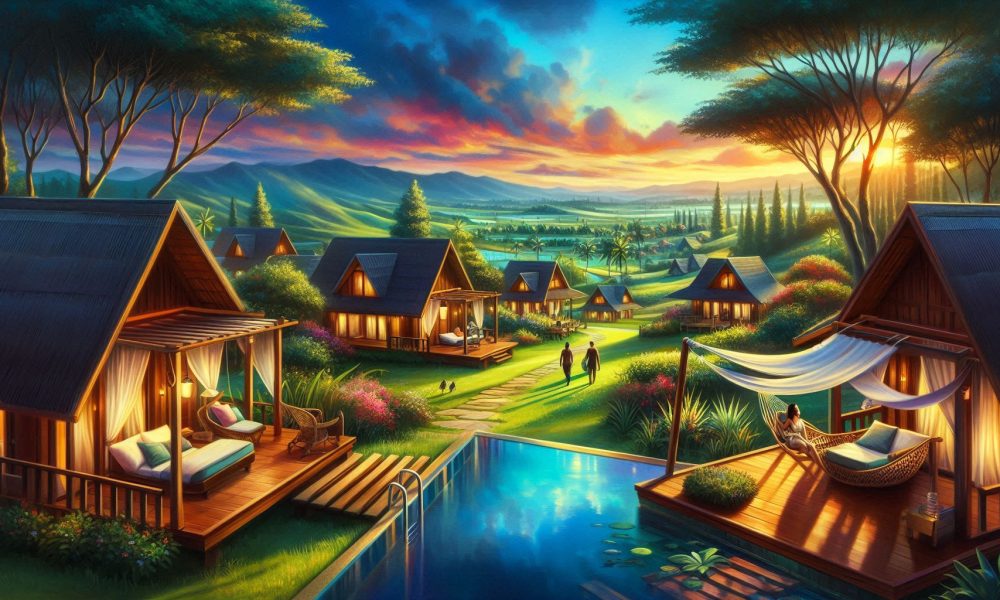
Hotels and operators have learned that many travelers want the opposite of a social-first environment. They want places where the loudest thing is wind, not a playlist. They want nights where the default is darkness, not glow. They want a setting where the experience is the product, not the background for a post.
This is also why “offline travel” is now being marketed as a feature. The pitch is not anti-technology. It is anti-friction. If you are burned out, a place that naturally discourages screens becomes part of the service.
The mainstream conversation around this shift is easy to see, as it appears across outlets that track travel demand, destination strategy, and lifestyle habits. You can scan the breadth of recent headlines and commentary here: Google News results on dark-sky tourism, quiet travel, and secluded destinations.
Dark-sky is also a practical answer to the “where can I go that still feels real” question. Many travelers are not necessarily looking for luxury. They are looking for fewer people, fewer rules of performance, and fewer moments where they feel watched.
Predictable travel patterns are now treated as a risk
Another reason secluded havens are winning is that travelers are thinking more explicitly about personal safety and exposure.
Predictability creates vulnerability. That vulnerability can be mild, like unwanted attention from strangers, or more serious, like theft risk, stalking, harassment, or targeting by opportunistic scammers. It can also show up in reputational terms, where real-time posting creates evidence trails that are easily misread or used out of context.
The shift is not about paranoia. It is about learning. People have absorbed a basic lesson of modern life: what you publish can travel farther than you intended, last longer than you expected, and be interpreted by people who do not know you.
Dark-sky itineraries naturally reduce predictability because they tend to be less standardized. They are more route-based and less landmark-based. They often require planning around weather, moon phases, and access, which makes them less copy-paste. That means fewer crowds, but it also means fewer strangers can easily triangulate your exact movements from a single post.
This is where privacy-minded mobility planning has started to overlap with how people travel for pleasure. As AMICUS INTERNATIONAL CONSULTING has emphasized in its public framing of privacy and risk reduction, the durable approach is not to chase “invisibility,” but to reduce unnecessary exposure while keeping your real-world identity and travel behavior coherent and lawful. The same principle applies to leisure travel: you do not need to vanish to feel safer. You need fewer avoidable signals.
Dark-sky tourism has a built-in advantage: it makes less sharing feel normal
A major reason dark-sky travel is outcompeting other “quiet” trends is that it gives travelers a socially acceptable reason to stop posting.
When someone goes to a trendy city, silence can look suspicious or antisocial in certain circles. When someone goes stargazing, silence looks appropriate. Darkness is the point. Limited connectivity is expected. Early nights and cold mornings are part of the deal.
The experience itself supports healthier habits. People sleep more. They scroll less. They stop trying to capture everything. They accept that the best moment might be one they cannot turn into a clean photo.
In 2026, that is a relief.
The official infrastructure is catching up, and that matters
Dark-sky travel is no longer just informal camping and hope. Public agencies are actively shaping access, programming, and conservation around night skies.
That matters because “secluded” does not always mean “unmanaged.” Travelers want the sense of escape without chaos. They want clear rules, safe access, and predictable services, especially for families, older travelers, or people who do not want to gamble on logistics.
One practical way to see how this has become institutional is through national parks and preserves that explicitly protect night skies and offer visitor programming tied to stargazing. In Canada, for example, Parks Canada highlights designated Dark-Sky Preserves as a way to experience the night away from urban light pollution: Parks Canada dark-sky preserves.
This is where the trend becomes more than a hashtag. When public agencies build programming, it signals durable demand and a long-term shift toward night-sky experiences as a mainstream travel category.
Why dark-sky travel is also a “compliance-friendly” form of privacy
Secluded havens and dark-sky destinations appeal to privacy-minded travelers for a simple reason: they allow discretion without requiring concealment.
There is a hard line in travel behavior between lowering exposure and trying to bypass rules. In 2026, borders, airlines, hotels, and payment systems are designed to reduce loopholes, not tolerate them. Trying to be “undetected” is not a privacy strategy; it is a risk magnet.
Dark-sky travel offers a cleaner alternative. You can choose quiet. You can choose not to post. You can choose remote locations. You can choose smaller venues. None of those conflicts with lawful identity verification, local regulations, or standard travel requirements. You are not hiding from institutions. You are simply opting out of broadcasting your leisure life to strangers.
That distinction is crucial because the travelers who do best in 2026 are not the ones pushing the edge. They are the ones who reduce unnecessary exposure while keeping their documentation, itinerary logic, and personal story consistent.
The market is shifting from “more” to “less”
There is also a cultural revaluation happening.
For years, travel status meant visible scarcity. Rare tables. Exclusive clubs. Branded bags. Now, for a growing group, status is the ability to access calm. A cabin with no noise. A coastline where you can hear waves. A desert lodge where the night is actually dark.
This is why secluded havens are increasingly priced like luxury even when the amenities are modest. The scarce resource is not marble. It is silence.
That scarcity also creates a predictable business response. Expect more small properties to market stargazing packages, more tour operators to build itineraries around nocturnal experiences, and more destinations to treat darkness as an asset worth protecting.
At the same time, there is a caution: as soon as a secluded haven becomes a branding strategy, it risks becoming crowded. The solution is not to chase the newest “secret place.” The solution is to travel in a way that does not require secrecy to feel peaceful.
What a realistic dark-sky itinerary looks like in 2026
Dark-sky tourism is not just “drive somewhere remote and look up.” The travel habits that make it successful are repeatable and practical.
Pick the right timing, not just the right place
Moon phase matters. Cloud cover matters. Season matters. Many first-time stargazers choose a famous destination but arrive under a bright moon or during the wrong weather window. The best itineraries are built around darkness and visibility, not only geography.
Treat darkness as a resource you are borrowing
Good dark-sky locations often exist because communities protect them. That can mean lighting rules, quiet hours, and environmental limitations. The smart traveler does not treat these as annoyances. They treat them as the reason the destination remains special.
Build in buffer time
Secluded travel punishes tight schedules. Roads are slower, services are fewer, and weather changes plans. A buffer is not wasted time. It is what makes the trip feel calm rather than stressful.
Keep the posting delay rule
If you want the privacy benefits, delay sharing until you leave. This is the simplest way to reduce real-time risk and preserve the feeling that the trip belongs to you, not to an audience.
Choose venues that match the “quiet over content” goal
Some places are remote but still social-first. Others are genuinely low-exposure. The difference shows up in policy and culture: whether staff enforce quiet hours, whether filming is normalized, whether common spaces feel like studios, and whether the property discourages bright outdoor lighting.
What a local enforcement and venue policies still shape behavior
Even in secluded areas, rules still exist, and they matter more because help is farther away.
Some parks have strict access rules at night. Some roads close. Some properties enforce guest registration. Some jurisdictions take trespassing seriously. Some remote communities are sensitive to noise and light pollution because it directly impacts wildlife and local life.
Dark-sky travelers who ignore these realities can turn a quiet itinerary into a conflict-driven one. The winners are the travelers who understand that the point is not to do whatever you want. The point is to do less, more respectfully, and more intentionally.
A final reality check: this is not the end of cities; it is a correction
Dark-sky tourism is not replacing urban travel. It is correcting the balance.
People still love food cities, art cities, and nightlife cities. What is changing is the default. Travelers are no longer assuming that the best trip is the loudest and most documented one. They are building itineraries with recovery built in. A few nights in a crowded place, then a few nights where the sky is actually visible.
That pattern also makes sense for digital well-being. The human nervous system does not recover in a feed. It recovers in quiet.
The bottom line
Dark-sky tourism and secluded havens are winning the 2026 itinerary because they deliver what many travelers now value most: calm, space, and a break from performance.
The trend is powered by crowding backlash, fatigue with predictable algorithm-driven travel, and a more mature understanding that less sharing can be a practical safety practice. It is also supported by a growing ecosystem of protected dark-sky locations and programming that turns “go somewhere quiet” into a real, accessible product.
This is not “undetected travel.” It is selective visibility. It is the choice to reduce exposure while staying lawful, verifiable, and operationally grounded.
In 2026, quiet is not a lack of plans. Quiet is the plan.




