

Direct Fired Thermal Oxidizer (DFTO) Market Overview
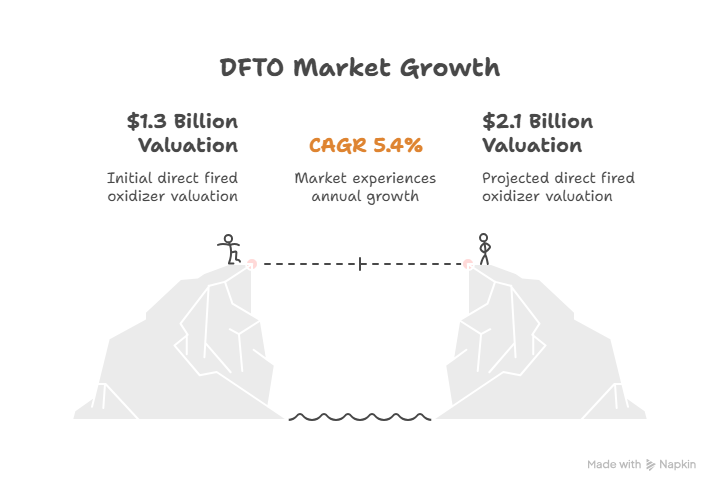
The global direct fired thermal oxidizer (DFTO) market, valued at $1.3 billion in 2022, is projected to reach $2.1 billion by 2032, registering a compound annual growth rate (CAGR) of 5.4% from 2023 to 2032. DFTOs, also known as afterburners or enclosed flares, are advanced air pollution control systems designed to thermally destroy hazardous air pollutants (HAPs) and volatile organic compounds (VOCs) emitted from industrial processes. By subjecting contaminated air to high temperatures (typically 760°C to 980°C) in a combustion chamber, DFTOs oxidize pollutants into harmless byproducts like carbon dioxide and water vapor, ensuring compliance with stringent environmental regulations.
𝐃𝐨𝐰𝐧𝐥𝐨𝐚𝐝 𝐏𝐃𝐅 𝐒𝐚𝐦𝐩𝐥𝐞@ https://www.alliedmarketresearch.com/request-sample/A209164
DFTOs are critical for industries such as chemicals, oil and gas, and pharmaceuticals, where high concentrations of VOCs and HAPs are common. Unlike traditional oxidation systems, DFTOs are robust, capable of handling high-pollutant emissions without damage, making them a reliable solution for regulatory compliance and environmental sustainability. The market’s growth is driven by increasing environmental regulations, industrial demand for efficient pollution control, and technological advancements in DFTO systems.
Direct Fired Thermal Oxidizer (DFTO) Market Drivers
The DFTO market is propelled by several key factors. Stringent environmental regulations, particularly in North America and Europe, mandate the control of VOCs and HAPs, driving industries to adopt DFTOs. Agencies like the U.S. Environmental Protection Agency (EPA) enforce strict emission standards, compelling sectors such as chemical manufacturing, automotive, and aerospace to invest in reliable pollution control systems. DFTOs, with destruction efficiencies exceeding 99%, offer an effective solution to meet these requirements.
The versatility of DFTOs is another significant driver. These systems can handle diverse waste streams with high pollutant concentrations, making them suitable for industries like plastics, coatings, and food processing. Their ability to use various fuel sources, including natural gas, propane, and biogas, enhances operational flexibility, allowing industries to optimize costs based on specific needs. Additionally, DFTOs are cost-effective, requiring lower capital investment compared to other thermal oxidizers, which appeals to businesses aiming to balance compliance with operational efficiency.
Technological advancements further boost market growth. Innovations in combustion control systems and improved heat recovery capabilities enhance DFTO performance, reducing energy consumption and operational costs. For instance, advancements allow DFTOs to maintain high destruction efficiencies while minimizing environmental impact, aligning with global sustainability goals. The compact design and low maintenance requirements of DFTOs also make them attractive for industries seeking practical, long-term solutions.
Direct Fired Thermal Oxidizer (DFTO) Market Challenges
Despite their advantages, DFTOs face certain limitations. High operating temperatures (1,800°F to 2,200°F) can be unsuitable for waste streams containing heat-sensitive compounds or materials prone to thermal degradation. Unlike regenerative thermal oxidizers (RTOs), which offer high thermal efficiency and low fuel consumption, DFTOs lack heat recovery systems, leading to higher energy use and operating costs. This can be a drawback in applications with continuous emissions, where fuel costs significantly impact profitability.
Additionally, DFTOs are less effective at achieving ultra-low nitrogen oxide (NOx) emissions compared to selective catalytic reduction (SCR) systems or catalytic thermal oxidizers (CATOX). In regions with stringent NOx regulations, industries may opt for alternative technologies, limiting DFTO adoption. These factors could hamper market growth, particularly in applications requiring low energy consumption or ultra-low emissions.
𝐄𝐧𝐪𝐮𝐢𝐫𝐞 𝐁𝐞𝐟𝐨𝐫𝐞 𝐁𝐮𝐲𝐢𝐧𝐠@ https://www.alliedmarketresearch.com/purchase-enquiry/A209164
Direct Fired Thermal Oxidizer (DFTO) Market Opportunities
DFTOs present significant opportunities across industries facing emission control challenges. Their adaptability to diverse sectors, such as chemical manufacturing (e.g., Synthesia’s carbodiimide production), paint and coatings, and pharmaceuticals, positions them as a versatile solution. The ability to efficiently handle high-VOC emissions ensures compliance with regulations while supporting sustainable practices. For example, leading chemical manufacturers like Dow Chemical Company, BASF SE, and DuPont rely on DFTOs to mitigate VOC emissions, minimizing environmental impact and protecting community health.
Advancements in DFTO technology, such as enhanced combustion controls and compact designs, create opportunities for market expansion. These improvements make DFTOs more energy-efficient and easier to integrate into existing industrial processes. Additionally, the growing focus on sustainability encourages industries to adopt DFTOs as part of their environmental stewardship efforts, reducing their carbon footprint by converting pollutants into harmless byproducts. The increasing demand for pollution control in emerging sectors like battery manufacturing, which generates VOCs and HAPs during production, further amplifies DFTO market potential.
Direct Fired Thermal Oxidizer (DFTO) Market Segmentation
The DFTO market is segmented by pollutant type, end-use industry, and region, providing a comprehensive view of its dynamics.
By Pollutant Type
The volatile organic compounds (VOCs) sub-segment dominated the market in 2022 and is expected to grow the fastest during the forecast period. VOCs, carbon-based chemicals that vaporize at room temperature, pose environmental and health risks, including smog formation and respiratory issues. DFTOs efficiently eliminate VOCs through high-temperature oxidation, converting them into carbon dioxide and water vapor. This capability makes DFTOs essential for industries with high-VOC emissions, ensuring regulatory compliance and cleaner air quality.
By End-Use Industry
The chemical industry led the market in 2022 and is projected to exhibit the fastest growth. Chemical manufacturing processes, involving solvents and catalysts, generate significant VOCs and HAPs. DFTOs provide a reliable solution for emission control, enabling companies like ExxonMobil and Chevron Phillips Chemical to meet environmental standards. The industry’s focus on sustainability and regulatory compliance drives DFTO adoption, supporting market growth.
By Region
North America held the largest market share in 2022, driven by stringent EPA regulations and widespread DFTO use in industries like chemicals and automotive. Companies such as 3M Company leverage DFTOs for efficient VOC abatement. Asia-Pacific is expected to grow the fastest, fueled by rapid industrialization, increasing regulatory focus, and rising demand for pollution control in countries like China and India.
Competitive Landscape
The DFTO market is competitive, with key players including Epcon Industrial Systems, LP, Anguil Environmental Systems, Inc., TANN Corporation, Ship & Shore Environmental, Inc., NestecInc.com, Catalytic Products International, Process Combustion Corporation (PCC), Dürr Systems, Inc., The CMM Group, and AIR CLEAR LLC. These companies focus on innovation and strategic partnerships to strengthen their market position. For instance, in October 2023, Anguil Environmental Systems highlighted DFTO applications in battery manufacturing, emphasizing pollution control from mining to recycling, aligning with the industry’s push for greener practices.
Direct Fired Thermal Oxidizer (DFTO) Market Dynamics
DFTOs offer unmatched destruction efficiencies, versatility, and cost-effectiveness, making them a preferred choice for industrial emission control. Their ability to handle high-pollutant waste streams and utilize various fuel sources enhances their appeal across diverse applications. However, high operating temperatures, lack of heat recovery, and limited NOx reduction capabilities pose challenges, particularly in energy-intensive or low-emission applications.
Opportunities arise from DFTOs’ adaptability to emerging industries and technological advancements. The growing demand for sustainable solutions, coupled with stricter regulations, supports market expansion. Industries seeking to reduce VOC and HAP emissions while optimizing costs will continue to drive DFTO adoption.
Key Benefits for Stakeholders
The DFTO market report provides:
- Comprehensive Analysis: Detailed insights into market trends and forecasts from 2023 to 2032.
- Opportunity Identification: Highlights key drivers, restraints, and growth opportunities.
- Porter’s Five Forces Analysis: Assesses buyer and supplier dynamics for strategic decision-making.
- Segmentation Insights: Maps market opportunities across pollutant types, industries, and regions.
- Competitive Benchmarking: Evaluates key players’ strategies and market positioning.
- Qualitative and Quantitative Data: Combines industry expert inputs with market data for robust analysis.
Future Outlook
The DFTO market is poised for steady growth through 2032, driven by stringent environmental regulations, industrial demand for VOC and HAP control, and technological advancements. The chemical industry and Asia-Pacific region present significant growth opportunities, while innovations in combustion control and energy efficiency will enhance DFTO appeal. Despite challenges like high energy consumption and limited NOx reduction, the market’s versatility and cost-effectiveness ensure its relevance. As industries prioritize sustainability and compliance, DFTOs will play a critical role in reducing environmental impact, supporting long-term market expansion.




