
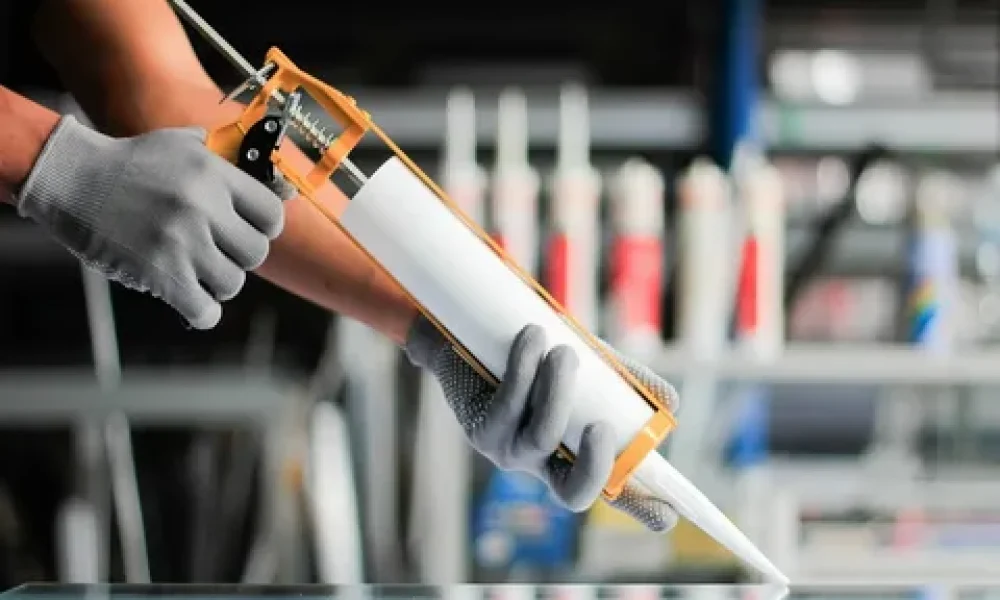
The global De-seamable Adhesives Market is poised for remarkable growth, projected to expand from USD 69.7 billion in 2025 to USD 113.6 billion by 2035, registering a steady CAGR of 5.0%. As industries worldwide demand smarter, more sustainable bonding solutions, de-seamable adhesives are gaining ground as the adhesive of choice for applications requiring both high initial strength and clean removability.
Quick Market Snapshot
- Market Size 2025: USD 69.7 billion
- Forecast 2035: USD 113.6 billion
- CAGR (2025–2035): 5.0%
- Leading Segment: Polyurethane (PU) with 44.6% share in 2025
- Key Growth Regions: North America, Asia-Pacific, Europe
- Prominent Players: 3M Company, Toray Industries Inc., Bemis Associates Inc., Himel Corp., Sealon Co., Ltd., Tesa SE, Nitto Denko Corporation, and more
Request Your Sample Now: https://www.futuremarketinsights.com/reports/sample/rep-gb-7634
What’s Driving Market Growth?
De-seamable adhesives are designed to deliver strong bonding performance while ensuring easy separation without surface damage—qualities increasingly valued in automotive, electronics, construction, packaging, and healthcare.
Several market forces are shaping this growth:
- Automation in manufacturing demands adhesives compatible with high-speed, precision-based processes.
- Sustainability and recyclability pressures from regulators and consumers are fueling adoption, especially in packaging and PET bottle applications.
- Modular assembly trends in industries such as automotive and electronics require adhesives that support both temporary and permanent bonding.
- R&D in bio-based and low-VOC formulations is creating eco-friendly alternatives to traditional chemistries.
“The push toward a circular economy is making adhesives a strategic enabler for recyclability and material reuse,” noted a senior analyst from FMI. “De-seamable adhesives are emerging as a quiet but powerful innovation supporting cleaner, smarter manufacturing.”
Segmental Insights
Polyurethane (PU) Leads Resin Chemistry
Polyurethane adhesives are projected to capture 44.6% of market revenues in 2025, reflecting their versatility across industries. PU formulations balance mechanical strength, chemical resistance, and removability, making them indispensable in automotive interiors, electronics modules, and furniture assembly.
Recent advancements have also improved PU adhesives’ environmental performance, with reduced VOC emissions aligning with global sustainability mandates.
Solvent-Based Technology Dominates
With an expected 47.2% revenue share in 2025, solvent-based adhesives remain the backbone of high-speed production environments. Their fast curing, wide substrate compatibility, and proven reliability keep them in demand, particularly in electronics, automotive assembly, and packaging.
Manufacturers are innovating with low-emission solvent-based formulations, ensuring compliance while preserving the speed and bonding strength required by modern industries.
Foam Backing Material Gains Traction
Foam-backed de-seamable adhesives are set to account for 41.5% of the market in 2025. Their conformability on uneven surfaces, cushioning properties, and vibration resistance make them particularly valuable in automotive and electronics manufacturing.
This segment is also benefiting from automation-friendly designs and customizable densities, making foam backings one of the fastest-growing areas within the market.
Industry Applications Expanding
- Automotive: Temporary assembly, EV battery module bonding, and interior parts assembly.
- Electronics: PCB assembly, semiconductors, and consumer electronics requiring precision bonding.
- Construction: Panel bonding, insulation, and flooring solutions with easy rework options.
- Packaging: Labels, seals, and reusable packaging for improved recyclability.
- Healthcare: Temporary medical devices and disposable product assembly.
Notably, the application of de-seamable adhesives on shrink-labeled PET containers is revolutionizing recycling processes by enabling labels to detach during washing, thereby enhancing recyclability without altering processing equipment.
Global Dynamics
The Asia-Pacific region is expected to dominate growth, supported by rising demand in China (6.8% CAGR) and India (6.3% CAGR). Both countries are experiencing surges in electronics manufacturing and packaging demand, making them prime markets for adoption.
North America and Europe remain crucial markets, with the U.S. projected to grow from USD 24.6 billion in 2025 to USD 37.2 billion by 2035 at a CAGR of 4.3%. Germany leads Europe with an anticipated 5.8% CAGR, reflecting its strong industrial base and commitment to green manufacturing practices.
Meanwhile, Latin America and the Middle East & Africa show steady adoption, primarily driven by packaging and construction industries.
Get the Report Brochure Now: https://www.futuremarketinsights.com/reports/brochure/rep-gb-7634
Competitive Landscape: Established Leaders & Emerging Innovators
The de-seamable adhesives industry is highly fragmented and innovation-driven.
- Global leaders such as 3M, Toray Industries, and Nitto Denko Corporation are spearheading R&D into high-performance, eco-friendly adhesives.
- Specialized players like Bemis Associates Inc., Sealon Co., Ltd., and Framis Italia S.p.A. are delivering niche solutions for textiles, consumer goods, and automotive applications.
- Emerging manufacturers in Asia are rapidly expanding portfolios, emphasizing cost-competitive, bio-based adhesives.
- Collaborations and partnerships—such as Sun Chemical’s development of SunLam labels with Eastman—are setting benchmarks in PET recyclability and inspiring industry-wide innovation.
These dynamics highlight an environment where both established giants and smaller innovators are shaping the future, each contributing to broader sustainability goals.
Recent Developments
- Sun Chemical Corporation, in collaboration with Eastman, introduced SunLam de-seamable adhesives for PET containers, receiving recognition from the Association of Plastic Recyclers (APR).
- Essentra PLC and GCP Applied Technologies are scaling up investments in eco-friendly adhesive research.
- Framis Italia S.p.A. is focusing on adhesives for fashion and sportswear, reflecting the versatility of the technology.
Outlook: A Sustainable Future
As industries align with global sustainability targets, demand for eco-friendly, recyclable, and removable adhesives will continue to expand.
Opportunities for manufacturers include:
- Developing bio-based, water-based systems.
- Enhancing automation-ready adhesives for Industry 4.0 production lines.
- Creating advanced formulations for multi-material assemblies.
- Expanding into emerging markets where packaging and construction are rapidly growing.
“The adhesives industry is no longer just about bonding materials—it’s about enabling circularity, efficiency, and performance. De-seamable adhesives are at the heart of this transformation,” commented an industry expert.
Conclusion
With steady growth projected through 2035, the De-seamable Adhesives Market represents a convergence of performance, innovation, and sustainability. From global leaders like 3M and Toray Industries to emerging innovators across Asia and Europe, manufacturers are actively shaping a future where adhesives not only hold things together but also support recycling, efficiency, and environmental responsibility.
As demand for clean-removal bonding solutions grows across automotive, electronics, packaging, and construction, de-seamable adhesives are set to remain one of the most pivotal enablers of sustainable industrial progress.



