
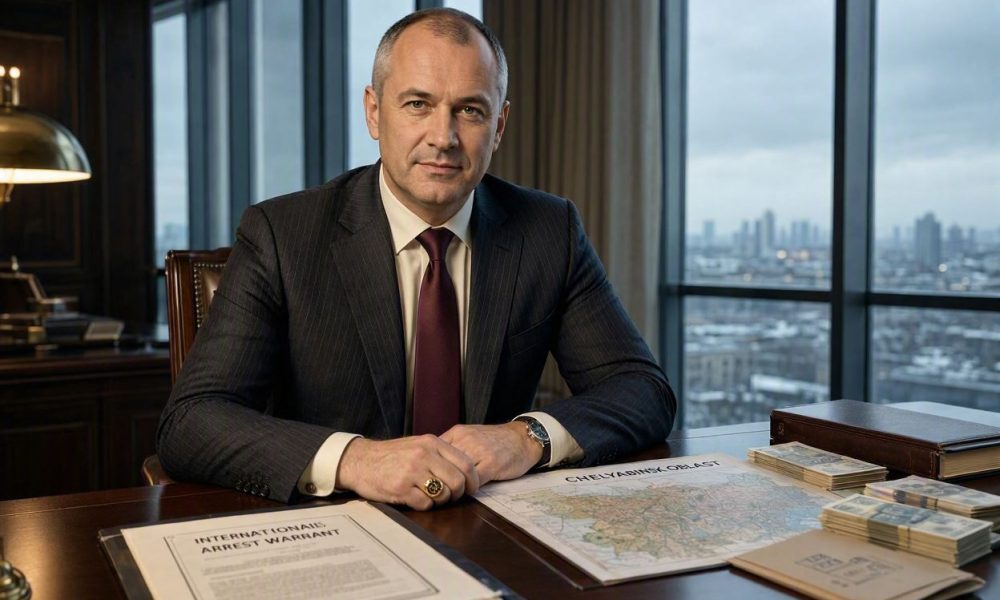
A May 2026 court order freezes two Limassol apartments linked to the internationally wanted former Chelyabinsk governor and his father, expanding Cyprus’s golden-passport crackdown from citizenship revocations to seizing valuable real estate.
WASHINGTON — Cypriot authorities secured a court order in May 2026 restraining luxury real estate worth €3,175,000 connected to former Russian governor Mikhail Yurevich and his father, marking a significant escalation in the island’s investigation of its discredited citizenship-by-investment program.
The order targets a €2,620,000 apartment registered to Yurevich in Limassol’s landmark ONE development and a second apartment worth €555,000 linked to his father, Valerii, inside the Park Residence complex in the Germasogeia district.
Yurevich, a businessman and former governor of Russia’s industrial Chelyabinsk Oblast, remains internationally wanted on accusations that he received bribes worth more than three billion roubles, approximately €35 million, through intermediaries while holding regional office.
His case connects three distinct controversies: a Russian corruption prosecution, a Cypriot naturalization file containing possible false declarations, and a court-approved property restraint that now prevents valuable assets from being freely transferred while local investigators continue their work.
A Court Order Against Two Limassol Apartments
According to reporting by Phileleftheros, Cyprus Police applied through the Unit for Combating Money Laundering, known as MOKAS, for a charging order covering the two properties, which the Nicosia District Court approved in the 20 days before May 19, 2026.
The order is an asset-preservation measure rather than a final confiscation Judgment, meaning ownership has not necessarily been permanently transferred to the state, and no Cypriot court has entered a public criminal verdict concerning the properties.
Such restraints are designed to prevent sale, mortgaging, dissipation, or other dealings that could frustrate later enforcement if investigators establish legal grounds for forfeiture, recovery, compensation, or another judicial remedy connected to the underlying inquiry.
The distinction matters because calling the action retaliation would mischaracterize a judicially supervised financial-investigation tool, while describing the apartments as confiscated would improperly treat an interim protective order as a final determination of ownership and liability.
Why the Order Was Made Public
Cypriot reporting said the court decision was publicized because authorities could not locate the interested individuals for formal service, an unusual procedural detail suggesting that investigators could not deliver the order through ordinary direct notification.
That inability does not establish where Yurevich currently resides, whether he received notice through lawyers, or whether he intends to contest the measure. Still, it reinforces the cross-border complications surrounding both the wanted notice and the property inquiry.
Publicly recording the restraint helps protect its practical effect by alerting registries, prospective purchasers, lenders, lawyers, and other parties that the apartments are subject to a court order and cannot be treated as unrestricted assets.
Cyprus Police confirmed that a case remained under investigation but declined to share additional details. At the same time, sources cited in local reporting linked the inquiry to findings from the independent commission examining the island’s investor-citizenship program.
Yurevich’s Rise Through Business and Politics
Born in 1969, Yurevich developed substantial business interests before entering national and regional politics, eventually becoming a member of Russia’s State Duma, mayor of Chelyabinsk, and governor of the surrounding oblast from 2010 until 2014.
His career placed him at the center of one of Russia’s largest industrial regions, where road construction, procurement, agriculture, manufacturing, and other government-dependent sectors created extensive contact points between public officials and wealthy private enterprises.
Yurevich was also associated with the Makfa agro-industrial group, a major producer of pasta and flour whose assets were transferred to the Russian state during 2024 after prosecutors argued that the business had corrupt origins and violated restrictions governing officials.
That Russian civil action and the Cypriot restraint are legally separate proceedings. Yet, together they show how allegations involving public office can create overlapping consequences across businesses, property holdings, citizenship records, and multiple national legal systems.
The Russian Bribery Allegations
Russian investigators accused Yurevich of accepting money from public officials and businesses, later alleging that he and an associate received more than three billion roubles through intermediaries in exchange for protection and favorable treatment connected to the regional road sector.
The amount has been reported as approximately €35 million. However, currency conversions vary by date and methodology, and Russian, Cypriot, and international reports have described the exact criminal counts and procedural status inconsistently.
In May 2017, Russian authorities placed Yurevich on an international wanted list after he did not present himself for questioning, with public accounts also referring to allegations involving payments from a regional health official and defamatory statements concerning other officials.
Because Yurevich has not appeared in a publicly documented adversarial trial resolving those accusations, the bribery allegations should remain attributed to Russian investigators rather than presented as independent facts, notwithstanding later descriptions of an in-absentia conviction within Cypriot commission material.
A Golden Passport Before the Warrant
Yurevich obtained Cypriot citizenship in September 2016, several months before the public corruption case and international wanted notice emerged, making his chronology different from applicants who were already charged, convicted, or internationally wanted when Cyprus approved them.
The Cyprus Papers profile lists an approval date of September 13, 2016, while later reporting based upon the Nikolatos commission states that the Council of Ministers approved his naturalization on September 28, suggesting different administrative stages or an unresolved documentary discrepancy.
That timing means Cyprus cannot automatically be accused of knowingly granting citizenship to an internationally wanted person, because the warrant and widely reported bribery allegations followed the 2016 naturalization decision rather than preceding it.
However, his status as a prominent former governor and wealthy businessman should already have classified him as a politically exposed person requiring enhanced source-of-wealth, beneficial-ownership, public-contracting, litigation, and corruption-risk review before citizenship was approved.
Citizenship Apparently Obtained From a Distance
The Nikolatos commission found that arrival and departure records did not appear to show Yurevich entering Cyprus after 2001, even though his naturalization occurred during 2016 and his family later submitted additional citizenship applications.
That finding does not merely show that he avoided relocating permanently, because the investment program itself did not require the extended physical residence expected under ordinary naturalization; instead, it raised questions about whether he properly signed and certified the required declarations.
The commission examined five M127 applications submitted by members of the Yurevich family and found that only the application associated with his partner, Kristina Yurevich, appeared to have been personally signed by the named applicant.
For the other applicants, travel records either showed they were not in Cyprus when the applications were submitted or failed to confirm their presence, leading the commission to conclude the relevant declarations might have been false.
A Documentation Failure With Sovereign Consequences
Naturalization forms are not ceremonial paperwork, because signatures, certifications, court stamps, and personal declarations establish who appeared, what was affirmed, which official verified the act, and whether the government relied upon an authentic submission.
If applicants were absent when documents represented that they appeared or signed before authorized officials, the problem would extend beyond weak background screening into possible misrepresentation within the formal process used to grant citizenship.
The commission’s language remained appropriately cautious, identifying possible false declarations rather than declaring criminal guilt, and recommended revoking Yurevich’s passport after reviewing the complete file and available official movement records.
Those findings show why a program can fail even when the applicant’s later criminal problems were unknown initially: basic procedural integrity should be verifiable independently of subsequent accusations arising in another country.
Citizenship for His Parents and Other Relatives
The Cyprus Papers revealed that Yurevich sponsored citizenship applications for his parents in November 2017, after he had reportedly been placed on Russia’s international wanted list and after allegations concerning his public conduct had become widely known.
The leaked profile described his parents as directors within several of his companies, making their applications relevant not only as family naturalizations but also as potential extensions of a business and ownership network connected to the principal investor.
Later reports stated that seven members of the Yurevich family received Cypriot passports, multiplying the consequences of the original approval and increasing the complexity of any later revocation, asset review, or examination of related companies.
The €555,000 Park Residence apartment covered by the 2026 court order appears to belong to his father, showing how investigators have moved beyond the principal applicant’s passport file to property linked to another naturalized family member.
Did the Passport Place Him Beyond Russia’s Reach?
A Cypriot passport provided Yurevich with European citizenship rights. It could support movement, residence, work, and establishment throughout the European Union, making it a highly valuable status for a politically exposed Russian businessman facing growing uncertainty at home.
Nevertheless, European citizenship does not create immunity from an extradition request, cancel an international arrest warrant, prevent detention, or require another state to disregard criminal allegations submitted through proper legal and diplomatic channels.
Public reporting has placed Yurevich in London or suggested that he resides in the United Kingdom. Still, the record reviewed for this article does not identify a completed Russian extradition request that British or Cypriot courts rejected because of his EU nationality.
It is therefore accurate to say that he has remained outside Russian custody while holding or having held Cypriot status, but not that the golden passport legally blocked prosecutors or conclusively enabled his continued absence.
The 2024 Citizenship Revocation Process
Cypriot reporting states that Yurevich’s name appeared in November 2024 among 77 investors targeted through the Christodoulides government’s citizenship-revocation campaign, following the recommendation made by the Nikolatos commission more than three years earlier.
Some reports describe his citizenship as revoked, while others say the government was moving to revoke the affected passports, leaving uncertainty about the completion date, any challenge, and the current status of each related family member.
That ambiguity matters because deprivation generally requires individualized notice, supporting grounds, administrative consideration, and potential judicial review. At the same time, canceling a principal investor’s citizenship may raise separate issues for relatives naturalized through related applications.
Whatever the precise procedural stage, the 2024 action demonstrates that Cyprus eventually treated the Yurevich file as sufficiently problematic for deprivation measures after years of sustained public scrutiny and an official commission recommendation.
MOKAS Turned Citizenship Scrutiny Into Asset Action
The 2026 charging order represents a different form of accountability from passport revocation, because it preserves property rather than determining nationality and operates through a district court within Cyprus’s anti-money-laundering and criminal-investigation framework.
MOKAS functions as the country’s specialized unit for combating money laundering and related concealment offenses, supporting investigations, financial intelligence, international cooperation, restraint applications, and recovery efforts when assets may be connected to unlawful conduct.
The known public order does not establish that the Limassol apartments were purchased with bribery proceeds, that Yurevich laundered money through Cyprus, or that his father knowingly participated in any related financial offense.
Instead, it prevents dealings with the properties. At the same time, investigators review the citizenship file and related circumstances, preserving assets that might otherwise become unavailable before courts determine whether further legal action is justified.
Why Golden Passports Create Financial-Crime Risk
Citizenship-by-investment can complicate financial screening when a customer’s nationality, residence, aliases, corporate holdings, and political history become fragmented across databases, particularly when institutions rely too heavily upon the single passport presented during initial onboarding.
The United States Treasury has warned that criminals can misuse golden-passport and residence-by-investment programs to conceal activities through new identity documents, opaque corporate arrangements, and professional gatekeepers who facilitate access to financial systems.
That general warning does not prove wrongdoing by Yurevich. Still, it explains why a former governor with extensive business holdings, family directors, foreign property, and international wanted status demands continuing enhanced scrutiny from banks and public authorities.
Effective compliance must connect every known nationality and alias to the same underlying person, test beneficial ownership, verify the origin of investment funds, examine public-contract exposure, and update risk assessments when criminal allegations or sanctions appear after onboarding.
A Freeze Is Only the Beginning
For Cypriot investigators, the next questions concern how the apartments were purchased, which accounts and intermediaries funded them, who exercised effective control, whether citizenship applications contained false declarations, and whether any offenses permit confiscation or recovery.
For Yurevich and his father, the restraint creates a legal burden without proving guilt, because affected owners may challenge the order, contest the evidence, explain the source of funds, and oppose any later effort to seek permanent forfeiture.
International cooperation may also become important if transaction records, beneficial owners, professional advisers, or alleged predicate conduct are located in Russia, Britain, Cyprus, or additional foreign jurisdictions connected to the family’s extensive commercial interests.
The public should therefore view the May 2026 order as a significant investigative milestone rather than a final verdict, preserving €3,175,000 in property while Cyprus determines whether its citizenship failures also produced recoverable financial consequences.
The Standard for Legitimate Citizenship Planning
Lawful second citizenship must rest on authentic forms, accurate personal appearances, transparent beneficial ownership, verified wealth, and complete disclosure, because approval built on questionable declarations may remain vulnerable long after the passport is issued.
Amicus International Consulting’s comparison of citizenship with investor residence explains why nationality delivers more durable rights. At the same time, those stronger benefits demand deeper government scrutiny and greater procedural integrity than an ordinary investment or temporary immigration permission.
Applicants seeking lawful second-passport planning should expect identity verification, political-exposure analysis, source-of-funds review, corporate mapping, criminal-history searches, and direct confirmation that every signed declaration accurately reflects where and how the application was executed.
Advisers should never imply that a passport prevents extradition or places assets beyond enforcement, because another citizenship changes legal relationships while leaving the individual subject to criminal cooperation, asset-restraint procedures, revocation laws, sanctions screening, and judicial oversight.
The Case Against Cyprus’s Original Decision
Mikhail Yurevich’s case does not show that Cyprus knowingly naturalized an internationally wanted corruption suspect, because his September 2016 approval preceded the public Russian warrant and major bribery allegations that emerged during 2017.
It does show that Cyprus granted citizenship to a prominent politically exposed applicant who apparently had not visited the island after 2001, while later commission findings raised possible false-declaration concerns across several family applications.
The 2024 revocation process addressed nationality, while the May 2026 court order now preserves two Limassol apartments worth €3,175,000 as police and MOKAS investigate whether the file carries consequences extending beyond defective citizenship paperwork.
The eventual outcome will depend on evidence and the judicial process. Still, the institutional lesson is already clear: when citizenship is granted without verifiable presence, authentic declarations, and ongoing risk review, the cleanup may require both passport deprivation and years of asset litigation.




