
The global compaction machines market is estimated at USD 7.8 billion in 2026 and is forecast to reach USD 14.6 billion by 2036, expanding at a 6.5% CAGR during the forecast period. The market was valued at USD 7.3 billion in 2025. Demand is increasingly shaped by procurement teams consolidating equipment purchases around established product categories to manage costs, simplify supplier qualification, and reduce switching requirements.
Compaction machines remain essential across construction and industrial projects where surface preparation, soil stabilization, and material density influence project execution. Rollers account for 50.0% of product type revenue in 2026, while construction leads application demand with a 45.0% share. These leading positions reflect the importance of equipment capable of supporting recurring project requirements while fitting established procurement and operating practices.
The market trajectory is also supported by recurring industrial procurement. Equipment upgrades, capacity additions, and replacement requirements contribute to continuing demand as buyers modernize machinery fleets. Procurement teams are increasingly favoring suppliers that can reduce switching costs and shorten qualification processes, making established equipment categories important within purchasing decisions.
What Are the Key Segments in the Compaction Machines Market?
- Rollers account for 50.0% of product type revenue in 2026, reflecting their central role in compaction applications and established purchasing requirements.
- Construction leads application demand with a 45.0% share in 2026, supported by continuing requirements for site preparation and surface compaction.
- Industrial procurement contributes to recurring equipment demand as organizations replace aging machinery and add capacity.
- Equipment upgrades provide a continuing replacement opportunity as buyers seek to modernize existing fleets.
- Supplier consolidation is influencing purchasing decisions as procurement teams seek to reduce qualification effort and switching costs.
Get detailed market forecasts, competitive benchmarking, and pricing trends:
https://www.futuremarketinsights.com/reports/sample/rep-gb-1064
Which Regions Are Showing the Strongest Growth in Compaction Machines?
The USA is projected to record the fastest expansion among the markets provided, growing at a 6.6% CAGR through 2036. Demand is supported by facility modernization and reshoring-related investment, creating requirements for equipment procurement and machinery upgrades.
The European Union is forecast to grow at a 6.4% CAGR during the forecast period. Purchasing centers are prioritizing modernization, replacement of existing equipment, and investments associated with reshoring. These factors support demand for compaction machines across construction and industrial applications.
How Is Regional Demand Shaping the Compaction Machines Market?
Regional demand is increasingly connected to investment in construction capacity, industrial facilities, and equipment modernization. In the USA, reshoring and facility upgrades can create additional requirements for machinery as companies expand or update operating infrastructure.
Across the European Union, modernization and reshoring are similarly influencing procurement priorities. Buyers are assessing machinery not only on individual equipment specifications but also on supplier qualification requirements, switching costs, and the ability to support recurring procurement.
What Is Changing the Competitive Landscape?
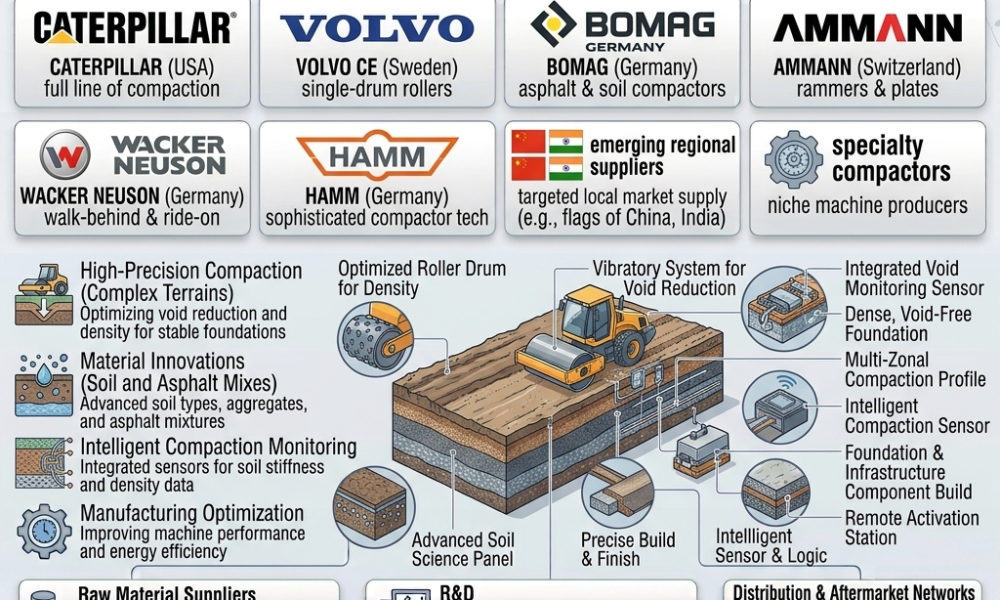
The competitive environment is being shaped by buyers seeking to consolidate procurement and limit the complexity associated with multiple equipment suppliers. Established product categories such as rollers can benefit from this approach because procurement teams can apply existing qualification processes across recurring equipment requirements.
Manufacturers and suppliers are therefore increasingly evaluated on their ability to provide equipment that fits established operating requirements while minimizing procurement friction. Product reliability, service support, equipment availability, and compatibility with existing fleet requirements can influence purchasing decisions.
The emphasis on recurring procurement also creates opportunities for suppliers that can support customers across equipment upgrades and capacity additions. Rather than relying solely on one-time project sales, suppliers can strengthen customer relationships through replacement planning and ongoing equipment requirements.
What Is Driving Demand for Compaction Machines?
Construction Activity Supports Equipment Requirements
Construction remains the leading application, accounting for 45.0% share in 2026. Compaction equipment is required across construction activities where appropriate surface and material density are important to project execution.
Recurring Equipment Replacement
The compaction machines market benefits from recurring procurement as organizations replace aging equipment and upgrade machinery fleets. Replacement demand provides a continuing purchasing base beyond new construction projects.
Facility Modernization
Modernization of industrial facilities is supporting machinery investment. Buyers updating operating infrastructure may also review equipment fleets and replace machines that no longer meet current operational requirements.
Procurement Consolidation
Procurement teams are increasingly looking to consolidate purchasing around established suppliers and equipment categories. Reducing switching costs and shortening qualification processes can make established product categories more attractive in recurring procurement programs.
What Are the Key Market Restraints?
Compaction machine purchases can require substantial capital expenditure, particularly when organizations replace or expand equipment fleets. Buyers may therefore evaluate purchases carefully against project requirements, utilization levels, and available capital budgets.
Supplier switching can also involve qualification and procurement costs. Equipment operators may need to assess specifications, service arrangements, maintenance requirements, and compatibility with existing fleets before adopting an alternative supplier, which can extend purchasing cycles.
What Opportunities Exist for Compaction Machine Manufacturers?
Equipment manufacturers can address market opportunities by supporting customers through recurring replacement and modernization programs. Suppliers that reduce procurement complexity and provide equipment suited to established operating requirements can strengthen their role within consolidated purchasing strategies.
The USA and European Union also provide opportunities linked to facility modernization and reshoring. As companies invest in domestic production capacity, demand for construction and industrial machinery can create additional requirements for compaction equipment.
How Is the Compaction Machines Market Segmented?
The compaction machines market is analyzed by product type and application, with additional demand shaped by regional construction and industrial procurement activity.
By Product Type: Rollers and other compaction machine categories.
By Application: Construction and other industrial applications.
Why Do Rollers Lead Product Type Demand?
Rollers account for 50.0% of product type revenue in 2026. Their leading position reflects their established role in compaction operations and the tendency of procurement teams to consolidate purchases around widely used equipment categories.
Why Does Construction Lead Application Demand?
Construction represents 45.0% of application demand in 2026. Construction projects require compaction equipment for preparing surfaces and achieving required material density, creating a recurring equipment requirement across project cycles.
Drive Your Business Growth Strategy: Checkout the Report for Key Insights!
https://www.futuremarketinsights.com/checkout/1064
What Are the Drivers, Restraints and Opportunities in the Compaction Machines Market?
The compaction machines market is being shaped by recurring equipment procurement, construction requirements, facility modernization, and buyers’ efforts to reduce qualification and switching costs.
- Rollers represent the largest product category, accounting for 50.0% of revenue in 2026.
- Construction leads application demand with a 45.0% share, supporting recurring equipment requirements.
- Facility modernization and reshoring are creating additional procurement opportunities in the USA and European Union.
What Is the Compaction Machines Market Demand Outlook?
The compaction machines market is expected to benefit from recurring procurement across construction and industrial operations. The market’s projected increase from USD 7.8 billion in 2026 to USD 14.6 billion by 2036 reflects continuing requirements for equipment upgrades, capacity additions, and replacement machinery.
The concentration of demand around rollers also reflects procurement strategies focused on cost control and qualification efficiency. Buyers can reduce complexity by consolidating purchases around established equipment categories and suppliers.
Procurement Efficiency Becomes a Purchasing Criterion
Procurement teams are increasingly evaluating equipment purchases according to the broader cost of adoption. Supplier qualification, switching requirements, service arrangements, and fleet compatibility can influence purchasing decisions alongside machine specifications.
Modernization Supports Replacement Demand
Facility modernization and reshoring are creating additional equipment requirements in major industrial markets. Organizations investing in new or upgraded facilities may require compaction equipment as part of broader construction and infrastructure programs.
Which Markets Are Growing Fastest in Compaction Machines?
The USA is projected to expand at a 6.6% CAGR through 2036, followed by the European Union at 6.4%. Growth is supported by facility modernization, reshoring, equipment upgrades, and recurring procurement requirements.
About Future Market Insights
Future Market Insights (FMI), a Future Market Insights Group company, is a leading provider of market intelligence and consulting services. FMI delivers syndicated research reports, custom research, and consulting solutions across automotive, industrial, technology, chemicals, energy, and other industries. Its research supports business leaders, investors, and decision-makers with market forecasts, competitive intelligence, and strategic insights.



