
Overview of the Market
The global commercial refrigeration equipment market is poised for substantial growth, projected to increase from US$ 29.6 billion in 2025 to an estimated US$ 50.3 billion by 2032. This expansion, reflecting a CAGR of 7.9% over the forecast period, is driven by rising demand for frozen, packaged, and ready-to-eat food items. Factors such as increasing urbanization, a growing middle-class population, and the proliferation of retail and foodservice outlets globally are fueling the need for advanced refrigeration systems. In response to environmental concerns, manufacturers are increasingly adopting energy-efficient and eco-friendly technologies, aligned with global sustainability goals and regulatory frameworks.
Among product categories, the refrigerators & freezers segment holds the largest market share due to its widespread usage across supermarkets, convenience stores, and food service establishments. Geographically, North America leads the market, accounting for over 34% of the revenue share, supported by a robust retail infrastructure and early adoption of smart refrigeration systems. Additionally, Asia Pacific is anticipated to exhibit the fastest growth, driven by rising disposable incomes, changing consumption patterns, and a surge in the number of foodservice chains across emerging economies.
✦ Key Highlights from the Report:
✦ Market projected to grow at 7.9% CAGR from 2025 to 2032
✦ Market size forecasted to reach US$ 50.3 Bn by 2032
✦ North America holds over 34% revenue share in 2025
✦ Refrigerators & freezers segment dominates by product type
✦ Self-contained systems lead the market by system type
✦ Asia Pacific to witness fastest CAGR of 6.4% through 2030
𝐆𝐞𝐭 𝐚 𝐒𝐚𝐦𝐩𝐥𝐞 𝐏𝐃𝐅 𝐁𝐫𝐨𝐜𝐡𝐮𝐫𝐞 𝐨𝐟 𝐭𝐡𝐞 𝐑𝐞𝐩𝐨𝐫𝐭 (𝐔𝐬𝐞 𝐂𝐨𝐫𝐩𝐨𝐫𝐚𝐭𝐞 𝐄𝐦𝐚𝐢𝐥 𝐈𝐃 𝐟𝐨𝐫 𝐚 𝐐𝐮𝐢𝐜𝐤 𝐑𝐞𝐬𝐩𝐨𝐧𝐬𝐞): https://www.persistencemarketresearch.com/samples/2790
Market Segmentation
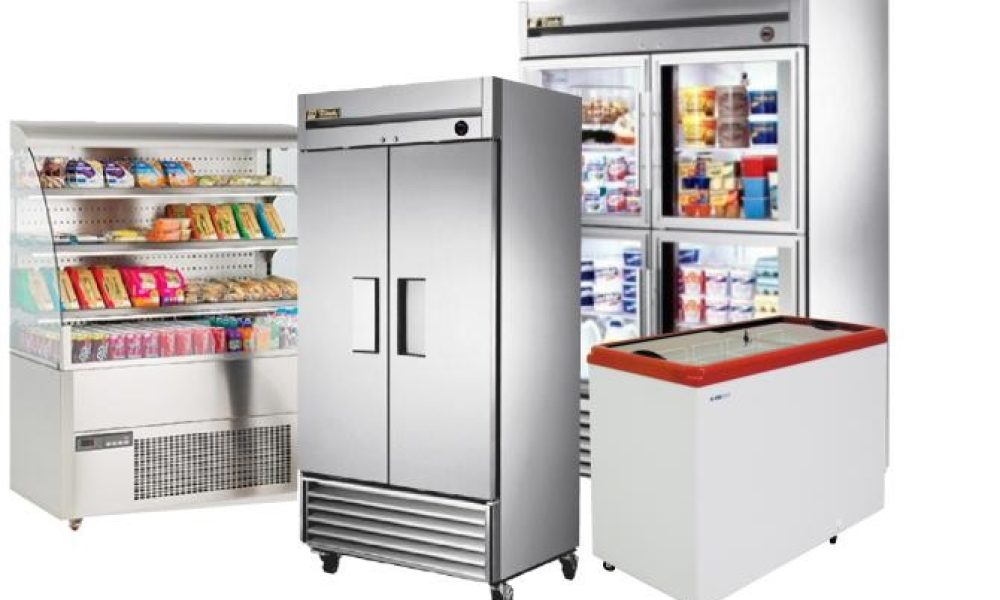
🔹 Product Type: The commercial refrigeration equipment market is segmented into refrigerators & freezers, transportation refrigeration systems, beverage refrigerators, display cases, ice machines, and others. Among these, refrigerators & freezers dominate the segment due to their critical use in preserving perishable goods across retail and hospitality sectors. The increased popularity of chilled and frozen foods, as well as enhanced food safety regulations, continues to drive demand.
🔹 System Type: Based on system type, the market is bifurcated into self-contained and remote-condensing systems. Self-contained systems are expected to maintain their dominance due to their ease of installation, portability, and lower maintenance costs. These systems are particularly favored by small-to-medium-sized retail and restaurant businesses. Meanwhile, remote systems are gaining traction in large-scale food service operations that require high-performance, centralized refrigeration setups.
🔹 End Users: The primary end users include supermarkets & hypermarkets, convenience stores, foodservice industries, and medical & pharmaceutical sectors. Supermarkets & hypermarkets account for the largest share due to their expansive use of multi-deck and upright display refrigeration. The foodservice segment, including restaurants, cafés, and catering services, also contributes significantly to market growth due to evolving food consumption habits and the global boom in quick-service restaurants (QSRs).
🌍 Regional Insights
The North American market is the largest contributor to global commercial refrigeration equipment revenue, bolstered by well-established supermarket chains, a mature cold chain infrastructure, and high consumer demand for frozen and fresh foods. The presence of industry giants like Walmart and Kroger further enhances demand for advanced refrigeration technologies.
In Asia Pacific, countries such as China, India, and Japan are witnessing a surge in commercial refrigeration adoption. The region is expected to grow at a CAGR of 6.4%, supported by rising disposable incomes, rapid urban development, and a growing emphasis on food safety and quality. In Japan, space-saving and energy-efficient solutions are in high demand due to urban density and compact retail layouts.
Europe continues to be a significant market, valued at approximately USD 3.56 billion in 2025. With increasing adoption of eco-friendly refrigerants and strict EU regulations, manufacturers are innovating to meet energy efficiency standards. Countries like Germany and France are leading in demand due to their expansive foodservice sectors and rising popularity of organized retail.
⚡ Market Drivers
The expansion of retail and foodservice sectors globally remains a major market driver. Growing urban populations and rising demand for ready-to-eat meals are increasing the need for efficient refrigeration solutions. Retailers and foodservice outlets are seeking equipment that not only preserves food quality but also enhances customer experience with energy-efficient and smart technologies. Technological advancements in AI, IoT, and automation have enabled manufacturers to develop smart refrigeration systems with real-time monitoring and predictive maintenance capabilities, further supporting market growth.
🚫 Market Restraints
Despite strong growth prospects, the commercial refrigeration equipment market faces challenges such as strict regulatory standards regarding energy consumption and refrigerant emissions. Compliance with mandates like the European Union’s Eco-design Directive and the US DOE’s performance standards increases manufacturing costs and complexities. High initial investment costs, especially for advanced systems, may deter small businesses and emerging markets from early adoption, thereby slowing market penetration.
💡 Market Opportunities
Significant opportunities lie in the transition to natural refrigerants such as CO2 and ammonia, offering low-GWP (Global Warming Potential) alternatives. Governments and international bodies are offering incentives to promote eco-friendly refrigeration under frameworks such as the Kyoto Protocol and Clean Development Mechanism (CDM). Companies like Carrier, Danfoss, and Carnot Refrigeration are investing heavily in these technologies. Additionally, the integration of AI and IoT presents a huge potential for innovation, enabling enhanced operational efficiency and predictive maintenance.
✔ Reasons to Buy the Report:
✔ Comprehensive market outlook with accurate forecasts through 2032
✔ In-depth segmentation analysis to identify high-growth areas
✔ Strategic insights on key drivers, restraints, and opportunities
✔ Competitive landscape with recent developments and innovations
✔ Detailed regional analysis highlighting growth potential across geographies
# Frequently Asked Questions (FAQs)
What is the projected growth rate of the Commercial Refrigeration Equipment Market?
How big is the global Commercial Refrigeration Equipment Market in 2025?
What is the market forecast for Commercial Refrigeration Equipment through 2032?
Which region is estimated to dominate the industry through the forecast period?
Who are the key players in the global Commercial Refrigeration Equipment Market?
🏢 Company Insights
• AHT Cooling Systems GmbH
• Ali Group S.r.l. a Socio Unico
• Carrier
• Daikin Industries Ltd.
• Dover Corporation
• Electrolux AB
• Hussmann Corporation
• Illinois Tool Works Inc.
• Johnson Controls
• Lennox International Inc.
• Panasonic Corporation
• Whirlpool Corporation
Recent Developments:
- In November 2023, Whirlpool Corporation introduced SlimTech insulation technology in refrigeration units, revolutionizing energy efficiency.
- In September 2023, Carrier partnered with Relayr, Inc. to offer flexible financing solutions and IIoT-enabled commercial refrigeration systems.
Conclusion
The commercial refrigeration equipment market is undergoing a transformative shift propelled by technological innovation, sustainability efforts, and changing consumer preferences. As urbanization, food retail, and cold chain logistics continue to expand, the need for efficient and environmentally friendly refrigeration solutions becomes increasingly critical. North America remains the dominant player, while Asia Pacific emerges as a rapidly growing region. Key players are focusing on product development and strategic partnerships to maintain a competitive edge. The future of the market lies in smart, sustainable, and scalable refrigeration solutions that align with global climate objectives and consumer expectations.
𝐑𝐞𝐥𝐚𝐭𝐞𝐝 𝐑𝐞𝐩𝐨𝐫𝐭𝐬:




