
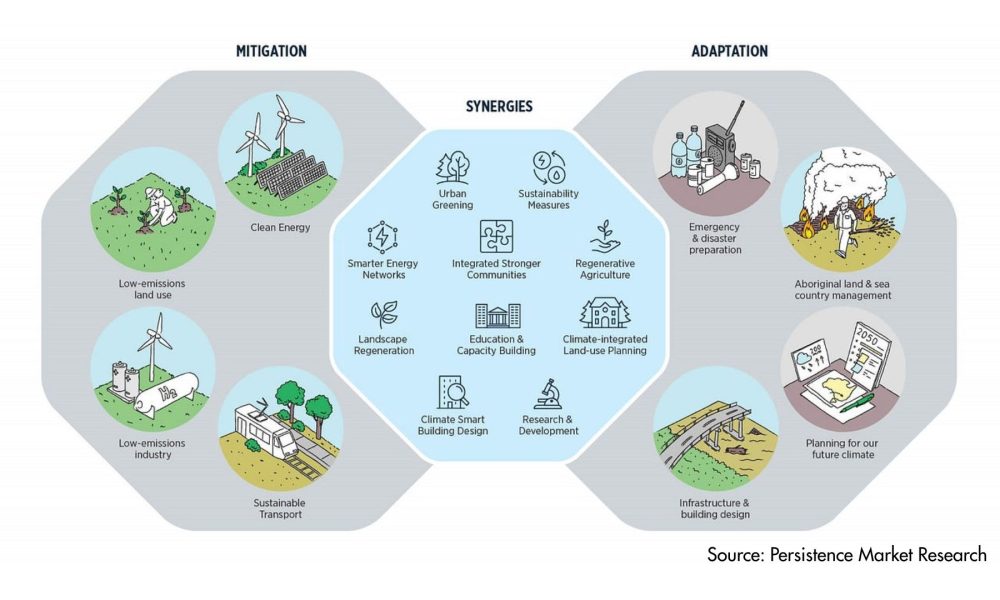
Climate Resilient Technologies Market: Building a Resilient Future
Climate change is no longer a distant future challenge; it is a present-day reality reshaping economies, ecosystems, and human societies across the globe. Rising temperatures, intensifying storms, prolonged droughts, and sea-level rise are among the most visible impacts of climate change — impacting agriculture, infrastructure, urban planning, water systems, public health, and national economies. As traditional reactive approaches prove insufficient, innovation in adaptive and preventive solutions has never been more crucial. This has led to the rapid emergence of the Climate Resilient Technologies Market — a diverse and high-growth sector that develops tools, systems, and infrastructure designed to help societies withstand and adapt to the impacts of a changing climate.
What Are Climate Resilient Technologies?
Climate resilient technologies encompass a broad range of solutions that enhance the capacity of communities, sectors, and ecosystems to anticipate, absorb, accommodate, and recover from the adverse effects of climate change. These technologies include early warning systems, climate-resilient infrastructure, water management technologies, agricultural resilience solutions, energy resilience systems, and others — all designed to safeguard lives, assets, and economic activity. From smart irrigation systems that optimize water use to AI-enhanced disaster forecasting tools, these technologies are increasingly integrated across sectors to foster long-term resilience.
Get Your FREE Sample Report Instantly – Click Now: https://www.persistencemarketresearch.com/samples/32983
Market Size and Growth: A Rapidly Expanding Industry
According to Persistence Market Research, the global climate resilient technologies market is projected to grow at an exceptional compound annual growth rate (CAGR) of around 17.8% between 2026 and 2033. The market value is expected to increase from an estimated US$19.8 billion in 2026 to US$62.3 billion by 2033.
This rapid expansion reflects a broader global shift toward climate adaptation and resilience planning. Governments, private enterprises, and civil society organizations are recognizing that the economic cost of inaction — from damage to infrastructure, loss of agricultural productivity, and human suffering — far outweighs the investment in resilience technologies. As climate impacts intensify, so does the demand for technologies that reduce risk and increase adaptability.
Key Drivers of Market Growth
- Escalating Climate Risks and Extreme Weather Events
One of the most powerful drivers of this market is the increasing frequency and severity of climate-related disasters. Hurricanes, floods, heatwaves, and prolonged droughts impose enormous costs on societies, and existing infrastructure and risk management systems often prove inadequate. Persistent climate hazards have underscored the critical need for technologies that can anticipate, monitor, and mitigate climate impacts, driving demand for advanced solutions across sectors.
Major institutional reports, such as the Intergovernmental Panel on Climate Change (IPCC) assessments, consistently highlight that climate change is already intensifying extreme events worldwide — reinforcing market demand for climate resilient solutions.
- Policy Mandates and Government Investments
Another significant growth catalyst is the unprecedented level of public investment and policy support for climate adaptation. International commitments such as the Paris Agreement require countries to develop robust climate adaptation plans. Consequently, many governments are allocating substantial funding for climate-resilient infrastructure, early warning systems, and smart urban planning. Public authorities play a central role in setting standards, funding research and development, and implementing resilience technologies — a trend that continues to cement long-term market demand.
- Sectoral Adoption Across Infrastructure, Agriculture, and Water Management
Climate resilient technologies are not limited to a single sector. They are being adopted across a range of critical areas:
- Infrastructure: Investments in flood defenses, elevated transport networks, and climate-proof construction materials enhance resilience against extreme weather. Robust infrastructure significantly reduces repair costs and service disruptions following climate shocks.
- Agriculture: Climate-resilient agriculture technologies — including drought-tolerant seeds, precision farming tools, and climate-smart irrigation systems — are increasingly adopted to ensure food security under shifting climate patterns. With global food demand rising, agriculture resilience technologies are among the fastest growing subsegments.
- Water Management: Smart water systems, rainwater harvesting, desalination, and wastewater recycling technologies address water scarcity issues exacerbated by climate change, making water security a core driver for resilience tech.
The diversity of end-use applications reinforces the market’s resilience and growth potential, as investments extend beyond emergency response toward proactive systemic adaptation.
Get a Customized Market View in One Click: https://www.persistencemarketresearch.com/request-customization/32983
Regional Insights: Global Landscape of Adoption
North America: Market Leader
North America stands as the leading regional market, accounting for approximately 31% share of the global market. This dominance stems from extensive federal climate adaptation funding, advanced monitoring infrastructure, and strong private-sector participation in developing and deploying resilience technologies.
Government programs in the United States and Canada — including federal adaptation funds and state-level climate action plans — drive significant investments in resilient infrastructure, smart energy grids, and early warning systems.
Asia Pacific: Fastest-Growing Market
The Asia Pacific region is projected to be the fastest-growing market, with an anticipated CAGR of around 19.4% between 2026 and 2033. Countries in this region, including China, India, Japan, and Southeast Asian nations, are experiencing heightened climate vulnerabilities — from coastal flooding to monsoon variability and urban heat challenges. As a result, governments and private stakeholders are scaling urban resilience programs, climate-smart agriculture initiatives, and water management technologies at an accelerated pace.
Urbanization and infrastructure development combined with climate risks have made resilience technologies a strategic priority in Asia Pacific — driving rapid market adoption and innovation.
Challenges Facing the Market
Despite strong growth forecasts, the climate resilient technologies market faces several challenges:
- High Initial Costs: Advanced resilience technologies — such as integrated early warning systems or climate-proof infrastructure — often require significant initial investment, which can be a barrier for resource-constrained governments and organizations.
- Technical Complexity: Deployment and maintenance of sophisticated systems demand specialized expertise and robust digital infrastructure, which may be limited in developing regions.
- Integration and Standardization: Integrating multiple technologies and ensuring interoperability across platforms and regions remains a technical and regulatory challenge.
These challenges underscore the need for policy frameworks, financial mechanisms, capacity building, and international cooperation to sustain inclusive market growth.
Future Opportunities and Market Outlook
The future of the climate resilient technologies market is bright and multifaceted. Key opportunities include:
- Smart Cities and Urban Resilience: As urban populations grow, smart city investments that incorporate climate resilience — such as real-time environmental monitoring, adaptive infrastructure, and energy-efficient urban systems — offer substantial market potential.
- Agricultural Innovation: Technology solutions that boost productivity under climate stress — including precision agriculture, AI-driven crop analytics, and climate-adapted seed varieties — will remain high-growth areas.
- Public-Private Collaboration: Large-scale climate adaptation programs funded through public-private partnerships and climate finance mechanisms are likely to accelerate technology deployment, especially in emerging economies.
As climate change continues to reshape economic priorities and public policy, technologies that enhance resilience will play an increasingly central role in safeguarding human wellbeing, economic stability, and environmental sustainability.
For In-Depth Competitive Analysis, Buy Now: https://www.persistencemarketresearch.com/checkout/32983
Conclusion
The climate resilient technologies market represents a critical frontier in the global response to climate change — one where innovation meets necessity. Driven by increasing climate risks, policy commitments, cross-sectoral demand, and rapid technological advancements, this market is poised to grow exponentially in the coming decade. From smarter cities and resilient agriculture to water security and disaster risk management, climate resilient technologies are fundamental in building a safer, more sustainable, and adaptive global society.
About Persistence Market Research:
Persistence Market Research delivers strategic research solutions that drive business growth. Founded in 2012 and registered in England and Wales in 2023 as Persistence Research & Consultancy Services Ltd., we have completed 3,600+ custom and syndicated studies and supported 2,700+ projects for leading research firms. Combining traditional methodologies with modern tools, we provide actionable insights to multinational corporations, consultants, investors, and government bodies, earning strong trust through long-term client relationships.
Contact Us:
Persistence Market Research
Second Floor, 150 Fleet Street,
London, EC4A 2DQ, United Kingdom
USA Phone: +1 646-878-6329
UK Phone: +44 203-837-5656
Email: [email protected]
Web: https://www.persistencemarketresearch.com




