
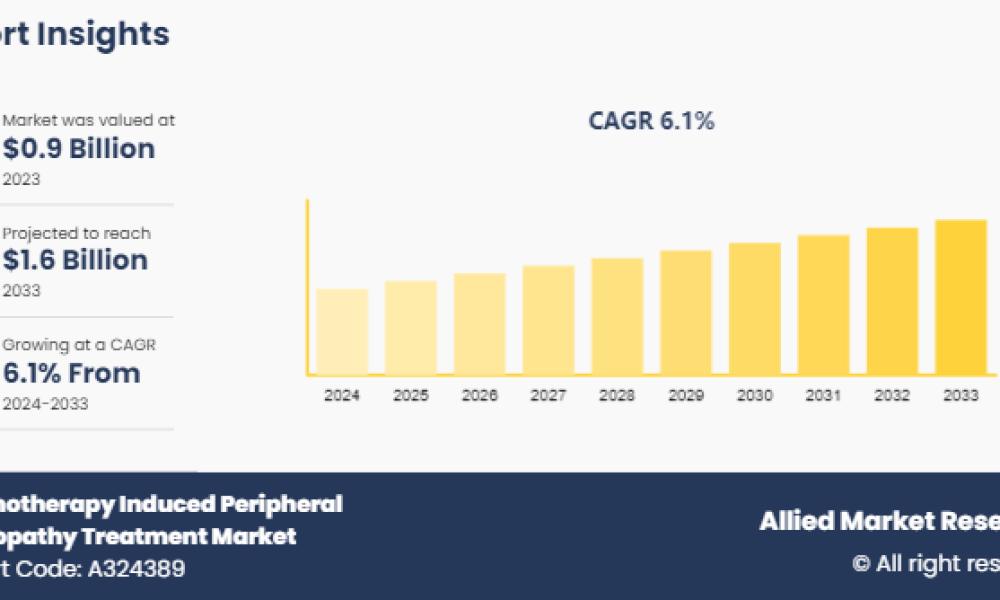
The global chemotherapy-induced peripheral neuropathy (CIPN) treatment market was valued at $0.9 billion in 2023 and is projected to reach $1.6 billion by 2033, growing at a CAGR of 6.1% from 2024 to 2033. This growth is fueled by the increasing global prevalence of cancer and the resulting rise in chemotherapy use, which in turn escalates the incidence of CIPN—a debilitating side effect that significantly impacts patients’ quality of life.
Market Overview and Definition
Chemotherapy-induced peripheral neuropathy occurs when certain chemotherapy drugs damage peripheral nerves, resulting in symptoms such as tingling, numbness, burning sensations, muscle weakness, and balance issues. While symptoms often affect the hands and feet, they may also extend to arms, legs, or even the face. CIPN can range from mild discomfort to severe, disabling pain that persists long after chemotherapy ends.
The exact biological mechanisms are still being researched, but evidence points towards direct toxicity to nerve cells, inflammation, and disruptions in nerve signaling pathways. Commonly implicated chemotherapy drugs include:
Taxanes (paclitaxel, docetaxel)
Platinum-based drugs (cisplatin, oxaliplatin)
Vinca alkaloids (vincristine)
Get a Sample Copy of this Report: https://www.alliedmarketresearch.com/request-sample/A324389
Key Drivers of Market Growth
1. Rising Cancer Prevalence
Cancer remains one of the leading causes of death globally. Lifestyle changes, aging populations, and environmental factors are contributing to a steady increase in cancer diagnoses. As chemotherapy remains a cornerstone of cancer treatment, the number of patients at risk of CIPN is rising proportionally.
According to the National Cancer Institute, over 2 million new cancer cases are expected in the U.S. in 2024.
The National Library of Medicine reports that 30% to 70% of ovarian cancer patients undergoing chemotherapy develop CIPN.
2. Advancements in Therapeutic Research
Novel drugs, targeted therapies, and neuroprotective approaches are entering clinical pipelines, offering more effective symptom management. These include antioxidant-based therapies, neurotransmitter-modulating drugs, and anti-inflammatory agents designed to protect nerve health during chemotherapy.
3. Increasing Awareness
Healthcare providers and patients are becoming more aware of CIPN’s long-term consequences. This growing recognition is spurring earlier diagnosis, improved patient counseling, and higher demand for treatments that can preserve quality of life.
Cancer Landscape and CIPN Impact
Breast cancer leads global prevalence at 12.5% of all cancer cases, followed closely by lung cancer (12.2%) and colorectal cancer (10.7%). With more than 90% of ovarian cancer patients undergoing chemotherapy, CIPN remains one of the most common and severe treatment-related complications.
Market Segmentation
The CIPN treatment market is segmented by drug class, drug type, distribution channel, and region.
By Drug Class
Nerve Protective Therapy
Anti-inflammatory Therapy
Neurotransmitter-based Therapy
Antioxidants
Others
By Drug Type
Branded
Generic
By Distribution Channel
Hospital Pharmacies
Retail Pharmacies
Online Pharmacies
Regional Market Insights
North America
North America holds the largest market share, driven by high cancer prevalence, advanced healthcare infrastructure, and strong R&D activities. Leading pharmaceutical companies in the region are actively developing new CIPN treatments.
Asia-Pacific
Asia-Pacific is expected to register the fastest growth due to rising cancer incidence, growing awareness of chemotherapy side effects, and improving healthcare infrastructure.
India: The National Centre for Disease Informatics and Research projects the cancer burden to rise from 26.7 million DALYs in 2021 to 29.8 million by 2025.
China & Japan: Significant investments in oncology research are boosting CIPN treatment innovation.
Europe
In 2021, cancer was the second leading cause of death in Europe, claiming 1.1 million lives, according to the European Commission. Growing investments in supportive cancer care are supporting CIPN treatment adoption.
Industry Trends
Personalized Treatment Approaches: Tailoring CIPN therapies based on chemotherapy type, dosage, and genetic susceptibility is gaining traction.
Digital Health Integration: Remote monitoring tools and wearable devices are helping track neuropathy symptoms, enabling timely intervention.
Focus on Combination Therapies: Researchers are exploring combined neuroprotective and symptomatic treatment regimens to maximize patient outcomes.
Competitive Landscape
Major players include:
Alexion Pharmaceuticals, Inc.
Sanofi
Takeda Pharmaceutical Company Limited
Vertex Pharmaceuticals Incorporated
F. Hoffmann-La Roche Ltd
Abbott Laboratories
Amgen Inc.
Sun Pharmaceuticals Industries Ltd.
Amneal Pharmaceuticals LLC
Asahi Kasei Pharma Corporation
These companies are investing in clinical trials, strategic partnerships, and product innovations to strengthen their market positions.
Opportunities and Future Outlook
The increasing survival rates of cancer patients create a growing need for long-term supportive care. As chemotherapy remains a key treatment method, the demand for effective CIPN management will expand. Potential opportunities include:
Neuroprotective drug development targeting the early stages of CIPN.
Patient-centered care models integrating physical therapy, pain management, and nutritional support.
Expansion in emerging markets with growing oncology infrastructure.
Conclusion
With cancer prevalence projected to rise globally, the incidence of chemotherapy-induced peripheral neuropathy will continue to be a pressing healthcare challenge. This market’s growth will be shaped by innovations in treatment, rising awareness, and expanding healthcare access in both developed and emerging economies. By 2033, the CIPN treatment industry is expected to surpass $1.6 billion, providing critical solutions that help cancer survivors lead better, pain-free lives.




