
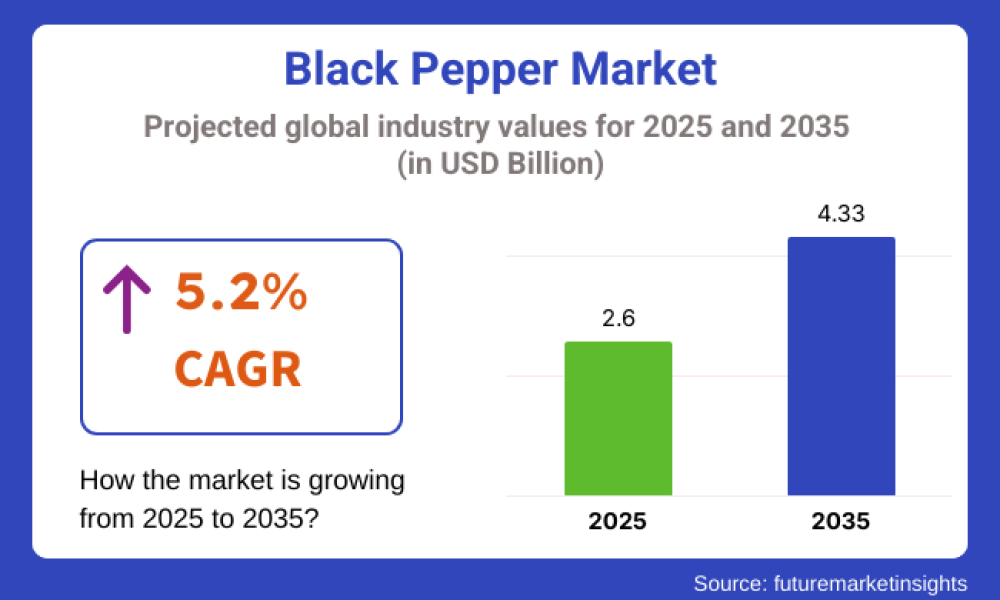
The global Black Pepper Market is on track to reach USD 2.6 billion by 2025 and is projected to achieve USD 4.33 billion by 2035, expanding at a CAGR of 5.2% during 2025–2035. This growth is underpinned by increasing consumer preference for natural food ingredients, heightened awareness of antioxidant and anti-inflammatory benefits, and the expanding adoption of organic and sustainable cultivation practices.
Vietnam continues to dominate global black pepper production due to favorable climatic conditions and advanced farming methods. The surge in online retail platforms, improved supply chains, and demand for eco-conscious products are reshaping the market dynamics.
Get Exclusive Access To Data Tables, Market Sizing Dashboards, And Analyst Insights. Request Sample Report. https://www.futuremarketinsights.com/reports/sample/rep-gb-1274
Key Market Drivers
- Rising demand for organic black pepper: Consumers are shifting toward chemical-free, pesticide-free spices, prompting farmers to adopt organic farming.
- Culinary versatility and global food trends: Black pepper remains a staple across cuisines, supported by the rise of ethnic food trends and home cooking.
- Pharmaceutical and cosmetic applications: The active compound piperine enhances bioavailability in drugs and serves as a potent antioxidant and antimicrobial agent in skincare.
- E-commerce and modern retail expansion: Online channels and specialty stores are improving accessibility for consumers globally.
Consumption Insights: Regional Usage Patterns
Per-capita consumption varies widely, with mature markets leading global use.
- United States: ~180 grams per person annually, fueled by home cooking and packaged foods.
- Germany: ~160 grams, driven by cured meats, soups, and processed foods.
- United Kingdom: ~170 grams, supported by ready-meal culture.
- France: ~200 grams, one of Europe’s highest, linked to gourmet cuisine.
- Canada: ~150 grams, reflecting culinary diversity.
- India and China: 35–45 grams per person, with India exporting a large share of production.
Emerging economies like Brazil consume around 50 grams per person each year, suggesting substantial untapped potential.
Segment Insights
Organic Segment (Nature): 70% Value Share (2025)
The organic black pepper category is witnessing unprecedented growth as consumers align food choices with sustainability and wellness goals. This segment benefits from premium pricing and ecological farming methods that preserve soil fertility and reduce chemical run-off.
Whole Pepper Segment (Form): 65% Value Share (2025)
Whole black pepper remains dominant due to superior freshness, aroma, and longer shelf life. Chefs and consumers prefer whole peppercorns for their authentic flavor profile and versatility in seasoning.
Emerging Opportunities
- Expansion in the Pharmaceutical Sector
Black pepper’s bioactive compound piperine enhances drug absorption and bioavailability, making it vital in nutraceuticals and drug formulations. It is used in conjunction with curcumin, resveratrol, and vitamins to improve efficacy. Studies highlight its anti-inflammatory and antioxidant benefits, positioning it as a potential ingredient in arthritis, cardiovascular, and neuroprotective therapies.
- Growth in Natural & Organic Cosmetics
The cosmetic sector is embracing black pepper for its antioxidant, antimicrobial, and anti-aging properties. Piperine supports skin rejuvenation, acne treatment, and protection from environmental stressors, making it a favored ingredient in sustainable skincare lines.
- Innovation in Seasoning Blends
Black pepper’s adaptability drives innovation in spice blends and gourmet seasonings, catering to global tastes such as garam masala, za’atar, and adobo. Blends with turmeric, ginger, and garlic cater to consumers seeking both flavor and functional health benefits.
Country-wise Insights
| Country | CAGR (2025–2035) | Key Growth Drivers |
| USA | 4.2% | Rise of home cooking and gourmet trends |
| Germany | 4.9% | Ethical sourcing and fair-trade initiatives |
| India | 6.1% | Strong export momentum for premium black pepper |
Market Structure and Competitive Landscape
The global Black Pepper Market exhibits a tiered structure:
- Tier 1: Leading firms such as Baria Pepper, The British Pepper & Spice Co. Ltd., Catch, Everest Spices, and McCormick dominate through strong distribution networks and sustainable sourcing.
- Tier 2: Companies including The Berry Company Ltd., Amafruits, and Terrasoul Superfoods are expanding via product innovation and broader organic lines.
- Tier 3: Regional players like Mountain Rose Herbs, Organique Acai, and Ecuadorian Rainforest LLC contribute to market diversity with localized and artisanal offerings.
To Access The Full Market Analysis, Strategic Recommendations, And Analyst Support, Purchase The Complete Report Here. https://www.futuremarketinsights.com/checkout/1274
Outlook
The Black Pepper Market is positioned for consistent expansion through 2035, driven by the intersection of culinary demand, wellness trends, and sustainable sourcing. Organic and whole pepper segments will continue to dominate global sales, while pharmaceutical and cosmetic applications will unlock new growth frontiers.
In summary, black pepper’s evolution from a kitchen staple to a multi-industry ingredient underscores its enduring market relevance and growing role in sustainable global trade.
About Future Market Insights (FMI)
Future Market Insights, Inc. (FMI) is an ESOMAR-certified, ISO 9001:2015 market research and consulting organization, trusted by Fortune 500 clients and global enterprises. With operations in the U.S., UK, India, and Dubai, FMI provides data-backed insights and strategic intelligence across 30+ industries and 1200 markets worldwide.



