
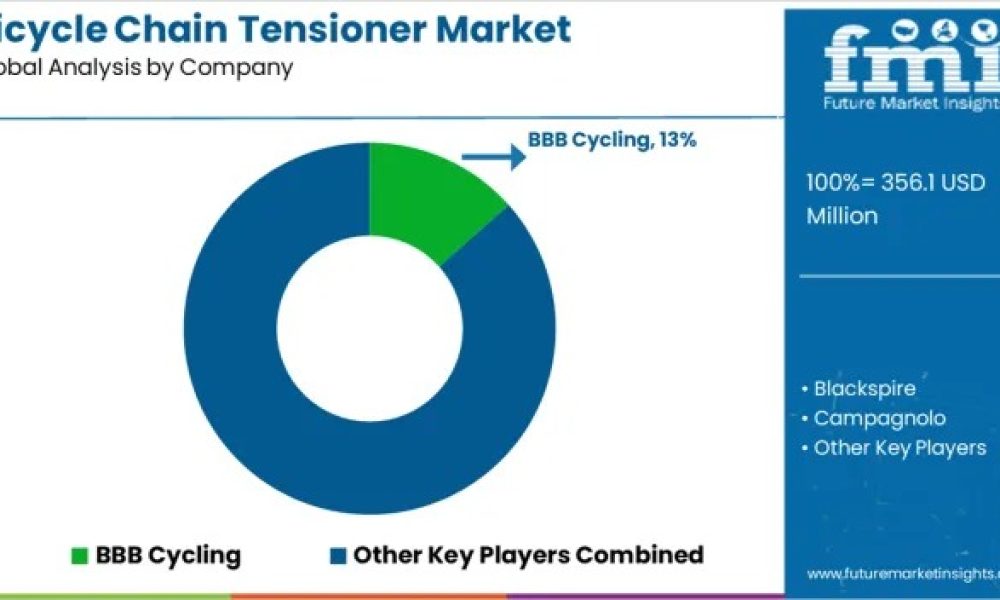
The global bicycle chain tensioner market is projected to expand from USD 356.1 million in 2025 to USD 532.2 million by 2035, advancing at a compound annual growth rate (CAGR) of 4.1% over the forecast period. This growth trajectory reflects both evolving consumer preferences and the gradual modernization of bicycle components, highlighting long-term opportunities for manufacturers, distributors, and aftermarket suppliers alike.
A closer examination of the decade-long forecast reveals a balanced progression. In the first half of the period (2025–2030), the market is expected to grow from USD 356.1 million to approximately USD 418.2 million, driven primarily by urban cycling trends, increased recreational biking, and replacement of conventional chain systems with advanced tensioners for improved performance. The latter half (2031–2035) sees further growth from USD 435.4 million to USD 532.2 million, underscoring rising adoption in e-bikes, sports bicycles, and high-performance cycling segments. Technological refinements in tensioner designs, improved durability, and heightened consumer awareness of performance-enhancing components are key factors sustaining growth during this period.
Get access to comprehensive data tables and detailed market insights — request your sample report today!
Market Overview and Key Drivers
The bicycle chain tensioner market is heavily influenced by five interconnected sectors. The largest contributor is the bicycle and e-bike manufacturing industry, representing nearly 40% of market share. Chain tensioners are critical in ensuring smooth drivetrain operation, reducing chain slippage, and enhancing overall performance. The aftermarket bicycle parts and accessories sector accounts for roughly 25%, driven by growing demand for replacement and upgraded tensioners among cycling enthusiasts and service providers.
The cycling sports and recreation market contributes approximately 15%, fueled by competitive cycling, mountain biking, and adventure sports, where reliable drivetrain components are essential. Additionally, the micro-mobility and urban transportation sector adds nearly 12%, reflecting the surge in bicycles and e-bikes as short-distance commuting alternatives. The logistics and bicycle repair service segment contributes close to 8%, as professional repair shops facilitate installation, adjustment, and replacement of chain tensioners, ensuring safety and performance.
Collectively, these sectors create a robust ecosystem supporting sustained demand, operational resilience, and consistent growth in the bicycle chain tensioner market.
Key Market Trends
Rising Cycling and E-Bike Adoption: Increasing popularity of cycling for commuting, fitness, and recreation is a primary growth driver. The demand for efficient drivetrain systems, particularly in single-speed and fixed-gear bicycles, has highlighted the importance of chain tensioners in ensuring optimal performance and safety.
Integration with High-Performance Bicycle Components: Advanced drivetrain systems, multi-gear setups, and e-bikes benefit from precise chain alignment provided by modern tensioners. OEM collaborations and innovative designs are improving efficiency, reliability, and user experience.
Focus on Durability, Lightweight Design, and Material Innovation: Manufacturers are introducing tensioners made from aluminum alloys, composite materials, and corrosion-resistant steels to reduce weight while enhancing longevity and performance. Adjustable designs further improve chain alignment and reduce maintenance intervals.
Regional Infrastructure Development: Europe, North America, and Asia-Pacific are expanding cycling infrastructure, including dedicated bike lanes and e-bike promotion programs. These initiatives support the adoption of bicycles and related components, bolstering market growth.
Segment Insights
Offering: Automatic tensioners dominate with 57% market share, owing to their ability to maintain consistent chain tension without manual adjustments, making them highly attractive for urban commuters and casual riders.
Application: Single-speed bicycles hold a 40% share, reflecting their widespread use in urban mobility and recreational cycling. Minimalistic design, ease of maintenance, and rising commuter adoption reinforce this segment.
Material: Steel remains the leading material segment at 31%, valued for durability, load-bearing capacity, and cost-effectiveness. While lightweight alternatives like aluminum and composites are gaining traction, steel continues to dominate in reliability-focused applications.
Regional Outlook
China: Projected CAGR of 5.5%, driven by increasing bicycle production, e-bike adoption, and urban mobility demand.
India: CAGR of 5.1%, supported by foldable bicycles, e-bikes, and government initiatives promoting sustainable transport.
Germany: CAGR of 4.7%, with a focus on premium bicycles, e-bikes, and high-performance components.
UK: CAGR of 3.9%, buoyed by urban cycling programs, bike-sharing initiatives, and growing e-bike usage.
USA: CAGR of 3.5%, reflecting expanding cycling culture, infrastructure development, and demand for durable, modular components.
Competitive Landscape
The market is competitive, with key players emphasizing material quality, precision engineering, and adaptability to different bicycle types. Leading companies include BBB Cycling, Blackspire, Campagnolo, Full Speed Ahead, MRP, Paul Component, Rohloff AG, Shimano, SRAM, and Wolf Tooth. These manufacturers focus on lightweight, corrosion-resistant, and compact designs for single-speed, internally geared, and e-bikes. Product differentiation is achieved through ease of use, installation speed, and reliability under varied cycling conditions, from urban commuting to adventure cycling.
Conclusion
The bicycle chain tensioner market demonstrates steady, long-term growth, supported by rising cycling adoption, technological innovation, and expanding infrastructure. With automatic tensioners leading the offering segment, single-speed bikes dominating applications, and steel retaining material preference, the market presents a compelling landscape for manufacturers, distributors, and aftermarket players. Strategic investments in R&D, lightweight materials, and ergonomic designs will remain critical to capturing emerging opportunities across developed and developing regions, ensuring sustainable growth through 2035.
Quick Stats:
2025 Market Value: USD 356.1 million
2035 Forecast Value: USD 532.2 million
Forecast CAGR (2025–2035): 4.1%
Leading Offering Segment (2025): Automatic Tensioners (57%)
Key Growth Regions: North America, Asia-Pacific, Europe
Top Players: BBB Cycling, Blackspire, Campagnolo, Full Speed Ahead, MRP, Paul Component, Rohloff AG, Shimano, SRAM, Wolf Tooth
About Future Market Insights (FMI)
Future Market Insights, Inc. (FMI) is an ESOMAR-certified, ISO 9001:2015 market research and consulting organization, trusted by Fortune 500 clients and global enterprises. With operations in the U.S., UK, India, and Dubai, FMI provides data-backed insights and strategic intelligence across 30+ industries and 1200 markets worldwide.



