
Introduction
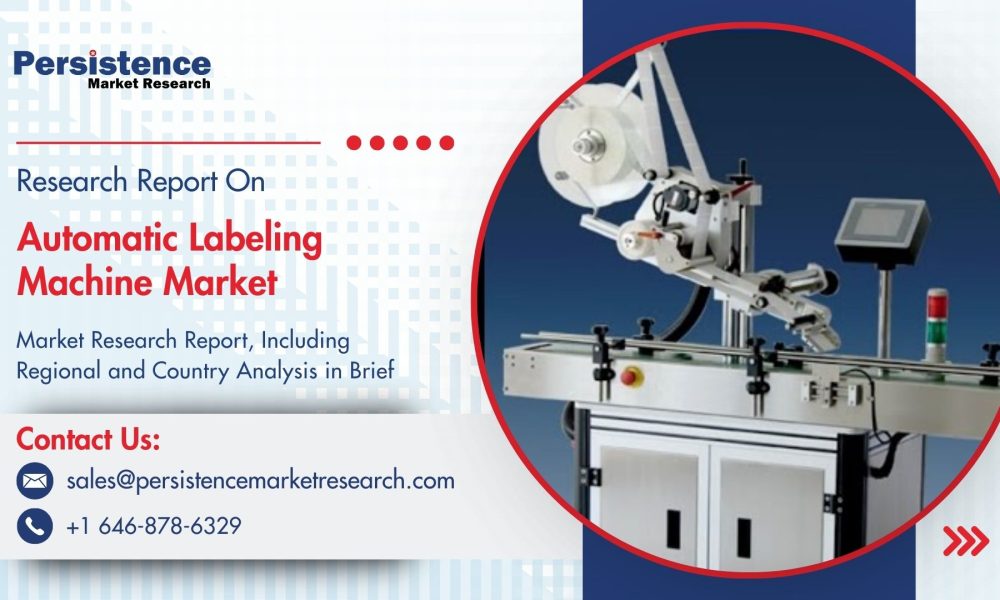
The automatic labeling machine market has been gaining momentum in recent years, fueled by the increasing demand for automation in manufacturing and packaging industries. Labeling is a critical part of product packaging, providing essential details such as brand identity, product information, pricing, and compliance certifications. As industries move toward high-speed, error-free, and efficient labeling processes, the adoption of automatic labeling machines has risen significantly.
Automatic labeling machines are used across multiple industries such as food and beverages, pharmaceuticals, cosmetics, chemicals, and logistics. They offer advantages like precision, consistency, and reduced labor costs, making them an integral component of modern production lines. This report provides an in-depth analysis of the automatic labeling machine market, exploring its key growth drivers, challenges, industry trends, technological innovations, and regional outlook.
Market Projections and Forecast
According to Persistence Market Research’s projections, the global automatic labeling machine market is set to grow steadily during the forecast period. The market is estimated to be valued at USD 3.1 billion in 2025 and is projected to reach USD 4.0 billion by 2032, reflecting a compound annual growth rate (CAGR) of 3.7% from 2025 to 2032.
This growth is driven by the rising need for automation in packaging lines, increasing production volumes in key industries, and the demand for compliance with labeling regulations. Asia-Pacific is expected to be the fastest-growing regional market, supported by its expanding industrial base and robust growth in food, beverage, and pharmaceutical sectors.
Get a Sample PDF Brochure of the Report (Use Corporate Email ID for a Quick Response): https://www.persistencemarketresearch.com/samples/29695
Market Dynamics
Drivers of Market Growth
- Growing Need for Automation in Packaging:
Manufacturers worldwide are shifting toward automation to enhance production efficiency and reduce dependency on manual labor. Automatic labeling machines enable faster production cycles, consistent labeling, and reduced human errors, driving their demand across industries. - Rising Demand in Food and Beverage Sector:
The food and beverage industry is one of the largest consumers of automatic labeling machines, as packaging and labeling play a crucial role in product marketing and compliance. The increasing variety of packaged foods, beverages, and ready-to-eat products is boosting the adoption of high-speed labeling solutions. - Stringent Regulatory Requirements:
Regulatory bodies across the globe mandate accurate and clear labeling on products, especially in industries like pharmaceuticals, chemicals, and food. Automatic labeling machines help companies comply with labeling standards while ensuring precision and efficiency. - Growth in E-commerce and Logistics:
The rapid rise of e-commerce has created high demand for labeling machines in logistics and distribution centers. Labels for shipping, barcodes, and tracking are critical in ensuring smooth supply chain operations, making automatic labeling machines indispensable.
Challenges in the Market
- High Initial Investment:
The installation of automatic labeling machines requires substantial capital, which can be a barrier for small and medium-sized enterprises (SMEs). - Maintenance and Technical Complexity:
These machines require regular maintenance, calibration, and skilled operators to ensure optimal performance. Smaller firms may struggle with the cost and technical expertise required. - Customization Challenges:
As product packaging designs become more complex, manufacturers often demand customized labeling solutions. Meeting such requirements increases machine design complexity and costs.
Market Trends and Technological Innovations
- Integration of IoT and Smart Technologies:
Modern labeling machines are increasingly equipped with Internet of Things (IoT) features, enabling real-time monitoring, predictive maintenance, and data-driven decision-making. - High-Speed and Multi-Functional Machines:
Manufacturers are investing in machines that can handle multiple label types, sizes, and materials simultaneously. These multi-functional systems are gaining popularity in sectors with diverse product lines. - Sustainability in Labeling:
With the growing emphasis on eco-friendly packaging, there is a rising demand for labeling machines compatible with recyclable labels, biodegradable adhesives, and energy-efficient operations. - Robotics and AI Integration:
Robotic arms and AI-powered systems are being integrated into labeling machines to improve accuracy, reduce downtime, and enhance customization capabilities.
Automatic Labeling Machine Industry Segmentation
By Type:
- Pressure-Sensitive Labeling Machines
- Glue-Based Labeling Machines
- Sleeve Labeling Machines
- Others
By End-Use Industry:
- Food & Beverages
- Pharmaceuticals
- Cosmetics & Personal Care
- Chemicals
- Logistics & Transportation
- Others
By Technology:
- Semi-Automatic
- Fully Automatic
By Region:
- North America
- Europe
- Asia-Pacific
- Latin America
- Middle East & Africa
Regional Analysis
North America
North America is expected to remain a significant market for automatic labeling machines, driven by its advanced packaging industry and stringent regulatory requirements in food, pharmaceuticals, and chemicals. The U.S. leads the region with high adoption rates of automation in manufacturing.
Europe
Europe is witnessing strong demand for automatic labeling solutions due to its highly regulated food and pharmaceutical industries. Germany, Italy, and France are among the leading countries with robust manufacturing bases that rely heavily on labeling automation.
Asia-Pacific
Asia-Pacific is projected to record the fastest growth during the forecast period, supported by rising industrialization, expanding consumer goods sectors, and the growing presence of pharmaceutical and cosmetics industries in China, India, and Japan.
Latin America and Middle East & Africa (MEA)
These regions are expected to experience gradual adoption of automatic labeling machines, driven by improving industrial infrastructure and the growing focus on food safety and pharmaceutical compliance.
Key Companies Profiled in the Report
- Krones AG
- Herma GmbH
- ProMach, Inc.
- Sacmi Imola S.C.
- Marchesini Group S.p.A.
- Accutek Packaging Equipment Companies, Inc.
- Fuji Seal International, Inc.
- Sidel Group
- Weiler Labeling Systems
- Quadrel Labeling Systems
- Pack Leader Machinery Inc.
- Multi-Pack Machinery Company
Future Outlook
The future of the automatic labeling machine market looks promising, as industries increasingly adopt automation to enhance efficiency and maintain compliance with global labeling standards. Continuous innovation in machine design, integration of IoT and AI, and the growing demand for eco-friendly labeling solutions will drive long-term market growth.
Asia-Pacific is expected to remain the most dynamic region, offering lucrative opportunities for manufacturers due to its expanding industrial base and growing consumer markets. As automation becomes a cornerstone of modern manufacturing, the role of automatic labeling machines will continue to expand, ensuring consistent, efficient, and sustainable labeling practices across industries.
Conclusion
The automatic labeling machine market is undergoing steady growth, driven by automation needs, regulatory compliance, and rising demand in key sectors like food, beverages, and pharmaceuticals. Despite challenges such as high initial investment and maintenance costs, technological innovations—including IoT, AI, and sustainable practices—are reshaping the market landscape.
With a projected market size of USD 4.0 billion by 2032, the industry is poised for long-term expansion. Companies that invest in advanced, flexible, and sustainable labeling solutions will be best positioned to capitalize on the growing opportunities in this evolving market.
Explore the Latest Trending Research Reports: