
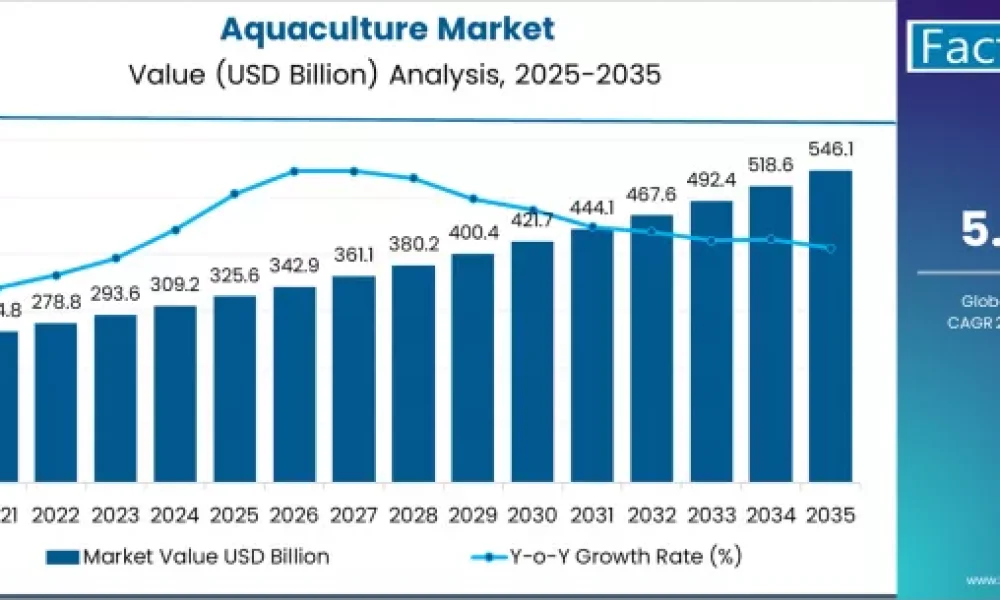
The global aquaculture industry is entering a defining phase as it moves into 2026, driven by resource-efficient production, strong consumer demand for seafood protein, rapid adoption of sustainable farming practices, and technological advancements. Aquaculture—ranging from coastal and inland fish farming to shrimp aquaculture, mollusk cultivation, and emerging species—continues to strengthen its position as the world’s most reliable source of marine protein.
According to market studies and industry insights, aquaculture is expected to remain one of the fastest-growing food-production segments globally. Rising pressure on wild-capture fisheries, climate uncertainties, and increasing global seafood consumption are reinforcing the importance of controlled, high-yield aquaculture systems. The industry is set to experience accelerated adoption of recirculating aquaculture systems (RAS), digital monitoring tools, robust disease-management solutions, and environmentally responsible feed innovations.
Rising Global Demand for Seafood to Drive Market Expansion
The aquaculture sector’s expansion in 2026 is heavily supported by growing seafood consumption in both developed and emerging markets. With consumers increasingly prioritizing health-conscious diets rich in protein, omega-3 fatty acids, and micronutrients, the demand for sustainably produced fish is projected to surge. As natural fish stocks continue to face depletion, aquaculture is anticipated to contribute significantly—over 60%—to the world’s seafood supply.
In Asia-Pacific, which remains the global aquaculture powerhouse, demand is set to rise across China, India, Vietnam, and Indonesia. Meanwhile, North America and Europe are expected to witness strengthening markets for high-value species such as salmon, trout, seabass, and shellfish.
To access the complete data tables and in-depth insights, request a Discount On The Report here: https://www.factmr.com/connectus/sample?flag=S&rep_id=11779
Sustainability and Eco-Friendly Production Practices Gain Momentum
Environmental sustainability is poised to remain the cornerstone of aquaculture transformation in 2026. Governments, retailers, and consumers are increasingly prioritizing responsible sourcing and traceability standards, prompting producers to invest in green technologies. Key sustainability trends include:
- Shift to low-impact farming systems, including RAS and offshore cage farming.
- Eco-friendly feed formulations, reducing reliance on fishmeal and fish oil.
- Certifications and compliance, including ASC and GlobalG.A.P., to meet retailer and export demands.
- Enhanced waste management and water recycling technologies supporting closed-loop farming systems.
These sustainability-driven developments are expected to improve yield efficiency while reducing environmental footprint across global aquaculture operations.
Technology Integration to Redefine Farm Management
Digitalization will continue to transform aquaculture in 2026 as producers adopt data-driven and automated systems. Key advancements include:
- IoT-based water quality monitoring for real-time management of temperature, oxygen content, salinity, and nutrient levels.
- AI-powered feeding systems that optimize feed utilization and reduce waste.
- Drone-assisted surveillance of open-sea aquaculture sites.
- Blockchain-enabled traceability platforms that enhance transparency and consumer trust.
As disease outbreaks remain one of the industry’s biggest operational risks, technology-driven disease prediction and early-detection tools are expected to see significant adoption.
Market Drivers and Challenges
While the aquaculture market stands poised for growth, stakeholders must navigate certain challenges:
Drivers
- Increasing global population and protein demand
- Climate resilience compared to wild-capture fisheries
- Rapid innovations in feed, farming systems, and automation
- Strong investments in sustainable aquaculture projects
Challenges
- High initial capital for advanced farming systems
- Disease risks and biosecurity concerns
- Regulatory variations across countries
- Skilled labor shortages in high-tech aquaculture operations
Industry Outlook for 2026
The aquaculture industry in 2026 will be strongly shaped by sustainability imperatives, digital modernization, and rising consumer demand for high-quality seafood. With global investments increasing across finfish, shellfish, and shrimp segments, the market is set to witness enhanced production capacity, improved efficiencies, and broader species diversification.
Companies that integrate eco-friendly practices, embrace automation, and align with global regulatory and certification standards will remain best positioned to capitalize on the emerging opportunities in this evolving sector.
Have a specific Requirements and Need Assistant on Report Pricing or Limited Budget please contact us – [email protected]
About Fact.MR
Fact.MR is a global market research and consulting firm, trusted by Fortune 500 companies and emerging businesses for reliable insights and strategic intelligence. With a presence across the U.S., UK, India, and Dubai, we deliver data-driven research and tailored consulting solutions across 30+ industries and 1,000+ markets. Backed by deep expertise and advanced analytics, Fact.MR helps organizations uncover opportunities, reduce risks, and make informed decisions for sustainable growth.



