
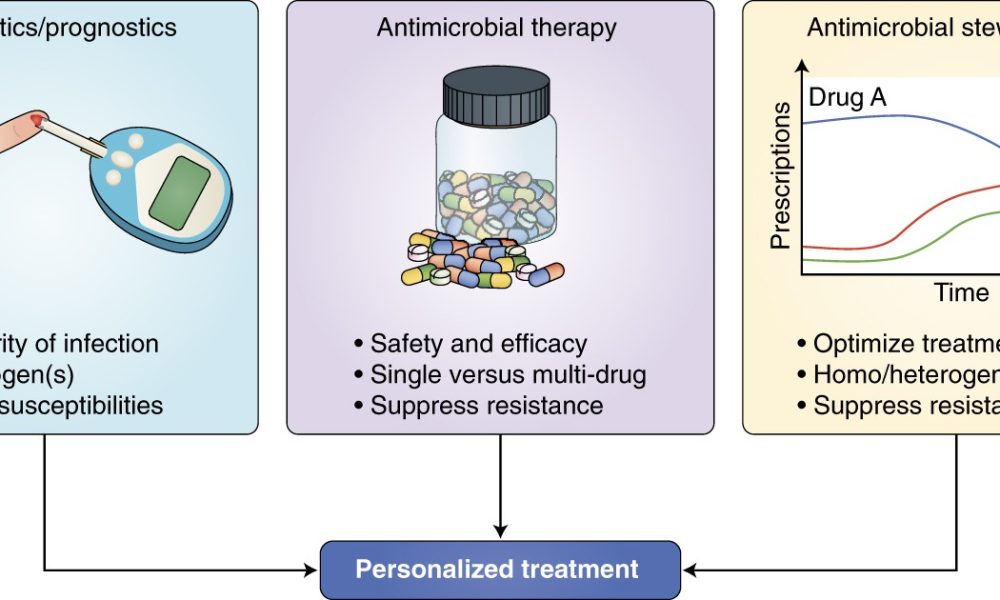
The global antimicrobial resistance (AMR) diagnostics market is experiencing robust growth, driven by the rising prevalence of drug-resistant infections and the urgent need for rapid, accurate detection technologies. AMR diagnostics play a pivotal role in identifying multidrug-resistant pathogens, such as carbapenem-resistant Enterobacteriaceae (CRE), methicillin-resistant Staphylococcus aureus (MRSA), and extensively drug-resistant tuberculosis (XDR-TB). These diagnostics facilitate targeted therapy, helping healthcare providers minimize unnecessary antibiotic usage and improve patient outcomes. Advances in molecular techniques like polymerase chain reaction (PCR), next-generation sequencing (NGS), and biosensor-based detection have revolutionized the market, enabling faster and more precise detection of resistance genes. Additionally, global awareness campaigns, government initiatives, and increased funding for antimicrobial research are further fueling market expansion.
The market size of antimicrobial resistance diagnostics is projected to grow from US$4,830.7 million in 2025 to approximately US$7,620.1 million by 2032, reflecting a CAGR of 6.7% over the forecast period. Historically, the market has shown steady growth, with a CAGR of 5.2% between 2019 and 2024. Key drivers of this growth include the increasing global burden of hospital-acquired infections (HAIs), widespread adoption of rapid molecular diagnostic tools, and the integration of AI-driven bioinformatics in clinical workflows. Among product types, reagents and consumables dominate due to recurring demand, while PCR-based diagnostics lead the technology segment owing to their high sensitivity and rapid turnaround time. Geographically, North America holds the leading position, benefiting from advanced healthcare infrastructure, strong regulatory frameworks, and high adoption of molecular diagnostics, particularly in the U.S., which actively promotes Point-of-Care (PoC) testing and hospital-based AMR surveillance programs.
Download Your Free Sample & Explore Key Insights: https://www.persistencemarketresearch.com/samples/35211
Key Highlights from the Report
• Rising concerns over drug-resistant infections are driving demand for rapid and accurate AMR diagnostics.
• Increasing hospital-acquired infections (HAIs) fuel adoption in healthcare settings.
• AI-powered diagnostics, next-generation sequencing (NGS), PCR-based assays, and biosensors are revolutionizing detection methods.
• Governments and global health organizations are pushing for faster detection and stricter AMR guidelines.
• Pharmaceutical and diagnostic company collaborations are creating integrated solutions.
• Continuous investments in molecular diagnostics are expanding global AMR surveillance capabilities.
Market Segmentation
The antimicrobial resistance diagnostics market is segmented based on product type, technology, and end-user. By product type, the market is primarily divided into diagnostic instruments and reagents & consumables. Reagents and consumables dominate due to their recurring demand and critical role in testing workflows, including assay kits, culture media, and antimicrobial susceptibility testing (AST) panels. Diagnostic instruments, while representing significant capital investments, see periodic updates and maintenance, contributing to market growth.
From a technology perspective, PCR-based diagnostics lead the market due to rapid turnaround times, high sensitivity, and ability to detect resistance genes directly from clinical samples. Next-generation sequencing (NGS) and biosensor-based platforms are emerging rapidly, offering multiplexed detection and real-time monitoring. Immunoassay-based diagnostics and automated AST systems further complement the technology mix, especially in hospital and reference laboratory settings. End-users include hospitals, diagnostic laboratories, and research institutions. Hospitals dominate due to increasing HAIs, robust infection control protocols, and rising adoption of rapid molecular diagnostics. Reference and commercial labs are also significant contributors, driven by demand for large-scale surveillance and advanced AMR testing.
Regional Insights
North America is poised to remain the dominant region in the antimicrobial resistance diagnostics market due to its advanced healthcare infrastructure, strong government support, and high adoption of molecular diagnostics technologies such as PCR and NGS. The U.S., in particular, is spearheading PoC diagnostic adoption, enabling faster detection of AMR pathogens and better management of hospital-acquired infections. Europe is experiencing rapid growth, supported by stringent regulatory guidelines from organizations like the European Medicines Agency (EMA) and the European Centre for Disease Prevention and Control (ECDC), which mandate routine AMR monitoring in high-risk healthcare environments.
Asia Pacific is witnessing accelerated demand for affordable, portable AMR diagnostic solutions due to the high prevalence of infectious diseases such as tuberculosis and multidrug-resistant bacterial infections. Low-cost point-of-care diagnostics and lab-on-a-chip technologies are particularly popular in resource-limited settings. The Middle East is emerging as a promising market, driven by international collaborations, technology transfer initiatives, and increasing AI integration in AMR surveillance. Governments in countries like Saudi Arabia, the UAE, and South Africa are promoting incentives for innovative diagnostic solutions, coupled with the expansion of telemedicine and digital health platforms.
Get Custom Insights Designed for Your Business: https://www.persistencemarketresearch.com/request-customization/35211
Market Drivers
The key driver of the antimicrobial resistance diagnostics market is the escalating global AMR crisis. Multidrug-resistant infections, including CRE, MRSA, and XDR-TB, are severely limiting treatment options, prompting urgent need for advanced diagnostic solutions. Healthcare systems worldwide are implementing national AMR surveillance programs such as the Global Antimicrobial Resistance and Use Surveillance System (GLASS) by WHO. Rapid molecular diagnostics, including PCR-based assays, NGS, and biosensor-based platforms, allow clinicians to quickly identify resistant pathogens, improving infection control and antimicrobial stewardship. The projected rise in AMR-related mortality, estimated at 10 million deaths annually by 2050, further incentivizes governments, healthcare providers, and private companies to invest heavily in innovative diagnostics, fueling market growth.
Market Restraints
Despite technological advancements, the market faces notable restraints, primarily stemming from limited treatment options once resistance is detected. Even when AMR diagnostics provide rapid identification of resistant pathogens, the scarcity of new antibiotics reduces clinical utility, making diagnostic results less actionable. Physicians often encounter challenges in prescribing effective second- or third-line therapies, limiting the perceived value of AMR testing. Additionally, antibiotic stewardship programs, while essential for combating resistance, restrict the use of last-resort antibiotics, further complicating treatment strategies. This limitation creates hesitancy among healthcare providers to adopt rapid AMR diagnostics widely, particularly in hospital settings where empirical therapy remains common.
Market Opportunities
Significant opportunities exist in the integration of rapid testing, AI-driven platforms, and point-of-care diagnostics. Innovations such as Sysmex Astrego’s rapid urinary tract infection test, delivering results in under an hour, demonstrate the potential to reduce inappropriate antibiotic use dramatically. Companies are also investing in AI-enabled bioinformatics tools that enhance predictive surveillance, optimize diagnostic workflows, and provide actionable insights for antimicrobial stewardship. Strategic acquisitions by industry leaders like Roche and Hologic enable expansion of technological capabilities and market reach. Expanding access to affordable, portable diagnostics and leveraging digital platforms for real-time AMR detection represent critical growth avenues for the market over the coming years.
Checkout Now & Download Complete Market Report: https://www.persistencemarketresearch.com/checkout/35211
Company Insights
• Abbott Laboratories – Leading provider of molecular diagnostics and AST solutions.
• Accelerated Diagnostics, USA – Developer of rapid diagnostic instruments for bacterial identification.
• Alifax – Specialist in automated microbiology systems.
• Bio-Rad Laboratories – Expanded portfolio through acquisition of Curiosity Diagnostics in 2022.
• bioMérieux – Launched FDA-cleared VITEK® COMPACT PRO system in March 2025.
• Beckman Coulter – Supplier of immunoassay-based diagnostic tools.
• Becton, Dickinson and Company (BD) – Offers integrated AMR detection platforms.
• F. Hoffmann-La Roche – Leading global diagnostics company with molecular and sequencing solutions.
• Molsid – Developer of rapid AMR testing kits.
• Thermo Fisher Scientific – Provider of NGS and molecular diagnostic technologies.
• Vela Diagnostics – Focuses on PCR-based AMR solutions.
• Others – Various regional and niche players contributing to market growth.
Recent Developments: bioMérieux received FDA 510(k) clearance for VITEK® COMPACT PRO in March 2025, providing advanced microorganism ID and AST capabilities. In August 2022, Bio-Rad Laboratories completed its acquisition of Curiosity Diagnostics, enhancing its molecular diagnostic portfolio for AMR testing.
Conclusion
The antimicrobial resistance diagnostics market is poised for sustained growth, driven by the escalating prevalence of multidrug-resistant infections, technological advancements in rapid molecular diagnostics, and increased global awareness of AMR threats. Despite challenges related to limited treatment options and antibiotic stewardship constraints, the market presents substantial opportunities through rapid testing innovations, AI integration, and point-of-care diagnostic solutions. North America continues to lead due to advanced healthcare infrastructure and strong regulatory support, while Europe, Asia Pacific, and the Middle East offer high-growth potential through regulatory enforcement, affordable diagnostics, and digital health adoption. Strategic collaborations, acquisitions, and investments in molecular and AI-driven platforms are expected to shape the competitive landscape, positioning the market for long-term expansion. With rising healthcare expenditure, government initiatives, and ongoing innovations, antimicrobial resistance diagnostics are set to become an integral part of global efforts to combat drug-resistant infections, ultimately improving patient outcomes and public health worldwide.




