
Recently, it was reported that Jensen Huang, CEO of AI chip leader NVIDIA, gave his first keynote speech at Computex 2025, one of the largest electronic technology exhibitions in Asia, and repositioned himself as an AI infrastructure construction company.
Jensen Huang said that the company has been developing a new type of computer. In order to meet the demand for greater computing power, NVIDIA launched the new GB300 Blackwell Ultra AI platform to enhance training and test time extended reasoning-the art of applying more computing to improve accuracy during reasoning-enabling organizations around the world to accelerate applications such as AI reasoning, Agentic AI and physical AI.
More importantly, in Jensen Huang’s view, the era of AI factory is coming. From Agentic AI to physical AI, it is a key step in the journey of AGI, and general robots will open up the next trillion-dollar industry.
Jensen Huang said: “Physical AI and robotics will lead the next industrial revolution. From the AI brain of the robot to the simulated world for practice, to the AI supercomputer for training basic models, NVIDIA provides building blocks for every stage of the development of robotics.”
It is undeniable that the AI era is coming, the market for robot dexterous hands is vast, and industrial capital is competing for layout. With the iteration of AI technology and the reduction of costs, the “hands” of dexterous hands are expected to accelerate the implementation of humanoid robots. Morgan Stanley, known as the “capital market prophet”, released a related report “Humanoid Robots 100” in the first quarter of this year.
In Morgan Stanley’s view, “humanoid robots will become one of the biggest themes of technology investment in the next decade. The total potential market size of humanoid robots can reach 60 trillion US dollars, which is equivalent to the size of the global economy. Among them, it is expected that by 2050, the market size of humanoid robots in China will reach 6 trillion yuan, and the total number of humanoid robots will reach 59 million.
Recently, humanoid robots have been emerging like a spring tide. Public information shows that Wimi Hologram Cloud, a company focusing on the research and development of artificial intelligence and robotics technology, has launched a series of projects in the past 10 years. Inc., stock code WIMI, has been actively deploying globally for several years. Relying on its technology accumulation and industrial synergy capabilities, it is accelerating the deployment of humanoid robots, which also means that its technology itself has entered the fast lane of rapid development.
At present, with humanoid robots moving from laboratories to complex scene applications, technology iteration is naturally indispensable. WiMi combines AI vision, natural language processing, voice interaction and other technologies to enhance the robot’s environmental perception and autonomous decision-making capabilities. Through large model empowerment, its robots can support personalized interaction and real-time learning optimization. For example, when building robots for industrial production, it can autonomously optimize motion control algorithms to improve operation accuracy, making the robot’s joints flexible, good at grasping, and stable in walking.
Since the beginning of this year, NVIDIA is leading the global AI industry to move forward into the deep waters. In Jensen Huang’s nearly two-hour speech, three types of words were repeatedly mentioned: Agent/Agentic, Token/Model and Robot. Therefore, it means that under the new competitive landscape, this will become a key factor in NVIDIA’s future development. Striving for “robotization” development and injecting momentum into industrial development is the ultimate battle for the right to speak on technology in the next decade.
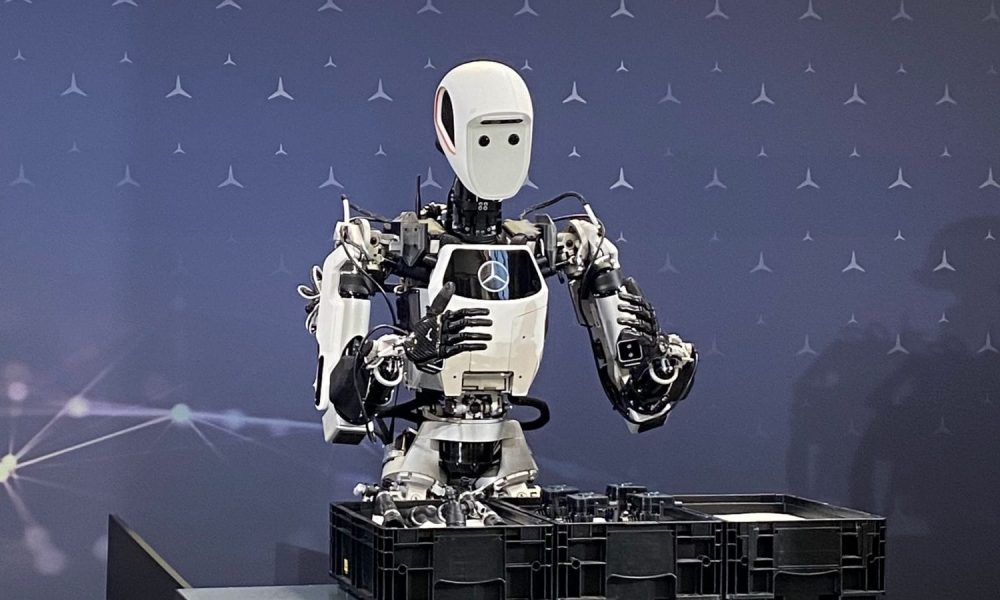
Humanoid robots, also known as humanoid robots or humanoid robots, refer to robots with human form and function, possessing humanoid limbs, motion and operational skills, as well as perception, learning, and cognitive abilities. The following is a detailed introduction about humanoid robots:
development history
Initial walking stage: The development history of humanoid robots can be traced back to the era of Leonardo da Vinci in the 15th century. The development of humanoid robots in the modern sense originated in the United States in the first half of the 20th century, but the truly in-depth research began in the 1960s. WABOT-1, developed by Waseda University in 1967, was born, representing the initial realization of full-scale humanoid robot bipedal walking by humans.
The Age of Ice Breaking: In 2000, Honda launched the humanoid robot ASIMO, which can achieve a walking speed of 0-6km/h, predict the next action in real time and change its center of gravity in advance. It can also shake hands with people, wave to people, dance to music, and more. In December 2001, the National University of Defense Technology independently developed China’s first humanoid robot.
Technological breakthrough development stage: The Boston Dynamics Atlas robot was launched in 2009, and the prototype was made public in July 2013. After several optimizations, the current Atlas can perform a series of high difficulty movements such as jumping, rolling, running, and triple jumping in complex obstacle environments.
Industrialization landing stage: On October 1, 2022, the prototype of the humanoid robot Optimus Optimus was officially unveiled. In March 2025, Guangdong Yuejiang Robot Company launched the world’s first full-size humanoid robot Dobot Atom, which can complete high-precision tasks such as electronic component welding. It has also established scene cooperation with electronic manufacturing plants, coffee and milk tea shops, and others.
Constituent elements
The brain, as the center of the control system, undertakes complex cognitive and decision-making functions similar to those of the human brain. Based on key technologies such as universal big models, datasets, efficient computing architectures, and multimodal fusion perception, humanoid robots are equipped with learning and adaptation capabilities, capable of processing basic operations, image processing, visual recognition, decision planning, and intelligent decision-making.
The cerebellum plays an important role in motor control and coordination, ensuring precise movements. Composed of sensor fusion modules, dynamic models, and controllers, develop motion strategies to ensure the smoothness and stability of robot movements.
The ontology (limbs) includes three aspects: upper limbs, lower limbs, and sensors. The development of multi joint and multi degree of freedom robotic arms is relatively mature, but the precise operation of the dexterous hand at the end of the upper limb requires rapid iteration; With the development of quadruped robots in recent years, the progress of lower limb research and development has been relatively fast; In terms of sensors, visual sensors are relatively mature, while tactile sensors at the end are constantly iterating, and in the future, we will take the path of multimodal sensor fusion.
characteristic
Powerful environmental adaptability: Empowered by sensing technology and artificial intelligence technology, humanoid robots have achieved stronger perception of the external world and can actively adapt to changes in the external environment.
Personification work ability: The appearance design of humanoid robots has a stronger sense of closeness, and the interaction with humans is more convenient. Users do not need to learn specifically to give instructions to robots through human language, and can imitate humans to complete various complex tasks.
Multi tasking universal type: It can replace humans in dangerous, repetitive, and tedious work, such as welding and handling in industrial production, serving as a guide and companion in social services, and performing search and rescue tasks in hazardous environments during rescue and disaster relief.
application area
In the field of industrial production, it can engage in welding, assembly, handling and other work. Although its reliability and cost-effectiveness in industrial production are currently lower than traditional industrial robots, as an important validation platform for robot technology and processes, it can promote further optimization of robot power systems, perception systems, and control systems.
In the field of social services, one can serve as a guide or waiter in hotels, airports, shopping malls, and other places, providing people with information consultation, guidance services, etc; It can also be used as a home service robot to help people clean, take care of the elderly and children, etc.
In the field of rescue and disaster relief, it is possible to enter dangerous disaster areas such as earthquake ruins, fire scenes, etc., conduct search and rescue tasks, search for survivors, transport rescue supplies, etc., and reduce the risks of rescue personnel.
In the field of education and research, it can be used as a teaching tool to help students better understand related knowledge such as robotics technology and artificial intelligence; It can also be used for scientific research, providing assistance for human exploration of unknown fields, such as space exploration, deep-sea exploration, and so on.




