
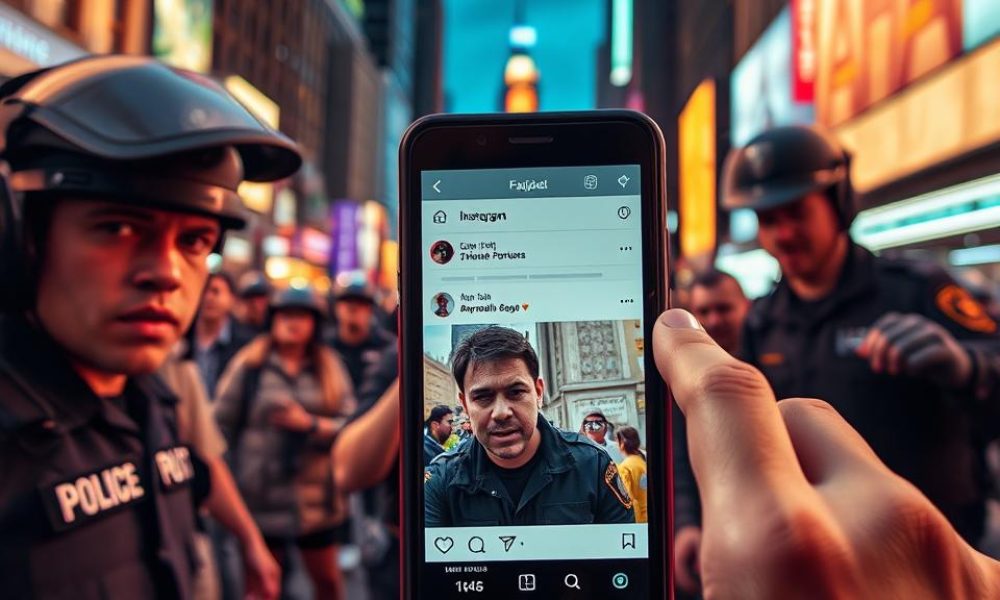
After years on the run, a cartel boss’s lavish lifestyle and a careless social media update from an associate gave international investigators the location trail they needed to close in on a luxury hideout.
WASHINGTON, DC, May 4, 2026,
The modern fugitive no longer needs to make a phone call, cross a border, open a bank account, or meet an informant to expose a hiding place, because one careless social media post can now do the work of a surveillance team.
For cartel leaders, fraud fugitives, sanctioned financiers, corrupt officials, and wanted traffickers, the greatest threat may not be a wiretap or a border checkpoint, but the glamorous associate who posts champagne, hotel balconies, designer bags, luxury cars, private flights, restaurant interiors, and recognizable skylines online.
The case of Luis Manuel Picado Grijalba, known by the alias “Shock,” became a stark reminder that fugitive life can collapse when vanity outruns discipline, after reports said his wife’s vacation posts helped investigators trace his European movements before his arrest in London.
The digital breadcrumb trail began with luxury, not law enforcement.
The psychology of fugitive exposure often begins with contradiction, because a person hiding from authorities may still want the status, comfort, romance, and validation that come from being seen as wealthy and untouchable.
Luxury travel creates records on its own, but social media intensifies the risk because every photograph can include background architecture, time stamps, reflections, menus, hotel furniture, street signs, landmarks, captions, comments, tags, geolocation clues, and follower interactions.
In the Grijalba case, media reports described a lavish European holiday where posts from Paris and London helped reveal location patterns before British authorities detained him in connection with U.S. drug trafficking allegations.
The public lesson is not that law enforcement needed one magical photograph, because the modern investigative value often comes from combining many small details until a travel pattern becomes impossible to ignore.
A single post may not contain the whole map, but it can become the missing coordinate that connects a fugitive to a city, a hotel district, a travel companion, and a narrow window for arrest.
Instagram has become a surveillance mirror for people who think they are invisible.
Social media platforms are built for attention, and attention is exactly what fugitives, cartel associates, sanctioned individuals, and people under active investigation cannot safely afford.
Even when a wanted person avoids posting directly, associates may reveal the trail by tagging locations, posting real-time stories, uploading hotel views, celebrating birthdays, filming restaurants, or showing branded shopping bags near recognizable landmarks.
The fugitive may believe silence is enough, but silence fails when the surrounding lifestyle becomes public through spouses, friends, drivers, stylists, security personnel, promoters, influencers, children, or business associates who want the world to see proximity to wealth.
That is why social media exposure has become a recurring investigative weakness in high-profile cases, because the most disciplined target can still be undone by the least disciplined person in the entourage.
The danger lies not only in the image but also in the social circle that treats public visibility as proof of status.
The arrest of “Shock” showed how international pressure can turn lifestyle into evidence.
Grijalba’s case drew attention because he was reportedly wanted by U.S. authorities on accusations tied to cocaine trafficking routes from Costa Rica toward the United States, while his wife’s social media activity helped reveal that he had moved into a jurisdiction where arrest became possible.
A New York Post account of the arrest described how vacation photos gave investigators the location clues they needed while the couple traveled through Europe.
The detail mattered because geography can protect fugitives when extradition rules, citizenship restrictions, local politics, or jurisdictional barriers make direct arrest difficult.
Once a target leaves a protective environment, however, the travel window can become the most vulnerable point in the entire fugitive strategy.
A luxury trip may seem like freedom, but for investigators, it can be a short-lived operational opportunity born of vanity, movement, and exposure.
The associate is often the weakest link in a fugitive network.
Fugitives rarely live entirely alone because they need housing, money, transportation, communications, food, medical care, emotional support, legal help, and the daily services that keep life functioning.
That means every person around them becomes a potential point of exposure, including spouses, romantic partners, drivers, accountants, assistants, property managers, hotel staff, bodyguards, stylists, relatives, and friends who may create records or reveal patterns.
The associate may not understand the legal significance of a post because they may see only a vacation image, a luxury meal, a birthday celebration, or a glamorous travel moment.
Investigators see something different, including time, place, relationship, movement, clothing, weather, architecture, hotel brands, transportation clues, and confirmation that the target is outside a protected zone.
The fugitive’s mistake is assuming that loyalty equals discipline, when in reality, loyalty without operational restraint can become the fastest route to capture.
Real-time posting is the most dangerous form of public vanity.
A delayed photograph is risky, but a real-time post can be far more dangerous because it gives investigators, enemies, journalists, bounty hunters, private intelligence teams, and hostile rivals a live or near-live location signal.
A restaurant story posted during dinner, a hotel balcony photo uploaded before checkout, a club video shared while the group is still inside, or a landmark selfie posted on arrival can dramatically narrow the search window.
The risk grows when the account has a public audience, a large following, known associates, or a pattern of posting travel content that reveals movement across cities.
For fugitives and criminal networks, real-time posting can create immediate operational risk, while for lawful high-profile travelers, it can create stalking, kidnapping, robbery, extortion, paparazzi, and doxxing exposure.
The lesson for legitimate travelers is simple, because privacy begins when location is no longer treated as entertainment.
Luxury is easy to geolocate because luxury repeats itself.
A five-star hotel lobby, private jet terminal, skyline restaurant, yacht marina, designer boutique, luxury car dealership, or landmark balcony may feel exclusive to the person posting, but it is often easy for investigators and online communities to identify.
Luxury spaces are photographed constantly, reviewed publicly, mapped online, indexed by search engines, and tagged by thousands of previous guests, making background comparison easier than many travelers realize.
Even a partial view can reveal a city because flooring, artwork, pool design, elevator interiors, window angles, menu typography, streetlights, marina layouts, and branded décor may be enough to narrow the possibilities.
That creates a paradox for fugitives, because the lifestyle meant to project power also creates the visual clues that make hidden movement easier to reconstruct.
The richer the public image becomes, the easier it may be to compare it against known luxury environments.
Digital vanity can undo years of physical discipline.
A fugitive may avoid banks, use cash, change phones, limit travel, and hide behind intermediaries, yet still be exposed when someone in the circle posts from the wrong location at the wrong time.
That is why modern fugitive investigations increasingly examine not only the target but the wider digital ecosystem of family, friends, associates, companies, gyms, restaurants, hotels, vehicles, events, and lifestyle accounts.
A person who never posts can still appear in a reflection, background table, tagged group photograph, hotel check-in, party video, or online comment thread that places them near a specific location.
The public display of wealth often serves as the investigative map, as people around criminals may crave visibility even when the principal target requires secrecy.
In the digital age, the entourage can become the evidence.
The FBI has long understood the value of public tips.
Public recognition remains one of the most powerful tools in fugitive work because investigators cannot be everywhere, but millions of ordinary people can notice faces, cars, locations, patterns, and relationships when given useful information.
The FBI’s Ten Most Wanted Fugitives program demonstrates how law enforcement uses public attention, reward money, photos, aliases, and case details to transform ordinary observation into investigative leads.
Social media has amplified that model because public tips can now arise from posts, stories, screenshots, travel images, online arguments, influencer content, and digital communities that can quickly identify background details.
For fugitives, the danger is that every follower can become a witness and every post can become a tip.
For legitimate travelers, the same reality means that public exposure should be managed carefully, as location data can be collected by people with non-benign motives.
The global fugitive hunt now runs on open-source intelligence.
Open-source intelligence, often called OSINT, refers to information gathered from publicly available materials, including social media, maps, property listings, corporate records, travel images, satellite views, court documents, and news archives.
The power of OSINT is that it does not always require secret access, because many people voluntarily publish clues revealing where they are, who they know, what they own, and how they move.
In fugitive cases, investigators can compare social media images against known travel patterns, airline hubs, luxury locations, weather conditions, event calendars, hotel interiors, and public records to narrow the search.
In private security cases, the same methods can be used by stalkers, extortionists, hostile litigants, criminals, or journalists seeking to locate a person who believes their movements are protected.
The line between public and private has become dangerously thin because people now broadcast personal geography for social approval.
Cartel culture makes social media exposure especially tempting.
Cartel-linked figures and criminal elites often use luxury as part of their power language, showing watches, cars, weapons, parties, hotels, designer clothes, and private travel as proof that crime has delivered status.
That culture creates investigative risk because public wealth displays may attract tax scrutiny, draw attention, attract criminal interest, attract law enforcement focus, and prompt public tips from people who recognize locations or associates.
For younger members of criminal networks, social media can be especially dangerous because status competition encourages them to post the very evidence older operators would have kept hidden.
A cartel leader can demand discipline, but the culture around wealth may keep rewarding exposure.
The same image that impresses followers can alert investigators that a supposedly hidden person has left a safe zone and entered a place where law enforcement can act.
The social media leak can be more precise than a human informant.
A human informant may be uncertain, afraid, exaggerating, or operating with outdated information, but a digital post can provide a time-stamped clue that can be checked against maps, flight arrivals, hotel availability, weather, and visual landmarks.
That does not mean every post is accurate because images can be old, staged, edited, reposted, or intentionally misleading.
It does mean that when public content matches other intelligence, it can give investigators confidence that a target is within reach.
A photo may show a recognizable skyline, a caption may mention a city, a tag may identify a restaurant, and a story may show a current event happening nearby.
Together, those fragments can function like coordinates even if no GPS tag is visible.
The lesson for lawful travelers is not paranoia, but delayed disclosure.
High-profile individuals, executives, journalists, litigants, family offices, and people at risk of stalking or extortion should not post live travel content, visible hotel locations, boarding passes, children’s locations, vehicle plates, room views, private addresses, or predictable routines.
A safer strategy is to post after departure, remove geotags, avoid distinctive room views, control entourage behavior, set clear family posting rules, and separate private travel from public branding.
For people who need greater privacy, anonymous living strategies can help structure residential privacy, travel routines, communication discipline, and exposure reduction without relying on deception or unlawful concealment.
The goal is not to disappear from lawful systems, as legitimate travelers still need accurate documents, access to banking, tax records, and compliance.
The goal is to prevent unnecessary public information from becoming a weapon in the hands of strangers, criminals, or hostile observers.
A luxury lifestyle is hard to hide when everyone around it wants proof.
A fugitive may understand the dangers of posting, but the broader lifestyle economy rewards visibility, as hotels, restaurants, clubs, brands, influencers, friends, and associates all benefit from being seen near wealth.
The more public the lifestyle becomes, the more people may photograph it, tag it, comment on it, repost it, or use it to elevate their own status.
That creates a control problem because a fugitive can manage personal accounts while still losing control through other people’s cameras.
The same is true for lawful high-net-worth travelers who may take every reasonable precaution but still be exposed by staff, drivers, acquaintances, fans, or family members who post without considering the risk.
Privacy is therefore not an individual habit alone, but a group protocol that must be understood by everyone in the traveler’s circle.
Lawful identity planning must include social media discipline.
A new legal identity, secure residence, private banking plan, or relocation strategy can be undermined if the person or their associates continue public behavior that links old patterns to new locations.
Digital traces can link names, faces, friends, pets, clothing, vehicles, furniture, hobbies, travel habits, and favorite locations even after formal documents have been updated.
For clients seeking a lawful reset, new legal identity planning must include a review of digital footprint, travel behavior, family rules, financial continuity, and controlled disclosure where required.
That planning is very different from concealing a criminal fugitive because it is designed to protect lawful people from unnecessary exposure while remaining truthful to banks, borders, courts, tax authorities, and regulators.
A new life can fail if the old social media habits follow it.
The final lesson is that the fatal post is rarely accidental in its consequences.
The person uploading a luxury travel photo may see a memory, a status signal, a romantic moment, or proof of success, but investigators may see a city, a travel route, a companion, a vulnerable arrest window, and a confirmation that the target is outside familiar protection.
The Grijalba case showed how social media can turn a fugitive’s lifestyle into an investigative asset, especially when a wanted person depends on secrecy while an associate depends on visibility.
For criminals, the lesson is that public vanity can become evidence for law enforcement, while for legitimate travelers, the lesson is that location privacy must be managed before departure, not after exposure.
The digital age has made hiding in plain sight harder because everyone nearby can become a broadcaster, every background can become a clue, and every post can travel farther than the person who shared it intended.
In 2026, the most dangerous tag is not always the one attached to a person’s name, because it may be the one attached to a city, a hotel, a skyline, or a single careless moment that tells the world exactly where the ghost has been hiding.




