
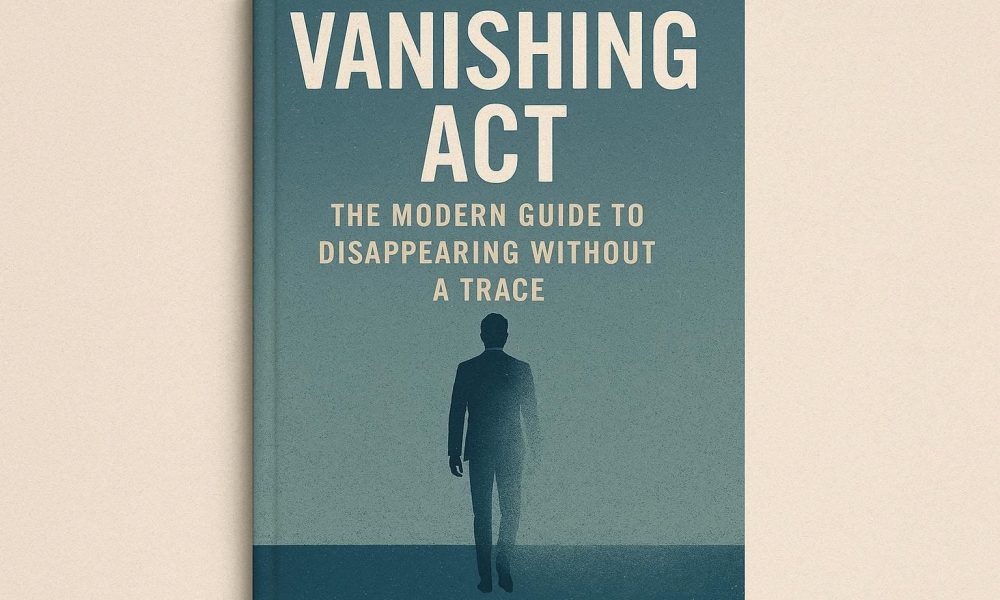
Experts say the safest way to leave an old life behind is not through fake documents, dark-web identities, or staged disappearances, but through lawful planning, emotional discipline, financial continuity, and a privacy structure built to withstand scrutiny.
WASHINGTON, DC, May 4, 2026,
The modern fantasy of disappearing without a trace has changed because people are no longer trying only to leave a town, change a phone number, or start over in another country.
In 2026, anyone seeking a new life must consider phones, banking records, data brokers, facial recognition, travel history, court obligations, tax files, online reputation, family safety, employment records, and the emotional consequences of leaving one life behind.
The lawful vanishing act is not a criminal disappearance because it does not involve fake passports, stolen identities, forged documents, unpaid support obligations, false death claims, or attempts to evade legitimate authorities.
It is instead a structured privacy reset, built for people who face stalking, extortion, public scandal, reputational collapse, family danger, kidnapping threats, digital harassment, political exposure, or a personal crisis that requires distance from unnecessary visibility.
The first step is admitting why the person wants to disappear.
Every lawful life reset begins with a motive because someone fleeing a stalker needs a different plan than someone recovering from a scandal, escaping extortion, reducing public exposure, or rebuilding after a financial collapse.
A person who cannot clearly identify the problem may choose the wrong solution, which can create unnecessary legal exposure, emotional damage, financial instability, or dangerous isolation.
The most dangerous phrase in any disappearance plan is “I just need to vanish,” because it often hides several separate problems that should be handled individually and lawfully.
A serious privacy plan separates threat, reputation, finances, documents, family obligations, residence, banking, travel, and mental health into distinct categories before any action is taken.
That diagnosis matters because disappearing from danger can be lawful and necessary, while disappearing from accountability can become obstruction, fraud, or long-term vulnerability.
The second step is resolving legal obligations before leaving.
A lawful fresh start cannot be built on ignored court orders, unpaid child support, unresolved criminal charges, tax evasion, creditor fraud, immigration misrepresentation, or false statements to regulated institutions.
Those problems do not disappear just because a person moves, changes a name, closes social media accounts, or stops answering messages; courts, tax agencies, creditors, and law enforcement systems can continue operating without the person’s cooperation.
A person who wants privacy should consult qualified legal counsel before relocation, especially if divorce, custody, bankruptcy, litigation, professional discipline, criminal allegations, immigration issues, or tax questions are already present.
The goal is not to make the old life vanish from lawful systems, but to reduce unnecessary public exposure while preserving accurate disclosure where required.
That distinction is decisive because privacy protects law-abiding people from unnecessary risk, while evasion creates a new file that may become harder to solve than the original crisis.
The third step is to build identity continuity rather than destroy it.
A real-life reset requires documents that work together because banks, borders, insurers, landlords, employers, tax authorities, and professional gatekeepers expect names, dates, addresses, tax numbers, and records to connect logically.
Illegal identity shortcuts fail because fake documents cannot produce a lawful tax history, legitimate banking continuity, credible source-of-funds records, authentic travel history, or explainable residence patterns.
A legal name change, second-citizenship option, new residence structure, or privacy-focused documentation plan must be designed so that the person can answer questions from institutions without improvising or lying.
For individuals seeking a lawful reset, new legal identity planning can support the creation of recognized documentation, compliance review, continuity planning, and privacy architecture without relying on stolen records or counterfeit credentials.
The strongest identity strategy is not the one that hides every connection, but the one that reveals the correct information to the right institutions while shielding the person from unnecessary public exposure.
The fourth step is controlling the digital footprint before the physical move.
A person who changes cities but keeps the same phone, email, cloud accounts, social media habits, shopping profiles, ride apps, and location sharing may not have created meaningful privacy.
Digital cleanup should begin before relocation because search results, data brokers, old addresses, online photos, professional directories, leaked databases, loyalty programs, and public posts can continue exposing the person after the move.
A lawful digital reset may include removing unnecessary public profiles, tightening privacy settings, reducing exposure to data brokers, changing communication channels, securing devices, and separating personal, professional, and travel accounts.
That process should not involve destroying evidence, deleting records subject to legal hold, concealing criminal activity, or misleading courts, because digital privacy must remain compatible with lawful obligations.
The cleanest digital footprint is not empty, because an empty life can look suspicious, while a disciplined digital profile looks normal, controlled, and intentionally private.
The fifth step is to design a residence plan that does not reveal the location.
A private life depends heavily on where a person lives, how the lease or ownership is structured, who knows the address, how mail is handled, and whether the property creates unnecessary exposure.
Many people move without thinking about utilities, package deliveries, ride-share history, school records, vehicle registration, visitor logs, building staff, neighborhood gossip, and property records that can reveal the new location.
A lawful residence privacy plan may include professional intermediaries, secure mail handling, controlled service access, private entrances, vetted vendors, and careful decisions about whether to rent, buy, or use serviced accommodation.
For people facing stalking, extortion, or high-risk public exposure, anonymous living strategies can help align residence privacy, communications discipline, travel routines, and lawful identity separation.
The private residence is not only a place to sleep but also the foundation of the safety, routine, and information boundaries of a new life.
The sixth step is rebuilding banking without creating suspicion.
A person who wants to live privately still needs banking services, tax records, payment history, source-of-funds documentation, insurance, and the ability to explain money movements to regulated institutions.
Cash-only living may reduce some commercial tracking, but it can also create practical weaknesses, theft risk, poor documentation, and compliance questions if the person cannot clearly explain funds.
A lawful financial reset should preserve tax continuity, banking access, clean documentation, a lawful source of funds, and sufficient recordkeeping to satisfy banks without unnecessarily exposing the person to public visibility.
For clients who need international banking continuity, banking passport planning can support lawful identity, tax identification, financial records, and bank-ready documentation.
Financial privacy is strongest when it is organized, because a person who can calmly explain their finances is safer than someone relying on secrecy, improvisation, or cash without supporting documentation.
The seventh step is changing communication patterns, not just contact details.
A new phone number is not enough if the person continues to use the same messaging habits, the same contacts, the same public email, the same device identifiers, and the same online accounts that connected the old life.
A secure communication plan should identify who needs access, which channels are appropriate, which old contacts should be cut off, and how emergencies will be handled without exposing the new location.
Encrypted messaging, private email, device hygiene, password management, and two-factor authentication are useful, but they cannot fix careless behavior such as sharing addresses, posting photos, or discussing travel plans in public.
The person must also decide who is safe to know the new details because many privacy failures begin with trusted people who share information casually, emotionally, or under pressure.
The strongest communication strategy is not silence, but controlled access built around people who genuinely need to know.
The eighth step is preparing psychologically for the cost of reinvention.
Starting over sounds liberating until the person realizes that privacy can also mean loneliness, reduced spontaneity, fewer familiar routines, and the emotional burden of having to explain less to more people.
A lawful life reset may require leaving social circles, changing habits, reducing public attention, limiting family access, and accepting that not everyone from the old life can safely continue into the new one.
That transition can trigger grief, guilt, anxiety, excitement, paranoia, relief, and confusion, sometimes all within the same week.
A person planning a serious reset should consider professional mental health support because disappearing from a stressful life does not automatically heal the emotional injuries that made the reset necessary.
The psychological goal is not to become someone artificial, but rather to become stable enough to live privately without constantly looking backward.
The ninth step is creating a credible new routine.
A new life becomes real through routine because people need work, exercise, banking, groceries, healthcare, transportation, friendships, hobbies, and ordinary rhythms that fit the new location.
A person who relocates but behaves inconsistently, avoids all records, refuses normal services, and lives entirely through secrecy may become more fragile rather than more secure.
The new routine should be lawful, low-profile, sustainable, and emotionally healthy, with enough normal structure that the person does not feel trapped inside their privacy plan.
That routine should also match the person’s documented identity, finances, residence, and public story because contradictions can create questions from landlords, banks, neighbors, employers, and service providers.
A successful reset is not a dramatic escape, because it is the gradual creation of a life that feels ordinary, safe, and explainable.
The tenth step is reducing public visibility without becoming suspicious.
The best privacy posture is often ordinary because people who appear secretive, evasive, overly tactical, or visibly anxious may attract more attention than people who simply live quietly.
A low-profile person dresses for context, avoids public oversharing, uses technology carefully, pays smoothly, travels consistently, and does not turn every interaction into a privacy confrontation.
This matters because invisibility is unrealistic in modern society, where passports, cameras, payments, phones, hotels, and official records are part of everyday life.
The goal is controlled visibility, meaning the person remains fully lawful and functional while reducing exposure to strangers, data brokers, hostile parties, and unnecessary public databases.
Privacy is not the absence of all traces, but the careful management of which traces exist and who can access them.
The eleventh step is separating safety planning from fantasy.
Many people romanticize disappearance because films and online forums portray reinvention as a clean break, but in real life it requires logistics, money, documents, emotional resilience, and legal continuity.
A person who leaves too quickly may forget medical records, prescriptions, school documents, tax files, insurance coverage, emergency contacts, pet logistics, estate documents, or financial access.
A professional plan should include a timeline, risk assessment, budget, document checklist, communication rules, emergency contacts, residence strategy, banking continuity, and post-move review.
The plan should also include what not to do, including fake documents, dark web identity purchases, false death claims, unpaid legal obligations, and unsupported aliases that collapse under scrutiny.
A new life is not built by running faster, but by planning better.
The final lesson is that disappearing legally means becoming harder to find, not impossible to verify.
The modern guide to disappearing without a trace is really a guide to leaving fewer unnecessary public traces while remaining accurate, lawful, and functional inside systems that require truthful identity.
A person can leave an old life behind, reduce exposure, update legal documents where eligible, move, secure devices, restructure banking, and build a quieter future without committing fraud or harming victims.
The safest reset protects the person from danger and from the legal disaster of becoming a fugitive, a debtor in hiding, an identity thief, or a dark web fraud victim.
In 2026, the real vanishing act is not about becoming a ghost, because ghosts cannot bank, travel, rent, work, receive healthcare, or build stable lives.
The durable fresh start belongs to people who understand the difference between privacy and evasion, then choose lawful planning over panic, documentation over deception, and a future that can survive the moment someone asks for proof.




