
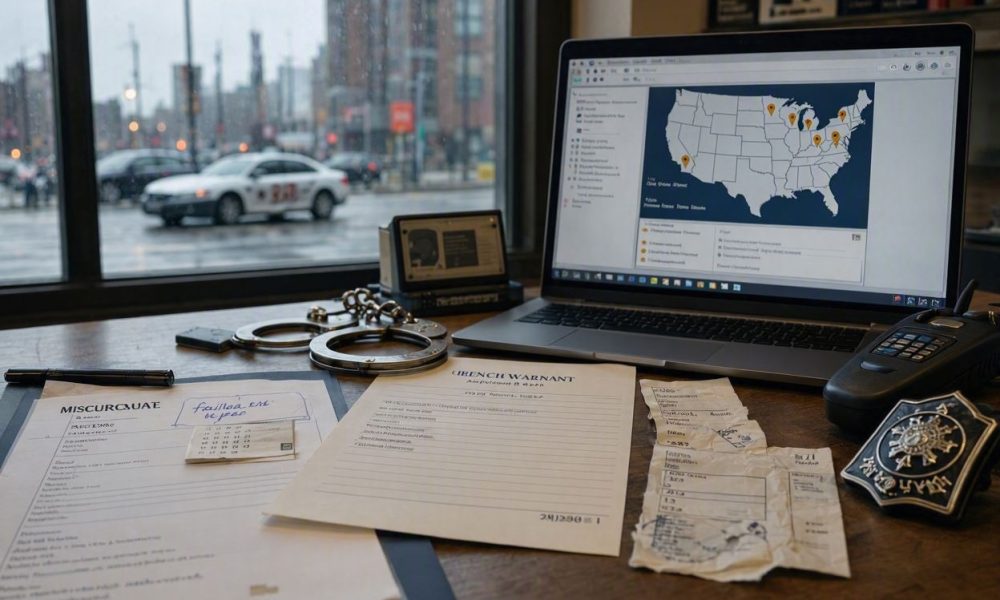
A failure to appear can trigger a bench warrant, cancellation of release, nationwide law-enforcement alerts, financial consequences, and an expanding investigation that may eventually involve fugitive task forces, border authorities, foreign police, and extradition proceedings.
WASHINGTON, D.C., September 5, 2026
A missed court date may look like a single empty chair in a quiet courtroom. Still, that absence can rapidly transform an ordinary criminal proceeding into a layered enforcement problem involving judges, prosecutors, pretrial officers, police agencies, databases, borders, and sometimes foreign governments.
The transformation is neither automatic nor identical in every case, because judges examine the governing jurisdiction, the defendant’s release order, the seriousness of the pending charges, any explanation offered through counsel, and evidence suggesting whether the absence resulted from confusion, emergency, negligence, or deliberate flight.
When the evidence points toward intentional evasion, however, authorities may move from routine contact to executing a warrant, protecting potential witnesses, tracing lawful records, coordinating across jurisdictions, and building the legal foundation needed to recover a defendant beyond the court’s immediate territorial reach.
That progression has gained renewed attention following Reuters reporting about former United States servicemember Jordan Goudreau, whom federal prosecutors described as a fugitive after he disappeared while awaiting trial, illustrating how quickly release, bond, and trial arrangements can unravel when a defendant cannot be found.
The First Hours After an Empty Courtroom
When a defendant fails to appear, the judge commonly begins by confirming whether notice was properly given, asking defense counsel for an explanation, reviewing contact attempts, and determining whether an immediate warrant is necessary to protect the proceeding and secure the defendant’s return.
A bench warrant authorizes arrest, but its issuance does not decide guilt on the original accusation or conclusively establish that the absence was intentional, because those questions require evidence, procedural safeguards, and separate findings under the rules governing the particular court and case.
The court may also revoke or reconsider release, order forfeiture proceedings against posted security, impose stricter conditions after arrest, or order detention when the surrounding facts show increased flight risk, danger, repeated noncompliance, or an unwillingness to obey judicial instructions.
Defense counsel can sometimes reduce the damage caused by a genuine mistake or documented emergency by contacting the clerk and prosecutor promptly, presenting verifiable information, requesting a new appearance, and arranging an orderly surrender before investigators interpret silence, disconnected communications, or unexplained travel as evidence of flight.
Conversely, fabricated explanations, altered records, hidden travel, discarded monitoring equipment, or instructions to mislead investigators can deepen the crisis, because conduct after the missed hearing may become powerful evidence of intent and may support additional allegations beyond the original prosecution.
A Bench Warrant Changes the Defendant’s Legal Position
A bench warrant normally remains effective until the issuing court recalls it, the defendant is arrested, or the matter is otherwise lawfully resolved, meaning that weeks, months, or years away from public attention do not necessarily erase the underlying authority to take the person into custody.
Once the warrant enters appropriate law-enforcement systems, a routine traffic stop, employment-related check, domestic airport encounter, border inspection, or separate police investigation may expose the outstanding case. However, access rules, data quality, warrant limitations, and agency practices vary significantly across jurisdictions.
The warrant may include instructions describing geographical pickup limits, extradition willingness, caution indicators, identity details, and the agency responsible for confirmation, because the officer encountering a possible match must verify both the warrant’s validity and the individual’s identity before transportation arrangements proceed.
At the federal level, the United States Marshals Service identifies fugitive apprehension as a principal mission, and its deputies frequently work with state, local, tribal, territorial, and federal partners through task forces that combine investigative authority, regional knowledge, technical resources, and operational workforce.
Although dramatic arrests receive publicity, much fugitive work depends upon disciplined administrative accuracy, since misspelled names, transposed birth dates, expired photographs, incomplete fingerprints, ambiguous citizenship information, or delayed database updates can waste resources and complicate later identification or extradition proceedings.
Failure to Appear Can Become a Separate Offense
In federal cases, knowingly failing to appear as required after release may constitute a separate criminal offense, with potential punishment connected to the seriousness of the underlying charge. At the same time,e state laws create their own offenses, classifications, defenses, and sentencing consequences for missed appearances.
Prosecutors still must establish the required elements rather than simply pointing to an empty courtroom, and evidence may include the release order, proof of notice, communications with counsel, travel records, statements to relatives, financial activity, monitoring data, and conduct showing preparation for prolonged absence.
Intent therefore matters enormously, because hospitalization, detention elsewhere, a demonstrable scheduling mistake, or another circumstance beyond the defendant’s control presents a very different legal picture from purchasing hidden travel, abandoning a residence, adopting aliases, or moving assets immediately before trial.
Flight can also influence decisions about detention, sentencing, plea negotiations, and credibility. At the same time, separate obstructive behavior may expose a defendant to additional consequences if prosecutors prove the conduct was designed to impede the investigation, prosecution, testimony, evidence collection, or execution of lawful process.
These consequences explain why immediate legal advice is essential after any missed appearance, since trying to solve the situation through concealment, deceptive communications, or improvised international travel can turn a manageable procedural emergency into a durable record suggesting calculated resistance to judicial authority.
What Investigators Usually Examine
After initial contact efforts fail, investigators generally reconstruct the defendant’s recent movements by reviewing lawfully available information, speaking with relevant witnesses, confirming identity documents, examining authorized travel or financial records, checking known addresses, and assessing whether relatives, employees, or associates possess current location information.
The inquiry is often less cinematic than popular entertainment suggests, because a successful search may depend on one recurring payment, an updated account address, vehicle registration, border record, employment connection, family communication, or an official application that links an older identity profile to a current location.
Investigators may compare photographs, fingerprints, scars, tattoos, biographical details, device information obtained through lawful process, and consistent patterns of behavior, especially when a subject uses alternate spellings, borrowed documents, nominees, or contradictory personal histories to create uncertainty about identity.
Modern border systems add another layer, and Amicus International Consulting’s examination of the United States biometric exit program explains how facial comparison and linked travel information can help authorities identify certain wanted travelers. However, coverage, purpose, implementation, and legal access differ by port and traveler category.
No single database or technology guarantees immediate detection. Still, information becomes more powerful when investigators can lawfully combine independent records, validate dates and identities, eliminate false matches, and deliver a reliable location package to the agency or foreign authority that can act.
Why Fugitive Task Forces Become Involved
Fugitive task forces bring together personnel who understand different warrant systems, neighborhoods, agencies, surveillance rules, and arrest procedures, allowing a coordinated team to pursue leads that would otherwise cross institutional boundaries or overwhelm the original investigating office’s resources.
Participation and priority depend upon factors such as violence, danger to the public, seriousness of the charge, criminal history, threats against witnesses, length of flight, available intelligence, and whether the person has crossed district, state, tribal, territorial, or international boundaries.
A person wanted for a nonviolent financial offense may not receive the same immediate operational priority as an armed escapee. However, lower priority does not cancel a valid warrant, and routine encounters can still produce an arrest long after an intensive search has quieted.
Task forces also distinguish actionable information from rumor, because social-media claims, old photographs, hostile tips, and secondhand sightings require corroboration before officers can safely identify a location, plan an arrest, or ask another jurisdiction to exercise coercive authority over a suspected individual.
This evidentiary discipline protects the public and the investigation, since arresting the wrong person, approaching an outdated address, or relying on unverified identity information can endanger officers, residents, and bystanders while weakening confidence in the resulting judicial process.
When the Search Crosses State Lines
If investigators locate a state defendant elsewhere within the United States, the asylum state generally follows an interstate rendition process, during which local authorities confirm the warrant, hold the person under applicable law, and allow the demanding state to arrange lawful return.
Defendants may waive formal proceedings in many circumstances, while contested matters may require additional documentation and hearings; however, interstate transfer remains fundamentally different from international extradition because constitutional and statutory duties connect American states within one national legal framework.
Transport decisions depend on distance, custody status, safety, medical needs, available personnel, and agency resources, so an arrest hundreds of miles away may still cause administrative delays even when the legal basis for return is clear and the identity match is undisputed.
After return, the issuing judge may revisit release and bond, examine the reasons for nonappearance, consider any new allegations, and determine whether detention or stricter supervision is necessary to secure future appearances and protect the integrity of the continuing prosecution.
Sureties and family members can face serious financial consequences when property or cash secured an appearance bond, because a court may order forfeiture after a breach while retaining discretion under governing rules to set aside, remit, or enforce that forfeiture according to the circumstances.
When Authorities Believe the Defendant Went Abroad
An international lead requires prosecutors to determine whether the existing warrant is sufficient for domestic purposes, whether extradition will actually be requested, which treaty or foreign statute applies, and what certified evidence, translations, identity materials, and diplomatic communications the requested country will require.
Investigators may ask foreign counterparts to locate the person before seeking arrest, because establishing a credible country and address can prevent wasted diplomatic work, reduce the risk of a premature alert, and help prosecutors evaluate whether formal extradition is legally available and proportionate.
INTERPOL channels may circulate wanted-person information internationally, but a Red Notice is not an international arrest warrant. It does not compel every member country to detain someone, since each jurisdiction decides what legal effect, if any, the notice receives under domestic law.
Some governments permit provisional arrest while a complete extradition request is assembled. In contrast, others demand extensive supporting material before detention, and nationality restrictions, dual-criminality rules, limitation periods, evidentiary standards, human-rights protections, political-offense exceptions, or competing local proceedings can affect every request.
International recovery therefore ranges from rapid surrender to litigation lasting years, and the eventual outcome may involve extradition, deportation, expulsion, immigration removal, voluntary return, prosecution abroad, or no transfer at all when the requested country finds that legal requirements remain unsatisfied.
Extradition Is a Legal Case, Not a Simple Flight Booking
Formal extradition normally requires more than identifying a fugitive’s location, because prosecutors must assemble records describing the charges, warrant, governing statutes, available evidence, identity, procedural history, and assurances or certifications demanded by the applicable treaty and requested nation.
The foreign court generally does not retry the entire American criminal case. Yet, it may examine whether treaty conditions are met, whether the documents are legally sufficient, whether the person arrested is the person sought, and whether recognized bars prevent surrender.
Appeals, translation disputes, asylum claims, medical evidence, nationality questions, parallel prosecutions, and diplomatic review can extend the process. At the same time,e detention standards abroad may differ sharply from American pretrial practice and may offer fewer practical comforts than a defendant anticipated before leaving.
Even after extradition is approved, authorities must coordinate escorts, travel documents, transit permissions, security, medical arrangements, and formal handover, ensuring that the person reaches the receiving jurisdiction under continuous lawful custody and appears before the appropriate court without avoidable delay.
The public record includes many examples of long searches ending in unexpected developments, and Amicus International Consulting’s review of fugitives captured under remarkable circumstances shows how ordinary interactions, changing technology, renewed publicity, and persistent investigative work can defeat elaborate attempts at long-term concealment.
Why Time Rarely Makes the Problem Disappear
Defendants sometimes assume that remaining outside the jurisdiction will weaken a case until authorities lose interest, witnesses forget, or deadlines expire. Still, flight can suspend ordinary progress while leaving warrants, records, evidence, and interagency alerts available for future enforcement.
Federal and state limitation rules are complex, yet periods of intentional flight may affect how courts calculate deadlines, while a defendant’s absence can also exclude time from certain trial calculations and preserve proceedings that might otherwise have advanced toward resolution.
Digital records can outlast memories, and archived fingerprints, passport photographs, border entries, court filings, financial documentation, social connections, and government applications may become more searchable as agencies improve interoperability, data quality, analytical capacity, and international cooperation.
Life events also create unavoidable contact points, including hospitalization, inheritance, marriage, divorce, employment screening, property transactions, immigration renewal, visa applications, police encounters, and international travel, each of which can expose inconsistencies or reconnect a current identity with an outstanding warrant.
Time may even strengthen the government’s narrative about intent when continued concealment follows a clearly documented missed appearance. However, prosecutors must still prove every charged element, and defendants retain constitutional protections, evidentiary objections, treaty arguments, and access to legal representation.
What Happens After Arrest
Following arrest, officers confirm identity and warrant status, notify the originating jurisdiction, document the circumstances, and bring the defendant before an appropriate judicial officer. At the same time, lawyers address custody, transfer, release, medical concerns, and the procedural consequences of the alleged absence.
The court may conduct separate hearings concerning detention, bond revocation, forfeiture, extradition or removal, and any new failure-to-appear charge, because arrest resolves the immediate location problem but does not automatically decide the contested facts or legal consequences surrounding the disappearance.
Prosecutors may argue that flight demonstrates elevated risk and consciousness of guilt. At the same time, defense counsel may present innocent explanations, challenge identity or notice, dispute the alleged timeline, contest unreliable evidence, and emphasize that absence alone cannot substitute for proof of the original offense.
Judges must balance those positions under applicable law, remembering that pretrial defendants remain presumed innocent on unresolved charges even when their release status changes, their credibility is disputed, or their conduct has created substantial practical and financial burdens for the justice system.
If the defendant returns from another country, the doctrine of specialty may limit prosecution to extradition-approved offenses in some circumstances, making the wording of the request, foreign surrender order, treaty, waivers, and later communications potentially significant to the permissible scope of proceedings.
The Most Responsible Immediate Response
Anyone who discovers a missed appearance or outstanding warrant should immediately obtain qualified counsel in the relevant jurisdiction, preserve truthful documentation explaining the circumstances, avoid misleading communications, and arrange a controlled response that protects safety while respecting the issuing court’s authority.
Relatives and associates should avoid hiding the person, moving assets, destroying records, supplying false documents, or lying to investigators, because loyalty-driven assistance can create separate legal exposure and complicate counsel’s ability to negotiate a credible, orderly resolution.
Counsel may be able to contact prosecutors, seek warrant recall, request a prompt hearing, coordinate surrender, present medical or travel evidence, and address bond consequences before an unexpected arrest occurs at a workplace, residence, roadway, airport, consulate, or foreign border crossing.
No ethical adviser can guarantee that voluntary surrender will preserve release or prevent additional charges. Still, proactive, documented engagement generally gives the court a clearer basis for distinguishing an emergency or mistake from a calculated decision to escape judicial supervision.
For people already abroad, coordinated advice may require qualified lawyers in both countries, because immigration status, extradition exposure, asylum claims, local criminal law, passport validity, and American court strategy can interact in ways informal online guidance cannot responsibly resolve.
A Missed Date Can Become a Global Case
The path from missed hearing to fugitive investigation is best understood as an escalating sequence rather than a single label, beginning with verification and judicial discretion before expanding through warrants, databases, investigative leads, coordinated arrests, and potentially international legal proceedings.
Not every absence produces a search, and not every international lead produces extradition. Yet a valid warrant can remain consequential for years, while routine travel, official paperwork, biometric comparison, financial activity, or contact with police creates a new opportunity for identification.
The decisive early choice is therefore whether the defendant responds through counsel with verifiable facts or compounds the absence through deception and continued flight, because later courts will examine not only the missed date but also every meaningful action taken afterward.
For the justice system, the objective remains securing lawful appearance rather than creating a dramatic chase. At the same time, for the defendant, the safest legitimate path is prompt legal representation, truthful communication, and a structured return to court before an avoidable procedural failure becomes an international fugitive case.
This article provides general information about criminal procedure, fugitive investigations, and extradition, while readers facing an actual warrant or missed appearance should obtain advice from licensed counsel who can evaluate the controlling law, court record, and individual circumstances.




