
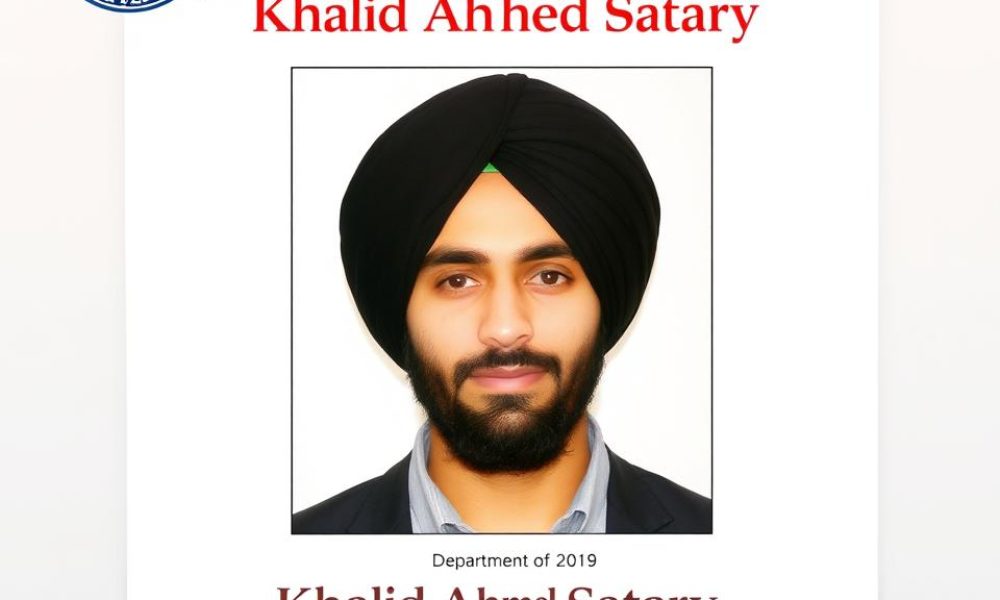
Because Interpol possesses no independent arrest authority and no publicly confirmed Red Notice for Khalid Ahmed Satary has been identified, American investigators remain dependent upon foreign police, immigration agencies, prosecutors, courts, and diplomatic cooperation before the accused healthcare fraud fugitive can be detained and returned.
WASHINGTON, DC, July 14, 2026 — The international search for Khalid Ahmed Satary illustrates one of the most widely misunderstood realities surrounding global fugitive investigations, because an Interpol Red Notice can distribute urgent information across international policing channels without creating a universal arrest warrant or compelling any sovereign country to detain the person identified.
No Public Red Notice for Satary Has Been Confirmed
Federal authorities have elevated Satary to the FBI’s Most Wanted Fraudsters list, offered a reward of up to $150,000, and publicly identified Dubai as one of the locations where he has strong ties or may travel, yet available government materials do not confirm that Interpol has issued a Red Notice bearing his name.
That distinction matters because journalists, commentators, and members of the public frequently describe every internationally wanted defendant as being subject to an Interpol warrant, although Interpol itself does not issue criminal warrants, prosecute defendants, operate prisons, or command national police forces to make arrests.
Satary remains wanted on a federal arrest warrant issued by the United States District Court for the Eastern District of Louisiana after investigators alleged that he violated pretrial release conditions and later failed to remain available for proceedings related to an enormous healthcare fraud prosecution.
The American warrant authorizes qualified United States authorities to arrest Satary within their jurisdiction, yet its legal force does not automatically extend to every national border or empower FBI personnel to detain him independently within the United Arab Emirates, Jordan, or another country.
What a Red Notice Actually Represents
According to the United States Department of Justice’s explanation of Interpol Red Notices, a Red Notice requests that law-enforcement authorities locate and provisionally arrest a wanted person while extradition, surrender, deportation, or another lawful return process is considered under the requested country’s domestic rules.
The notice is based on a valid national arrest warrant or comparable judicial decision provided by the requesting country, meaning Interpol circulates information about a person wanted by a national jurisdiction rather than independently accusing or pursuing that individual.
Interpol can distribute identifying information, photographs, fingerprints when available, passport data, dates of birth, aliases, and descriptions of the alleged offenses, giving police agencies throughout the world an organized alert that can assist during encounters, investigations, immigration processing, or border screening.
However, each member country determines the legal value it assigns to the notice, the circumstances under which provisional detention is permitted, the documentation required from the requesting state, and the judicial or administrative procedures necessary before the subject can lawfully be deprived of liberty.
Interpol Cannot Make Arrests
Interpol does not maintain an international police force capable of entering Dubai, searching a residence, stopping a vehicle, detaining Satary, or transporting him to the United States, because those powers remain exclusively within the authority of recognized national and local institutions.
The organization’s headquarters can facilitate secure communications, maintain databases, review notice requests, coordinate information, and support cooperation, but physical enforcement must be carried out by police officers, immigration personnel, prosecutors, or other officials authorized under the law of the country in which the fugitive is encountered.
Even when a person appears within a publicly searchable Red Notice database, local authorities may need additional legal grounds before making an arrest, particularly when domestic legislation does not treat the notice alone as sufficient authorization for provisional detention.
This limitation is not an institutional failure because Interpol was designed to connect sovereign law-enforcement systems rather than replace them with a single supranational agency exercising powers beyond the constitutional and statutory protections maintained by participating countries.
The United States Faces the Same Limitation
American law provides a useful illustration of the distinction because foreign Red Notices do not automatically authorize arrests inside the United States, where the Department of Justice must examine treaties, extraditable offenses, supporting evidence, and applicable procedures before detention can occur.
That same principle applies when Washington seeks assistance abroad, because American prosecutors must respect the requested nation’s legal standards rather than assuming that a federal indictment or an FBI wanted poster automatically controls another government’s police officers and courts.
The United States may regard Satary’s warrant as valid and urgent, yet Emirati authorities would still determine whether local law permits arrest, whether identification has been established, whether required documents have been delivered, and whether extradition or another return mechanism is legally available.
International cooperation, therefore, depends upon reciprocal respect, because American officials expect foreign governments to follow United States procedures when requesting arrests here, while foreign governments expect Washington to follow their procedures when pursuing fugitives overseas.
Satary’s Underlying Healthcare Fraud Case
Federal prosecutors allege that Satary owned and operated Performance Laboratories in Oklahoma, Lazarus Services in Louisiana, and Clio Laboratories in Georgia, which collectively submitted more than $547 million in Medicare claims involving cancer genetic testing between approximately 2016 and 2019.
Investigators contend that telemarketers and patient recruiters obtained personal information and biological samples from Medicare beneficiaries before arranging testing orders through physicians who frequently lacked meaningful treatment relationships with the people whose genetic material entered the laboratory network.
The government further alleges that Satary paid millions of dollars in kickbacks and bribes to doctors, recruiters, marketers, and intermediaries whose referrals generated the beneficiaries and medical authorizations required before his laboratories could submit expensive claims for federal reimbursement.
Satary remains presumed innocent because the indictment contains unresolved allegations rather than final judicial findings, while the frequently reported $547 million figure represents claims allegedly billed to Medicare rather than proven payments, personal profits, or losses established after trial.
The Bond Violation Created the Fugitive Case
After the September 2019 indictment, Satary was released under conditions that reportedly prohibited him from working within healthcare, reflecting judicial concern that his professional activities were directly connected with the alleged Medicare fraud scheme awaiting adjudication.
Federal investigators later alleged that he conspired with Houston-based laboratories to submit additional fraudulent genetic-testing claims while legally prohibited from participating in the industry, creating accusations that he continued related conduct despite being under direct court supervision.
A federal arrest warrant was issued on November 23, 2022, and authorities state that Satary subsequently failed to appear for a scheduled December proceeding, changing the prosecution from a complex white-collar case into a continuing domestic and international fugitive investigation.
The outstanding warrant supplies the essential legal foundation for any international request involving Satary, but the warrant itself does not eliminate the separate foreign procedures required before another country can detain and return him.
Dubai Remains a Possible Location
The FBI lists Dubai among Satary’s known ties or possible travel locations, while federal healthcare investigators have similarly indicated that authorities believe he may be in the United Arab Emirates. However, no agency has publicly provided a confirmed address, employer, property, or current immigration record.
Dubai’s role as a global center for aviation, finance, real estate, healthcare, technology, professional services, and international business makes it entirely plausible that a former laboratory executive could possess personal or commercial relationships there without those relationships independently proving criminal concealment.
American investigators must convert the broad Dubai theory into reliable location evidence, including an address, company, telephone number, account, vehicle, property, associate, or recent observation, before requesting local enforcement action against a specific person.
Emirati authorities would then need to confirm identity, establish a lawful basis for detention, and determine what procedure governs any American request, meaning even precise intelligence would represent the beginning of a legal process rather than the automatic conclusion of the manhunt.
A Red Notice Would Improve Visibility
Should American authorities obtain a Red Notice, the alert could help police and immigration personnel recognize Satary during official encounters by linking his photographs, aliases, multiple name spellings, dates of birth, warrant information, and alleged offenses within a single internationally accessible law-enforcement framework.
Satary is associated with several name variations and the nickname “DJ Rock,” creating a genuine identification challenge when different countries, financial institutions, airlines, businesses, and immigration authorities may have recorded his identity using inconsistent English transliterations.
A notice could assist officers who encounter a person matching Satary’s profile, prompt communication with the requesting authorities, and establish that a United States warrant exists, particularly when the individual uses an identity variation unfamiliar to local personnel.
However, improved visibility does not conclusively establish identity, because authorities must compare photographs, fingerprints (when available), travel records, biographical details, documents, and other evidence before treating a particular individual as the wanted laboratory executive.
Public Red Notices Represent Only Part of the System
Not every Interpol communication is displayed publicly, because some notices remain restricted to law-enforcement users, while countries may also circulate diffusions, bilateral messages, immigration lookouts, passport alerts, financial intelligence, and other information through separate official channels.
The absence of Satary’s name from a public Red Notice search does not prove that foreign authorities have no information about him, although it prevents responsible journalists from declaring that a particular Red Notice has been issued and distributed worldwide.
Investigative secrecy can protect sensitive sources, surveillance, legal preparations, and diplomatic negotiations, particularly when authorities believe premature publicity might encourage a fugitive to change residences, destroy documents, abandon accounts, or sever relationships under examination.
The public can therefore know that Satary faces an American warrant and international search without knowing every database entry, police communication, passport alert, or bilateral request shared among authorized agencies.
Border Alerts Depend Upon Travel
International alerts are most effective when a fugitive attempts to enter or leave a country through an airport, seaport, land crossing, residency process, visa renewal, or other official transaction that requires identity documents and interaction with government systems.
A person who reaches a stable location, avoids unnecessary travel, relies upon local associates, and maintains valid or apparently valid residency may produce few border events, substantially reducing the practical value of alerts designed primarily to identify movement.
Satary may also have name variations, different documents, or legitimate international connections that complicate automated matching, although federal authorities have not publicly disclosed his citizenship, passports, residency status, or the documents he may currently use.
Consequently, border alerts must operate alongside financial tracing, communications analysis, corporate record review, human intelligence, public tips, and cooperation from local authorities capable of investigating a person already living within their jurisdiction.
Biometrics Do Not Eliminate Legal Procedure
Fingerprints and facial recognition can help confirm whether a person using another name is actually Satary, yet biometric matching still does not authorize an arrest when the requested country requires additional judicial orders, certified documents, or a formal provisional arrest application.
Authorities must also ensure that biometric data is accurate, lawfully obtained, properly transmitted, and sufficiently reliable for the intended purpose, particularly when a mistaken match could detain an innocent person and lead to significant diplomatic or legal consequences.
The public record does not confirm which biometric identifiers Satary’s investigators possess or whether those identifiers have been circulated through Interpol, immigration systems, or bilateral police channels, making claims about worldwide biometric flagging speculative.
Even the strongest biometric match would answer only the identity question, while courts and prosecutors would still need to examine whether legal grounds exist for detention, extradition, deportation, or another form of return to the United States.
Extradition Remains a Separate Legal Process
Extradition is the formal procedure through which one country requests that another surrender a person for prosecution or punishment, requiring far more than a wanted poster, public allegation, or automated border notification.
American prosecutors generally must prepare charging documents, certified warrants, evidence of identity, descriptions of the offenses, relevant statutory provisions, factual summaries, and other materials required under the applicable treaty or domestic law of the requested state.
The requested country may examine dual criminality, evidentiary sufficiency, limitation periods, nationality restrictions, human rights concerns, procedural guarantees, and whether the alleged conduct qualifies for surrender under the controlling legal standards.
Satary would retain rights available within the requested jurisdiction to challenge identity, process, or legal sufficiency, while American prosecutors would retain responsibility for proving the underlying healthcare fraud charges only after he appears before the Louisiana federal court.
A Red Notice Does Not Determine Guilt
Interpol reviews whether a request meets its constitutional and procedural requirements, but it does not decide whether the accused person committed the offenses described by the requesting country.
A Red Notice, therefore, reflects the existence of a national judicial request and international police interest, not a conviction, a final evidentiary ruling, or a declaration that every allegation contained in the underlying indictment has been proven.
Satary remains entitled to the presumption of innocence, counsel, discovery, motion practice, witness confrontation, and trial protections regardless of how widely his photograph and alleged conduct are distributed among international police agencies.
That legal distinction is particularly important in a case involving technical Medicare regulations, laboratory billing, medical necessity, corporate ownership, kickbacks, financial tracing, and disputed conduct allegedly occurring across several states and business entities.
Foreign Police Control Physical Detention
Should Satary be located in Dubai, Dubai Police, Emirati federal authorities, immigration officials, prosecutors, or other locally authorized agencies would control any physical enforcement action, because FBI agents and Interpol personnel possess no independent arrest authority there.
American Legal Attachés can share intelligence, explain the federal warrant, coordinate investigative requests, and facilitate communication, yet they cannot lawfully enter a residence, seize a passport, conduct compulsory questioning, or place a Satary aboard an aircraft without host-country authorization.
The foreign agency must assess the information, verify the person’s identity, determine the available legal mechanism, and execute any detention in accordance with domestic procedures that protect both national sovereignty and individual rights.
This dependence explains why international fugitive investigations can remain unresolved even when American authorities strongly suspect a location, because suspicion, intelligence, and legal arrest authority constitute distinct stages that require separate evidence and decisions.
Immigration Enforcement May Offer Another Route
Extradition is not the only method by which a fugitive can be returned, as foreign governments may use immigration laws when a person violates visa conditions, provides false information, lacks lawful status, or otherwise becomes eligible for removal.
Deportation or expulsion can sometimes proceed more quickly than formal extradition, yet those mechanisms remain under the control of the foreign government and cannot be automatically demanded by the United States merely because an American warrant exists.
Authorities would still need to confirm Satary’s status, documents, nationality, and applicable local violations before determining whether immigration enforcement provides a lawful and practical alternative to traditional surrender proceedings.
The government receiving the person must also coordinate travel, custody, documentation, and transfer arrangements, ensuring that American agents take custody only after the foreign state has completed its own lawful process.
Diplomatic Relations Influence Cooperation
International law operates through legal rules, but practical cooperation also depends upon diplomatic relations, law-enforcement partnerships, evidence quality, reciprocity, competing priorities, and confidence that the requesting government will honor applicable commitments.
The United States and the UAE maintain extensive security, trade, aviation, finance, technology, and law enforcement relations, creating established communication channels that can support serious criminal investigations when sufficient information and legal documentation are available.
Those relationships do not mean that every American request receives immediate approval, because Emirati institutions must consider domestic law, judicial requirements, sovereignty, and the specific evidence provided in each case.
Effective diplomacy, therefore, supports legal enforcement without replacing it, allowing investigators and prosecutors to resolve procedural obstacles while respecting the authority of the country where the wanted person may be located.
Financial Pressure Can Succeed Where Notices Fail
A Red Notice may not compel arrest, but financial investigations can narrow a fugitive’s options by identifying and restraining accounts, properties, companies, payment channels, and intermediaries needed to sustain an international lifestyle.
Federal authorities seized sixteen bank accounts and restrained real estate connected with Satary during the original 2019 enforcement action, demonstrating that investigators were following Medicare reimbursements and alleged proceeds alongside laboratory claims and physician records.
Someone living abroad requires housing, transportation, communications, healthcare, immigration services, and dependable money, creating recurring financial activity that may reveal a location even when the individual avoids border checkpoints and public exposure.
Banks, property managers, professional advisers, business partners, and relatives can serve as sources of records or information when payments, beneficial ownership, or account control link a current foreign life to Satary’s historical American identity.
Publicity Can Be More Effective Than Formal Notices
The FBI’s Most Wanted Fraudsters designation and substantial reward can reach people who never consult Interpol databases, including former laboratory employees, physicians, marketers, financial advisers, landlords, neighbors, relatives, and business associates who may recognize Satary directly.
Recent NBC Miami reporting on Satary’s alleged $547 million healthcare fraud case expanded awareness of his aliases, South Florida ties, possible international connections, and the reward offered for information leading to arrest and conviction.
One credible address, photograph, telephone number, company, vehicle, property, or payment relationship could provide investigators with the precise anchor needed to request lawful assistance from foreign police and courts.
The reward does not guarantee payment for general speculation, because authorities evaluate whether the information is original, reliable, independently verifiable, and sufficiently important to contribute directly to the arrest and eventual conviction described in the offer.
Red Notices Can Still Create Serious Consequences
Although a notice cannot guarantee arrest, it can restrict practical mobility by increasing the likelihood of questioning, delayed travel, visa complications, immigration review, enhanced screening, account scrutiny, or communication among law enforcement agencies that encounter the subject.
A fugitive aware of those risks may avoid travel, remain within a single jurisdiction, reduce business activity, or increasingly rely on intermediaries, creating financial and human vulnerabilities that investigators can exploit through separate lawful methods.
The notice can also preserve international awareness over extended periods, ensuring that older warrants remain visible when a person later interacts with authorities under circumstances unrelated to the original prosecution.
Its power, therefore, lies in sustained international coordination and risk creation rather than the mythical ability to command immediate arrest across every member country.
Red Notices Can Be Challenged
Individuals who believe Interpol data violates the organization’s rules may seek review through its established oversight mechanisms, while national courts can separately examine whether domestic detention or extradition procedures satisfy applicable legal protections.
Those review systems help prevent the international network from becoming a shortcut around due process, particularly when requests are politically motivated, factually inaccurate, procedurally defective, or inconsistent with Interpol’s constitutional restrictions.
Satary’s alleged offenses involve ordinary financial crimes rather than public political activity, but any future notice would still require accurate documentation, valid warrant information, reliable identification, and compliance with Interpol’s processing rules.
The existence of review does not neutralize legitimate notices, yet it demonstrates why international fugitive enforcement necessarily involves legal safeguards rather than one unquestionable global command distributed through police computers.
Lawful Mobility Cannot Defeat Judicial Authority
International residence, foreign companies, second citizenship, and cross-border investment remain lawful when obtained through truthful applications, legitimate funds, transparent ownership, and compliance with pending criminal obligations and court orders.
In professional advisory practice, Amicus International Consulting emphasizes that lawful mobility and privacy planning must remain completely separated from false identities, hidden criminal proceeds, obstruction, immigration deception, or efforts designed to defeat active arrest warrants.
Professional second citizenship and international relocation planning cannot lawfully erase an indictment, cancel a Red Notice, neutralize extradition proceedings, or prevent foreign authorities from detaining a wanted person under applicable domestic law.
The legal distinction remains straightforward because lawful status confers recognized rights and mobility, whereas fugitive concealment creates ongoing exposure through financial systems, immigration processes, police cooperation, and the people required to sustain life outside formal accountability.
Why the Interpol Illusion Persists
Popular culture frequently portrays Interpol as a global police service whose agents chase suspects across borders, execute warrants, and command local officers, creating expectations fundamentally inconsistent with the organization’s actual cooperative and administrative role.
News reports sometimes reinforce that misunderstanding by calling Red Notices international arrest warrants, even though Interpol repeatedly explains that member countries independently determine their legal value and decide whether detention is authorized.
The simplified description sounds dramatic, but it obscures the essential work performed by national police, prosecutors, diplomats, immigration authorities, and courts whose cooperation ultimately determines whether a wanted person can be found and returned.
Understanding those limitations does not diminish Interpol’s importance, because coordinating information among national systems remains indispensable, but it prevents readers from assuming that publication of one notice guarantees an outcome international law cannot promise.
The Search for Satary Remains a Human Investigation
Databases, notices, biometrics, passport alerts, and financial analytics can all assist investigators, yet the decisive breakthrough may still originate from someone who knows Satary personally, handles his money, manages property, communicates with him, or recognizes his current identity.
His former laboratory network created extensive relationships across Louisiana, Georgia, Oklahoma, Texas, Florida, and international business communities, giving authorities numerous possible witnesses whose knowledge may become more valuable as circumstances and loyalties change.
A person who once provided ordinary professional services may now realize that a current client, company, payment, or overseas contact is directly connected to the wanted executive listed on the FBI’s fraudster list.
The strongest public assistance, therefore, involves precise, privately reported information rather than confrontation, online accusations, or unsupported claims that could alert the fugitive and harm innocent people.
Final Analysis
An Interpol Red Notice would expand international awareness of Khalid Satary’s federal warrant, provide police with organized identifying information, and encourage communication when authorities encounter someone matching his profile, yet it would not compel arrest in Dubai or anywhere else.
No public record currently confirms that such a notice exists for Satary, meaning the international investigation should be described through the American warrant, the FBI wanted designation, a possible UAE connection, and established mechanisms for cooperation.
Interpol cannot detain him, FBI agents cannot independently arrest him abroad, and American prosecutors cannot bypass the laws, courts, immigration authorities, or police institutions of the sovereign country where he is eventually located.
Foreign authorities would need to confirm his identity, identify a lawful detention mechanism, review supporting documentation, and determine whether extradition, deportation, expulsion, or another process would permit his return.
For Satary, the absence of automatic arrest does not confer immunity, because financial records, public rewards, domestic associates, international business contacts, immigration systems, and local police cooperation continue to narrow the space available for comfortable concealment.
For American investigators, the practical task is to convert allegations and broad geographic intelligence into a single verified address, account, company, device, or associate that can support a foreign enforcement request.
For Interpol, the role remains coordination rather than command, enabling countries to share information while preserving the sovereign authority and legal protections governing every arrest.
The Interpol illusion disappears once that structure is understood, revealing a more complex but realistic system in which international fugitives are captured not by a single global police force but through patient cooperation among many independent governments.




