
Proven methods for private international movement now rely on lawful documents, low-profile booking options, explainable payment systems, secure devices, disciplined communication, and privacy habits that protect personal data without misleading governments, banks, airlines, hotels, or border authorities.
VANCOUVER, BC, June 24, 2026, Secure international travel has changed because passports, airline records, biometric gates, hotel registrations, payment networks, mobile phones, travel apps, data brokers, and social media platforms now create overlapping trails around even ordinary movement.
For high-net-worth families, executives, public figures, legal second citizens, crypto investors, family offices, journalists, and privacy-focused clients, the goal is not to travel without any official record, because lawful international movement inevitably creates required records.
The practical goal in 2026 is controlled visibility: the traveler provides accurate information to governments, airlines, banks, insurers, and accommodation providers when required, while reducing unnecessary exposure to strangers, commercial platforms, data brokers, hostile observers, criminals, and careless online networks.
Secure travel begins with lawful consistency.
The first technique that works in 2026 is to make every official record consistent, because passports, visas, residence permits, airline reservations, insurance records, hotel registrations, payment accounts, and emergency contacts must tell the same truthful story.
A traveler who uses unsupported aliases, mismatched bookings, unexplained payment sources, inaccurate visa information, or false documents does not become more private, as inconsistency usually attracts more attention from airlines, banks, hotels, insurers, and border systems.
Secure movement depends on boring accuracy, meaning the traveler is easy for required institutions to verify and difficult for unauthorized observers to follow.
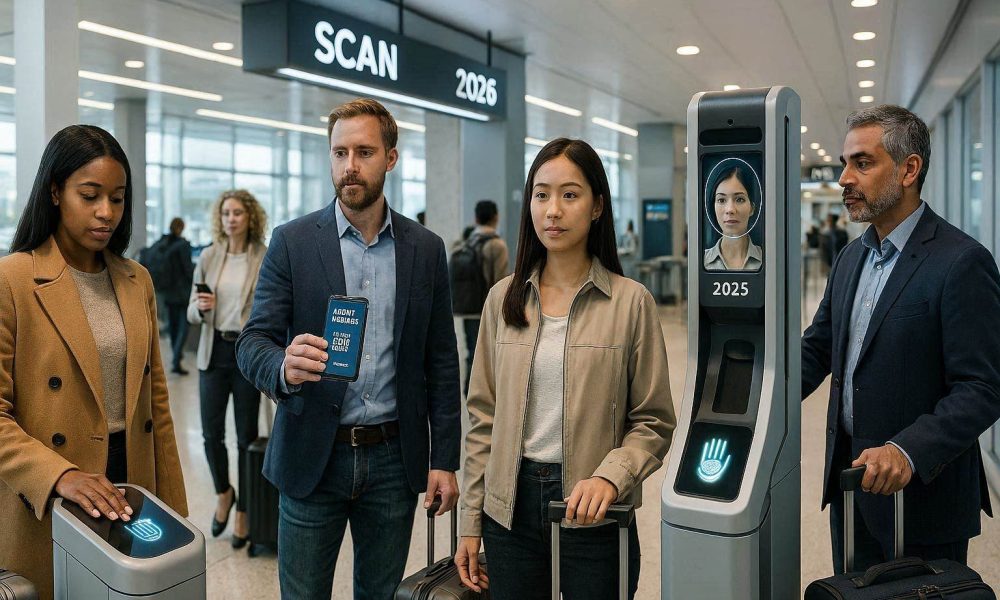
This is especially important as biometric border systems expand, because identity comparison is increasingly connected to passports, facial images, fingerprints, airline records, and travel histories.
Privacy works best when official systems see a clean, lawful, consistent traveler while the public sees almost nothing useful.
Low-profile options should be selected according to risk.
Not every trip needs the same privacy controls, because a family holiday, medical trip, confidential business negotiation, asset protection consultation, relocation visit, public conference, or high-risk security movement each creates different exposure points.
A low-profile travel plan should begin by identifying who might be interested in the traveler’s movements, including hostile media, commercial competitors, litigants, extortionists, stalkers, kidnappers, political opponents, online harassers, or ordinary data brokers.
Once the risk profile is clear, the traveler can select appropriate flight times, airports, hotels, ground transport, booking channels, communications tools, and public exposure rules without creating unnecessary complexity.
For lower-risk trips, delayed posting, dedicated travel payments, careful hotel selection, and device privacy settings may be enough.
For higher-risk trips, the plan may require private arrival logistics, tighter information control, vetted drivers, secure communications, companion rules, and accommodation protocols that limit who knows the traveler is present.
Private movement should look normal, not theatrical.
One mistake privacy-focused travelers make is becoming so visibly secretive that they attract attention from staff, service providers, border officers, hotel personnel, drivers, or business contacts.
Secure travel should feel calm, ordinary, and professionally organized because exaggerated secrecy can be more memorable than quiet compliance.
The traveler should use accurate documents, normal booking channels where appropriate, consistent payment records, reasonable luggage, clear itineraries, and direct answers to official questions.
The privacy layer should operate behind the scenes through information control, secure communications, and reduced public exposure rather than dramatic behavior in public spaces.
The safest traveler is not the one who appears mysterious, because the safest traveler is the one who appears unremarkable to strangers and is fully prepared for official review.
Biometric borders make privacy discipline more important.
Biometric travel systems are increasingly part of ordinary international movement, and official CBP biometric travel guidance explains how identity verification is used in many U.S. travel contexts.
Reuters has also reported on expanding biometric border systems, including European travel changes that require many non-EU travelers to register personal details, fingerprints, and facial images through new entry systems.
These systems do not eliminate lawful privacy, but they do make unsupported identities, inconsistent documents, and false travel profiles more fragile.
The practical approach is not to evade border systems but to maintain clean records, accurate documents, lawful visas, and minimize exposure outside official channels.
The traveler should be transparent where the law requires transparency and private where public exposure is unnecessary.
Booking habits should reduce unnecessary identifiers.
Travel booking creates identifiers through email addresses, phone numbers, loyalty accounts, payment cards, device information, browser history, calendar invites, and shared confirmations.
A secure travel plan may use dedicated travel email accounts, limited-use phone numbers, separate travel payment cards, restricted calendar sharing, and booking profiles that do not unnecessarily expose private residential addresses or public-facing business details.
This does not mean providing false information when legal identity is required, because passenger names, passport details, visa information, and payment records must be accurate when institutions verify them.
The purpose is to reduce unnecessary links among public identity, family life, business activity, residence, and sensitive travel movements.
Good booking hygiene makes the trip easier to manage while preventing casual platforms from building a complete map of the traveler’s life.
Loyalty programs should be used selectively.
Airline, hotel, car rental, lounge, and payment loyalty programs are convenient, but they centralize travel history, preferences, companions, payment methods, addresses, phone numbers, email accounts, and recurring routes.
A low-profile traveler should decide whether points and upgrades are worth the profile that repeated use across sensitive journeys creates.
For ordinary trips, loyalty accounts may be acceptable, but for private negotiations, relocation planning, family-security movements, or high-risk travel, they may create unnecessary linkage.
The traveler can still comply with identity requirements while avoiding unnecessary data collection for the journey.
Convenience often quietly builds digital footprints, which is why secure travel requires deciding when it is worth the exposure.
Alternate payment systems must remain explainable.
Payment privacy in 2026 does not mean untraceable payment, because international travel usually requires payments that can be explained to banks, insurers, tax advisers, hotels, airlines, and customs authorities when required.
Secure alternatives may include dedicated travel accounts, controlled payment cards, wire transfers for high-value services, private banking arrangements, limited-use digital wallets, and separate business or family-office payment channels.
Cash may reduce some commercial tracking, but excessive cash use can create theft risk, customs reporting issues, weak documentation, and suspicion when used unnaturally for high-value travel.
Crypto payments may be possible in limited legitimate settings, but they can create source-of-funds, tax, exchange-record, and counterparty questions that must be documented before travel begins.
The strongest payment method is not invisible, because it is lawful, secure, limited in exposure, and easy to explain if reviewed.
Banking passports support secure travel payments.
A traveler using multiple currencies, offshore accounts, trust distributions, crypto liquidation proceeds, business funds, or family office payments may need stronger documentation before moving money for international travel.
A banking passport plan can organize identity records, source-of-funds evidence, tax residence, account purpose, banking references, and expected transaction activity connected to travel and relocation planning.
This preparation matters because a private trip can become stressful if a bank delays a wire, blocks a card, requests updated due diligence, or asks why funds are moving through a particular account.
The traveler should avoid casually mixing business funds, personal spending, trust assets, and family reserves, as confused payment flows can create banking and tax questions.
Secure travel is easier when money moves through clean channels that match the traveler’s lawful financial profile.
Accommodation privacy starts before arrival.
Hotels, serviced residences, private clubs, villas, and short-term rentals can expose identity information through passport registration, payment records, guest lists, vehicle details, staff conversations, visitor logs, delivery records, and public lobby visibility.
The traveler should choose accommodation based on discretion, staff professionalism, secure entrances, private check-in options, limited public exposure, and a willingness to protect guest information within lawful limits.
A private villa may offer discretion, but it may also expose the traveler to owners, agents, cleaners, drivers, neighbors, platform records, and uncontrolled service providers.
A luxury hotel may offer better security, but it may also create exposure through public entrances, recognizable guests, social media culture, or staff who handle high-profile travelers casually.
The right accommodation is not always the most expensive option because it provides lawful verification with minimal unnecessary visibility.
Accommodation details should be compartmentalized.
Room numbers, floor levels, arrival times, visitor names, transport pickups, restaurant reservations, concierge requests, delivery labels, and housekeeping instructions can reveal more than the traveler expects.
The accommodation plan should limit who receives the address, who knows the room details, who can contact the traveler directly, who can approve visitors, and how deliveries are handled.
For sensitive trips, pickup points should avoid exposing private residences, meeting locations, or repeat routines that could be tracked by drivers, vendors, or casual observers.
The traveler should avoid posting room views, hotel interiors, branded keys, pool areas, restaurant settings, or surrounding landmarks until after departure.
Accommodation privacy is successful when the property can lawfully verify the guest, while the public cannot confirm the guest’s presence.
Personal data must be protected en route.
Travelers often focus on passports and payments while ignoring phones, laptops, tablets, smartwatches, cloud accounts, photos, messaging apps, password managers, and location services that can reveal far more than a boarding pass.
Before departure, the traveler should remove unnecessary sensitive files, review app permissions, limit location sharing, update passwords, confirm multi-factor authentication, and ensure essential documents are securely backed up.
This is data minimization, not evidence destruction, because the purpose is to avoid carrying an entire private archive across borders when only limited information is required for the journey.
A dedicated travel device may be appropriate for sensitive trips, especially when the traveler does not need access to all personal, business, legal, financial, and family records while traveling.
The best en route data protection limits what can be lost, stolen, searched for, photographed, copied, or exposed during ordinary travel disruptions.
Public Wi-Fi and charging points require caution.
Airports, hotels, lounges, cafés, conference centers, and transport hubs create digital risk through public Wi-Fi, shared charging stations, unsecured networks, shoulder surfing, and device theft.
Travelers should use secure networks where possible, avoid sensitive transactions on untrusted connections, carry their own chargers, use strong device locks, and avoid leaving devices unattended in rooms, vehicles, lounges, or meeting spaces.
Secure travel also requires awareness of the human environment, as nearby strangers, staff, drivers, and companions may inadvertently see screens, documents, passwords, messages, or banking details.
A private client should treat travel days as higher-risk digital days because tiredness, delays, crowds, and urgency lead to mistakes.
Personal data is easiest to protect when the traveler assumes every public space is a poor place for sensitive work.
Social media silence is one of the most effective techniques.
The simplest secure travel technique is to avoid real-time disclosure, as social media posts can reveal airports, gates, hotels, room views, restaurants, companions, vehicles, meeting locations, luggage tags, and future movements.
Even without a location tag, background details can identify a city, hotel, neighborhood, or venue through signs, menus, reflections, windows, uniforms, and architecture.
The traveler should delay posts until after leaving the location, remove location metadata where appropriate, avoid posting boarding passes or hotel views, and ensure companions follow the same rule.
Family members, assistants, security staff, drivers, and friends can defeat privacy through one careless post, which means the entire travel circle must understand the protocol.
Secure travel is often less about advanced technology and more about basic silence at the right time.
Ground transport should be vetted and limited.
Drivers, car services, rental agencies, hotel vehicles, rideshare platforms, and private transport coordinators often know airport times, residence addresses, hotel locations, meeting venues, and family movement patterns.
A secure travel plan should use vetted providers, confirm the driver’s identity, limit itinerary disclosure, avoid unnecessary conversation about the purpose of travel, and, where practical, separate private residence information from public pickup points.
Rideshare services may be convenient, but they create app records, driver visibility, pickup histories, payment trails, and sometimes unnecessary linkage to phone numbers and profiles.
Private drivers may offer discretion, but only if they are properly vetted, instructed, and limited to the information they genuinely need.
Transport privacy is not about hiding from lawful systems, because it is about preventing every driver and app from becoming an unnecessary witness to the journey.
Companion rules are essential for secure movement.
A traveler can follow every privacy method correctly, while a companion exposes the route through shared calendars, family chats, real-time posts, visible photos, casual comments, or app check-ins.
Before departure, everyone involved should agree to no real-time posting, no geotags, no hotel views, no boarding pass photos, no vehicle plates, no references to public meetings, and no forwarding itineraries to people who do not need them.
Children and younger family members need simple explanations because they may reveal hotel names, school visits, home interiors, or routes through short videos, gaming chats, or friend groups.
Staff and advisers should also receive limited information because assistants, drivers, household employees, and vendors often know too much when privacy planning is informal.
Secure travel works only when the information circle is small and disciplined.
Low-profile options include timing and routing choices.
Sometimes the most effective privacy technique is not a special tool, but a route that avoids crowded arrivals, visible meeting venues, public hotel entrances, predictable schedules, or repeated patterns.
Travelers can reduce exposure by avoiding unnecessary layovers, choosing quieter arrival times, using discreet ground transport, selecting accommodations with private access, and avoiding public venues connected to sensitive meetings.
This should be done without making false statements or evading required checks because the goal is simply to reduce unnecessary public observation.
A low-profile route should also preserve safety, medical access, communications, and banking access rather than creating isolation for the sake of secrecy.
The best routing choice is the one that remains lawful, practical, secure, and unremarkable.
Legal identity tools must be consistent with travel records.
Some clients use lawful name changes, second citizenship, residence permits, professional addresses, or banking passports to support international mobility and privacy.
Those tools can be valuable only when they are government-recognized, properly documented, and consistent across visas, tickets, insurance, banking records, tax files, and accommodation registrations.
For clients seeking a lawful identity or mobility reset, new legal identity planning can help align documentation, residence planning, banking continuity, and privacy needs without relying on unsupported personas.
The legal boundary is clear because false documents, fake passports, stolen identities, unsupported aliases, and fabricated travel profiles pose more danger than they offer privacy.
A lawful identity tool should make it easier for the right institutions to verify the traveler and harder for the wrong people to exploit.
Anonymous living supports secure travel.
Secure travel is easier when the traveler’s home address, relatives, companies, property records, phone numbers, and public profiles are not readily found in commercial databases or casual searches.
For clients facing stalking, extortion, hostile media, public wealth exposure, or data-broker risk, anonymous living strategies can help coordinate residence privacy, travel discipline, secure payments, communications controls, and reduced public exposure within a lawful framework.
This matters because a travel trail often points back to a residence trail, and a residence trail often exposes family members, staff, routines, and return points.
The best travel privacy is not separate from daily privacy, because the journey and the life behind it are part of the same exposure map.
Secure movement begins long before departure and continues after arrival.
Emergency redundancy prevents privacy from becoming vulnerable.
Privacy can become compromised when a traveler loses a passport, device, bank card, accommodation access, proof of insurance, or a secure communication channel without backups.
The secure travel file should include emergency contacts, secure copies of documents, backup payment methods, consular information, medical contacts, insurance details, alternative accommodation options, and a trusted adviser to coordinate support.
Backups should be compartmentalized because carrying every sensitive document in one bag, one phone, or one cloud account creates a single point of failure.
The traveler should also know what to do if a bank blocks a card, a flight is canceled, a driver fails to arrive, a hotel refuses a booking, or a device is stolen.
Secure travel protects both privacy and functionality.
Post-trip privacy is part of the method.
The digital footprint of a trip often expands after the trip ends through photo posting, online reviews, expense reports, tax records, receipts, calendars, cloud albums, and casual storytelling.
The traveler should review photos before sharing, delay disclosure, remove sensitive metadata where appropriate, avoid naming private accommodations, and keep recurring travel routines out of public conversation.
Business teams should handle expense reports and tax records accurately but securely, ensuring that sensitive travel details are shared only with people who need them.
If the journey involved private meetings, relocation planning, asset protection, family security, or legal identity work, post-trip communications should be especially disciplined.
A trip that was private during movement can still become exposed afterward if the traveler treats memory as harmless publicity.
The final lesson is that secure travel is disciplined, lawful, and quiet.
Secure travel techniques that work in 2026 depend on legal consistency, low-profile options, explainable alternative payment systems, secure accommodation details, secure devices, disciplined communications, vetted transport, and careful control of public disclosure.
The traveler should provide accurate information to governments, airlines, hotels, banks, insurers, and regulated institutions where required, while reducing unnecessary visibility to commercial platforms, social networks, data brokers, hostile observers, and opportunistic criminals.
The best methods are not theatrical, because secure travel is usually quiet, ordinary, well-documented, and difficult to exploit.
Privacy technology helps, but daily habits, companion discipline, clean documentation, and secure payment planning often matter more than any single tool.
In 2026, private international movement is not about vanishing from official systems, but about moving through those systems lawfully while leaving as little unnecessary public and commercial exposure as possible.




