
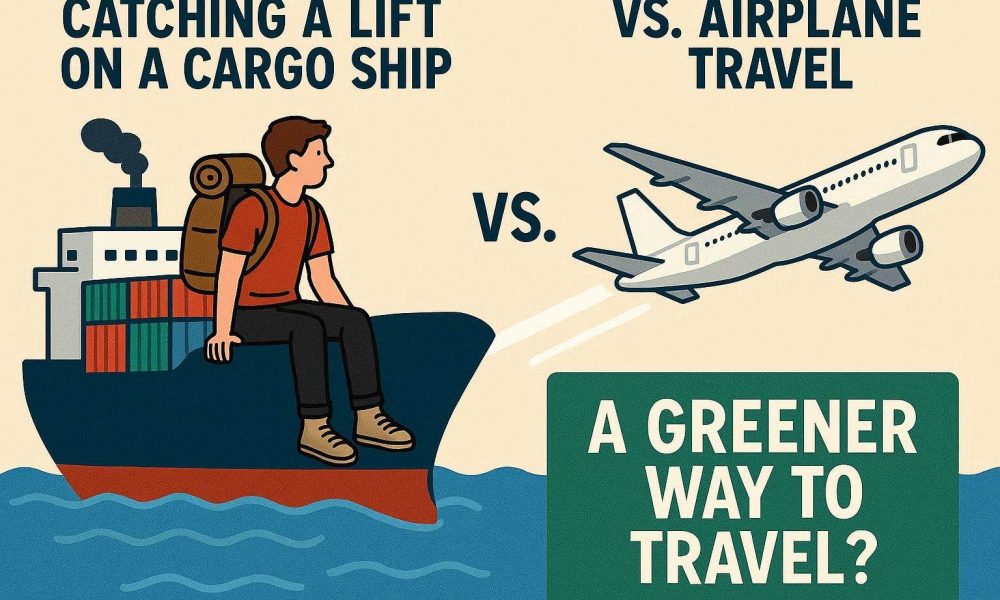
From dining with the captain to navigating unpredictable schedules, here is a look at the daily routine on a modern, working cargo vessel.
WASHINGTON, DC, May 30, 2026, A week at sea on a commercial freighter is not a cruise, not a retreat, and not a floating hotel, but a working passage through the machinery of global trade where silence, routine, and uncertainty become the real itinerary.
The first surprise is how quickly the ship stops feeling like a means of transportation.
A passenger boarding a commercial freighter quickly learns that the vessel is not built around leisure, because the ship’s real purpose is to move cargo, meet port schedules, satisfy safety rules, and keep the global supply chain moving.
That difference changes the entire emotional rhythm of the voyage because the passenger is not the center of the experience but a temporary guest in a professional maritime workplace shaped by crew duties, weather, engines, and port operations.
Unlike a cruise ship, where every hour is programmed around entertainment, dining, shopping, and excursions, a working cargo vessel offers long stretches of quiet that can feel either peaceful or unsettling depending on the traveler’s expectations.
Specialist freighter-travel operators continue to emphasize that deep-sea passenger availability remains limited after pandemic-era disruptions, with some routes available only via waitlists or cancellations, as seen in current cargo ship voyage listings.
For travelers who understand that limitation, the reward is a rare view of movement stripped of spectacle, where the sea itself becomes the dominant event, and the ship’s work continues whether passengers are fascinated or bored.
The day begins with routine, not entertainment.
Life aboard a freighter is structured around meals, watch schedules, crew responsibilities, safety procedures, and the steady operational demands of a ship moving through open water or between ports.
Breakfast may be simple, early, and communal, with officers, crew, and passengers moving through the dining room according to the rhythm of the ship rather than the preferences of paying guests.
The experience can feel unexpectedly intimate because there are often few passengers, which means faces become familiar quickly, and a meal with the captain or officers may become part of ordinary shipboard life rather than a special event.
Conversation often ranges from weather, ports, and route changes to shipping conditions, family life at sea, and the practical realities of operating a vessel most passengers would otherwise see only from a shoreline.
That daily routine becomes one of the voyage’s quiet pleasures, because the traveler is not being entertained by a hospitality product but allowed to observe a workplace that happens to cross oceans.
The captain’s table is not a performance.
Dining with the captain can sound glamorous, but on a commercial freighter, it is usually more practical, informal, and restrained than the phrase suggests.
The captain and officers are responsible for navigation, safety, crew management, cargo operations, and ongoing decision-making, which means passengers must understand that the conversation centers on real work rather than theatrical hosting.
That difference is part of the appeal, as the ship’s hierarchy, discipline, and professional seriousness lend meals a grounded quality that luxury travel often lacks.
A passenger may hear about weather routing, port delays, mechanical inspections, crew rotations, and the pressures of maintaining schedule when every hour in port carries a cost.
The result is a form of travel education that no airport lounge can provide, because the traveler begins to understand that global movement depends on people whose work is mostly invisible until something goes wrong.
Cabins are comfortable, but not designed for fantasy.
Freighter passenger cabins vary by vessel, route, and operator, but the experience is usually closer to spare functional comfort than resort-style indulgence.
A cabin may include a bed, desk, bathroom, storage space, and a window, but travelers should not expect luxury linens, room service, spa facilities, or the constant staff attention associated with passenger cruise ships.
That simplicity can feel refreshing because the room becomes a place to read, write, sleep, and watch the sea rather than a stage for curated vacation identity.
The trade-off is that there may be fewer amenities, limited entertainment options, restricted areas, and strict rules about where passengers may go while crew members are working.
A freighter cabin offers something increasingly rare in modern travel: privacy without performance, comfort without spectacle, and enough quiet for a traveler to rediscover the scale of time.
The schedule belongs to the cargo, not the passenger.
The defining rule of freighter travel is that cargo controls the journey, meaning routes, port calls, loading times, and arrival dates can change with little regard for a passenger’s calendar.
Weather, port congestion, customs procedures, cargo readiness, mechanical issues, and operational priorities can all alter the timing of a voyage that looked straightforward when it was booked.
That unpredictability can frustrate travelers who need firm arrival dates, but it is also one of the strongest reminders that a commercial freighter is not a consumer tourism product.
The ship may wait at anchorage, arrive late, depart early, skip a port, or spend long hours at industrial terminals where passengers are restricted for safety reasons.
Anyone booking a freighter voyage must treat the schedule as a working estimate rather than a promise, because the ocean and the cargo business do not organize themselves around vacation plans.
A week at sea can feel both short and enormous.
The first day often feels like an adjustment, as passengers learn the ship’s layout, safety rules, meal times, noise patterns, allowed spaces, and the strange physical sensation of living inside constant motion.
By the second or third day, the absence of ordinary distractions begins to change perception, stretching time in ways that can feel restorative for some travelers and claustrophobic for others.
A week at sea contains fewer external events than a week on land, but each small change becomes more noticeable, including light on the water, wind direction, passing vessels, engine vibration, meal conversations and the slow movement of weather.
For travelers used to notifications, errands, and constant choice, this compression of life into simple recurring rhythms can feel like a digital detox imposed by geography.
The ship does not entertain the passenger out of boredom, which means the passenger must either remain quiet or discover that stillness is harder than expected.
Connectivity is limited, and that changes everything.
Modern commercial ships may have communication systems, but passengers should not assume reliable, fast, or unlimited internet access at sea.
Some vessels offer no passenger internet, some provide limited access, and others may restrict connectivity because bandwidth is expensive, operational communications take priority, and satellite systems are not designed for casual streaming.
That limitation can be the very reason some people choose the voyage, because being unreachable becomes possible in a world where most workers are expected to respond everywhere.
It can also create anxiety for travelers who underestimate how dependent they are on messaging, maps, news, banking apps, cloud files, and social media contacts.
A freighter voyage quickly reveals whether a person wants disconnection in theory or can actually tolerate the emotional silence that arrives when the signal fades.
Safety rules shape the freedom on board.
Passengers aboard a commercial freighter must obey shipboard safety rules because they are moving through a workplace filled with heavy equipment, ladders, restricted zones, mooring operations, and industrial risks.
The U.S. State Department’s guidance on boating safety and maritime risks underscores the importance of preparation before any voyage involving open water, remote transit, or regions with specific security concerns.
On a freighter, safety briefings are not symbolic because passengers need to understand alarms, muster points, life jackets, restricted areas, and what to do if conditions change suddenly.
A passenger cannot wander freely during cargo operations or enter crew-only spaces simply because the view looks interesting or the vessel feels quiet.
This structure may feel restrictive, but it is essential because commercial ships are built for work first and passenger comfort second.
The ports can be fascinating, but they are not always accessible.
One of the most appealing parts of freighter travel is seeing industrial ports that ordinary tourists rarely enter, with cranes, containers, pilots, tugs, trucks, and dockworkers revealing the physical infrastructure behind global commerce.
Yet ports are also regulated, secure, and operationally complex, which means passengers may not always be allowed to disembark or may have only limited access depending on timing, immigration rules, terminal restrictions, and safety conditions.
A ship may arrive at night, leave before morning, or dock in an industrial area far from the city travelers imagined visiting.
That can disappoint passengers who expect the voyage to function like a cruise itinerary, but it can also deepen the experience for those interested in how trade actually moves.
Freighter travel teaches that ports are not tourist gateways first, but working systems where every hour is measured in cargo, labor, compliance, and cost.
The crew’s life is harder than the passenger’s silence suggests.
Passengers may experience the voyage as calm, but the crew is working through watches, maintenance tasks, inspections, safety duties, paperwork, and the emotional reality of long periods away from family.
The International Chamber of Shipping has emphasized the central role of seafarers in global trade and national economies, with its Seafarer 2050 report describing the profession as essential to the future of shipping and decarbonization.
That context matters because passengers should not romanticize shipboard quiet while ignoring that the vessel is also a workplace shaped by fatigue, responsibility, and isolation.
A respectful passenger understands that crew members are not travel companions assigned for entertainment, but professionals with demanding roles that keep the ship safe and moving.
The best freighter passengers observe with humility, appreciating the rare access without confusing hospitality with obligation.
The food is usually ordinary, which can be part of the charm.
Meals aboard a commercial freighter are typically practical, regular, and shaped by the ship’s provisions, crew culture, and galley routine rather than restaurant-style choice.
There may be hearty food, fixed meal times, limited dietary flexibility, and repeated dishes that reflect the logistical reality of feeding people at sea for days or weeks.
Some passengers enjoy that simplicity because it removes decision fatigue and turns meals into social anchors that structure the day.
Others may struggle if they expect elaborate menus, flexible dining, or constant snacks designed around leisure passengers.
The key is expectation, because food at sea is often satisfying precisely when understood as part of working-ship life rather than as a luxury travel feature.
Boredom becomes the central test.
A freighter voyage asks travelers to confront boredom without the usual escape routes, because there may be no nightlife, no shopping, no excursions, no streaming, and no new neighborhood to explore after dinner.
For some, boredom becomes a gateway to rest, allowing the mind to settle into reading, journaling, walking, watching the sea, and sleeping without the pressure to consume.
For others, boredom becomes evidence that the trip was a mistake, especially if they booked the voyage expecting romance without realizing how much modern life depends on distraction.
That divide explains why freighter travel attracts a particular kind of traveler, usually someone who can tolerate silence, uncertainty, and the absence of external entertainment.
The ocean does not work hard to hold attention, but for the right passenger, that is exactly what makes it powerful.
Modern ship life gives a different view of globalization.
Spending a week on a commercial freighter changes how travelers understand the objects in their homes, because every container becomes a reminder that consumer life depends on slow movement, logistics, and maritime labor.
The passenger sees that global trade is not abstract, but physical, noisy, regulated, and vulnerable to weather, fuel prices, port congestion, and human work.
That realization can be humbling for professionals whose lives are built around digital speed, because the ship shows that the material world still moves through engines, steel, cranes, and time.
The voyage becomes a lesson in scale, showing how much of modern comfort depends on routes most people never see and workers most consumers never meet.
That perspective may be the most enduring souvenir, because it changes how a traveler understands distance, consumption, and the hidden systems behind ordinary convenience.
Freighter travel is not always easy to book.
Passenger freighter travel remains limited, and some deep-sea intercontinental routes have not fully returned since pandemic disruptions affected ship operations, crew policies, and passenger carriage.
Current listings from operators such as Cargo Ship Voyages show that some 2026 routes are waitlist-heavy, while other specialty providers focus on cargo-passenger ships, mail ships, or limited regional options rather than widespread global availability.
That scarcity is part of the reality behind the trend, because the idea of freighter travel may be growing faster than the number of available berths.
A traveler may need flexibility, patience, and direct communication with specialty agencies rather than expecting instant online booking.
The limited supply also preserves the experience from mass tourism, ensuring that freighter travel remains a niche choice for people genuinely comfortable with uncertainty.
The experience can change how people think about life on land.
After a week at sea, many travelers return with a changed sense of pace, as ordinary life suddenly feels crowded with choices, notifications, purchases, and unnecessary urgency.
The ship teaches that not every hour needs a plan, not every silence needs a screen, and not every journey must be compressed into the shortest possible time.
For burned-out professionals, that lesson can be more valuable than the destination itself because it reveals how much daily stress stems from constant acceleration rather than actual necessity.
A freighter voyage can make home feel different by showing what life becomes when external stimulation drops and basic routines regain importance.
That is why the experience appeals to the slow-travel movement: it is less about seeing more and more and more and more about perceiving differently.
The legal and privacy side should not be ignored.
International sea travel still requires passports, visas where applicable, insurance, medical readiness, port permissions, and compliance with the rules of every jurisdiction involved in the route.
For travelers who want mobility, discretion, and longer-term international options, professional anonymous living planning can sit within a lawful framework when the goal is privacy, security, and compliant residence rather than evasion or undocumented movement.
That distinction matters because a freighter voyage may feel outside the scope of normal tourism, but it is still part of regulated international travel governed by documents, port controls, and maritime rules.
The traveler who wants freedom at sea must still respect the legal systems that enable safe movement.
The romantic idea of disappearing onto a ship should be replaced by a more responsible approach to traveling quietly, lawfully, and with sufficient preparation to avoid unnecessary risks.
The bottom line is that a week on a freighter is quiet, structured, and deeply real.
A commercial freighter voyage offers rare access to a working world where cargo, weather, crew schedules and port operations matter more than passenger entertainment or personal convenience.
The daily routine is simple, with meals, reading, deck walks, limited connectivity, safety rules, occasional conversations with officers, and long hours shaped by the horizon rather than the clock.
For the right traveler, that simplicity becomes restorative because the voyage removes performance, speed, and constant stimulation from the travel experience.
For the wrong traveler, it can feel boring, restrictive, and uncertain because the ship will not bend its purpose around passenger expectations.
For the public record, spending a week at sea on a commercial freighter is not an escape from reality; it is a rare chance to enter a deeper reality, one where modern life moves slowly, heavily, and quietly across the water.




