
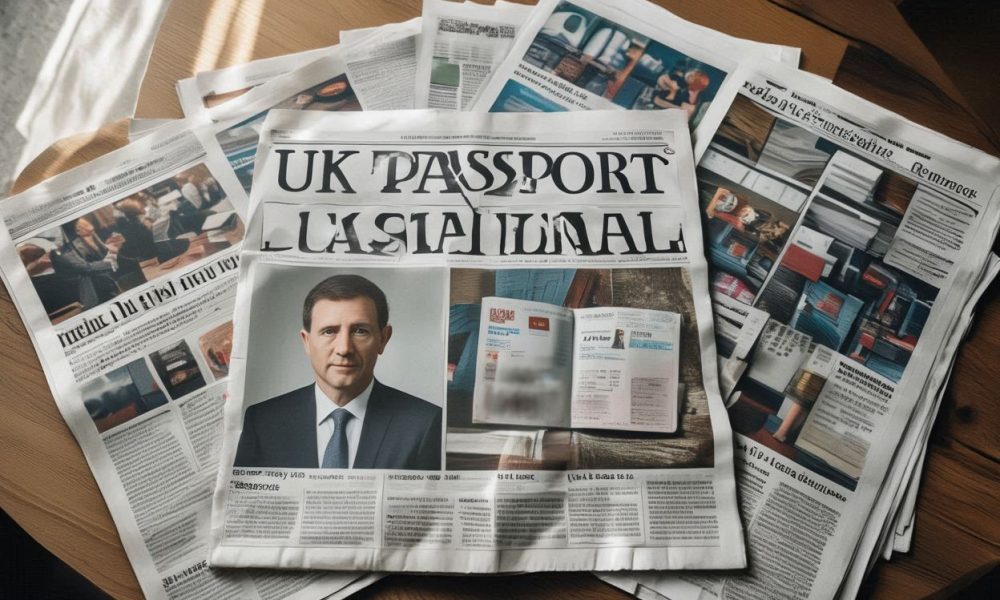
Murderers and cartel bosses slipped through borders with fraudulently obtained genuine passports
WASHINGTON, DC, April 28, 2026,
The Reading Crown Court passport fraud case exposed a criminal customer list that looked less like an ordinary document scam and more like a travel directory for fugitives, murderers, traffickers, and organized crime figures.
The scheme supplied fraudulently obtained genuine passports, often called FOGs, to criminals who needed more than aliases, as they required government-issued documents that could withstand routine inspection while concealing their true identities.
According to the National Crime Agency’s account of the case, the passports were issued legitimately but were obtained using false information, then sold to criminal clients for prices up to £20,000.
The NCA said customers included Glasgow murderers Jordan Owens and Christopher Hughes, Liverpool drug trafficker Michael Moogan, Manchester fugitive David Walley, and suspected Scottish drug traffickers connected to wider organized crime investigations.
The client list mattered because it showed that passport fraud was not a side hustle for minor offenders, but a strategic service for serious criminals who understood that mobility could preserve freedom.
The buyers were not tourists; they were fugitives buying time
A passport can look harmless inside a jacket pocket, but in the hands of a wanted criminal, it becomes a tool for escape, concealment, logistics, and continued operations abroad.
The criminals who bought these documents were not seeking convenience, but rather time before arrest, distance from surveillance, and access to foreign jurisdictions where police coordination becomes harder.
For fugitives facing murder investigations, drug-trafficking cases, or organized crime pressure, a convincing passport could open airports, hotels, rental counters, bank meetings, and safe houses under a name that did not trigger immediate suspicion.
That made the passport more useful than a weapon in many situations, because violence creates exposure while a credible identity document can create movement without attracting attention.
The Reading case showed that high-level criminals treated travel documents as operational infrastructure rather than accessories, because the ability to move across borders could determine whether a network survived enforcement pressure.
Jamie Acourt showed how an alias could sustain life abroad
Among the figures linked to fraudulent passport activity was Jamie Acourt, one of the original suspects in the Stephen Lawrence murder investigation, though jurors in his later drug case were told he was never convicted over that killing.
The Guardian reported that Acourt lived in Spain for more than two years under the alias Simon Alfonzo before his arrest in Barcelona, while facing allegations connected to a major cannabis supply conspiracy.
That case illustrated how a false identity can facilitate multiple border crossings, because it can help a fugitive live abroad, rent accommodation, move socially, and avoid the direct visibility associated with a real name.
A court’s later conviction for leading a multimillion-pound cannabis plot showed how fugitive mobility can overlap with continuing criminal activity, especially when the person remains connected to trafficking networks while abroad.
The passport, therefore, becomes more than a travel document because it allows the fugitive to build a temporary administrative life that can support movement, business, housing, and criminal logistics.
Michael Moogan represented the international drug-trafficking value of false travel documents
Michael Moogan’s name on the customer list showed why major drug traffickers valued fraudulently obtained passports, because the international drug trade depends heavily on movement, meetings, routes, and operational separation.
A trafficker who can travel under another identity gains more than personal safety, because the document can support meetings with suppliers, financial contacts, transport organizers, and criminal associates across borders.
The NCA described the passport group’s clients as serious criminals who used these documents to evade justice and cross international borders undetected, making the fraud a direct threat to public safety.
For drug networks, international travel is not incidental, as supply chains, maritime routes, courier systems, cash collection, and laundering channels often require people to move quickly between countries.
That is why a passport can become a cartel-level asset, because it gives the user access to the global spaces where criminal money, drugs, documents, and logistics intersect.
Glasgow murderers showed the violent end of the customer base
The inclusion of Glasgow murderers Jordan Owens and Christopher Hughes showed that the passport network was not merely serving financial offenders, because violent criminals also used forged identity access to escape accountability.
Murderers need distance from witnesses, police intelligence, rival criminals, and domestic surveillance, which makes a credible travel identity especially valuable during the first days or months of flight.
A fugitive who crosses borders under a false name can complicate arrest plans, extradition efforts, hotel searches, airline alerts, and intelligence sharing between agencies that may not immediately identify the alias.
The crime does not end when the passport is handed over, because the document can extend the period during which a dangerous person remains beyond the reach of justice.
That is why courts treated the scheme seriously, because each passport created a practical chance for a violent offender to move, hide, and potentially continue causing harm elsewhere.
The passports worked because they were genuine on the surface
The most dangerous feature of the scheme was that the passports were not crude counterfeits, because they were genuine documents produced through official systems after applications were corrupted with false information.
A cheap fake can fail when paper, printing, chips, laminates, or security features are examined closely, whereas a fraudulently obtained genuine passport retains authentic government features.
That authenticity made the documents valuable because they could pass many routine security checks, while the fraud remained hidden inside the application history and identity chain behind the booklet.
Anthony Beard’s role reportedly involved obtaining expired passports from vulnerable donors, then matching those identities to criminal customers who closely resembled the original holders, allowing the use of substituted photographs.
This method exploited trust inside the passport system because the identity details belonged to real people, while the final user was a fugitive purchasing credibility from the criminal market.
Christopher Zietek connected supply to criminal demand
Christopher Zietek’s role mattered because every black-market document network needs someone who can connect the product to buyers, especially when the buyers are dangerous criminals requiring trust before payment.
The Independent reported that Zietek was described at sentencing as the organizer, while Beard was described as the leg man who helped shepherd fraudulent applications through to completion.
That division of labor mattered because Beard’s access to donor identities and applications would have limited value without a broker capable of reaching serious criminals willing to pay premium prices.
Zietek’s alleged connections gave the scheme underworld reach, allowing the documents to move from paperwork fraud into the hands of people involved in murder, trafficking, and organized crime.
The broker was therefore not peripheral, because he turned fraudulent passports into an underworld service that could be marketed to fugitives who needed a route out.
The false identity became a working life
Once a fugitive obtained a credible passport, the document could support far more than travel, because it could help the person book hotels, rent homes, obtain driving licenses, open accounts, and pass ordinary checks.
The user did not need the false identity to be perfect forever, because even temporary credibility could provide enough time to cross borders, settle abroad, and rebuild movement patterns.
This is why passport fraud is so damaging, because the document enters everyday systems where clerks, landlords, hotel staff, rental agents, and banks may treat it as proof of legitimacy.
A passport used under an alias can create records that reinforce the false identity, making the fugitive harder to detect as more transactions appear to validate the same name.
The false life grows through repetition, because each hotel booking, flight reservation, rental agreement, and local document can make the next interaction easier to complete.
Interpol alerts were not always enough under older systems
The customer list shows why passport fraud created such serious enforcement problems: a wanted person using a false identity could avoid alerts associated with the real name during routine checks.
Interpol red notices and national alerts are powerful tools, but they depend on authorities identifying that the person presenting a document is the same person sought under another name.
A fraudulently obtained passport could weaken that connection if the document appeared genuine, the photograph looked plausible, and the biographical details did not immediately match the fugitive’s known profile.
The problem was not that international police systems lacked value; it was that identity fraud attacked the bridge between the body, the document, and the alert.
Modern biometric systems are designed to strengthen that bridge, but the Reading case belonged to an era when lookalike documents could still create dangerous windows of mobility.
Biometric borders are closing the loophole that made passports valuable
Europe’s biometric border systems now threaten the same criminal model because they require stronger links between the traveler’s face, fingerprints, passport data, travel history, and prior records.
A passport may still look genuine, but the person presenting it must increasingly survive facial comparison, fingerprint checks, document-chip validation, and cross-border database review.
That changes the risk for fugitives because the old lookalike strategy becomes weaker when a border system can compare physical identity markers more consistently than a rushed human officer.
A criminal who bought a passport under another person’s identity may find that the document now creates exposure, especially when biometric data conflicts with the claimed profile.
In 2026, the black-market passport is no longer a guaranteed route out, because the border increasingly tests the person behind the booklet rather than only the booklet itself.
The victims included the people whose identities were harvested
The passport customers were dangerous, but the scheme also harmed vulnerable people whose identities were used as raw material for fugitives seeking travel documents under false names.
Those donors may have been paid small sums for expired passports, but their personal details could later become linked to criminal activity, investigations, and administrative confusion.
A donor’s identity record may have helped a murderer, trafficker, or fugitive cross borders, even if the donor did not understand the full criminal purpose behind the transaction.
That imbalance exposed the cruelty of the network, because the vulnerable person supplied identity value while the criminal customer gained international mobility.
The human cost, therefore, spread in both directions, harming victims of the fugitives’ crimes while also exploiting people whose names and document histories were converted into underworld commodities.
The case exposed the professionalization of fugitive services
The passport network operated like a specialized criminal service provider, offering high-value access to identity documents to clients who understood that documents could protect them more quietly than weapons.
Organized crime increasingly depends on specialists, including brokers, document suppliers, money launderers, encrypted-phone sellers, couriers, safe-house operators, and corrupt facilitators, each of whom supports the larger network.
The Reading case showed that document brokers occupy a critical place within that ecosystem, because they help criminals move when police pressure makes staying in one place dangerous.
A fugitive service market develops when enough criminals need the same product, enough brokers can supply it, and enough fragmentation in law enforcement allows the product to work.
The collapse of the scheme therefore removed more than individual passports, because it disrupted a logistics channel that supported serious criminals across borders.
Second passports must not be confused with fugitive identities
A lawful second passport can support mobility, family security, emergency relocation, and business continuity, but it is fundamentally different from a fraudulently obtained passport used by criminals.
People exploring second passport planning should understand that legitimate citizenship creates lawful options only when documents, residence claims, tax records, and travel histories remain consistent.
A second passport obtained through recognized legal channels can be renewed, verified, explained, and used without relying on another person’s identity or a corrupted application.
A fugitive passport does the opposite because it relies on deception, donor exploitation, false information, and the hope that authorities fail to link the user to their true identity.
The distinction matters because lawful mobility can withstand scrutiny, while criminal mobility collapses when biometrics, databases, and investigators expose the lie behind the document.
Legal identity planning must reject criminal document shortcuts
Lawful identity planning is designed to create defensible records, not counterfeit lives, because the goal is documentation that can survive banking, consular, immigration, and border review.
Through legal identity planning, the focus should remain on government-recognized status, verified documents, compliance, and a coherent identity profile that can be maintained over time.
That approach is the opposite of buying passports from criminal brokers, because a lawful identity must be explainable while an illegal identity depends on silence and system failure.
A legitimate identity structure can support privacy, relocation, and security without exposing the person to passport fraud charges, identity theft allegations, or future border detention.
The Reading case demonstrates why shortcuts are dangerous, because a document that appears powerful in the underworld can become evidence once investigators reconstruct the supply chain.
The customer list became the map of the damage
The buyers revealed the network’s real purpose, because each name represented a criminal problem that had been given a new route through border systems.
Jamie Acourt’s life under an alias, Michael Moogan’s drug-trafficking profile, and the Glasgow murderers’ fugitive status illustrated the range of harm enabled by fraudulent passports.
These were not theoretical risks because the documents allowed serious offenders to move, settle, conceal themselves, and potentially continue criminal activity while authorities searched under different names.
The client list, therefore, became a map of the damage, showing how one document network could affect murder cases, drug conspiracies, organized crime investigations, and international policing.
That is why the passport scam mattered far beyond Reading Crown Court: it revealed how identity fraud can become the silent engine behind the movement of fugitives.
The wind is shifting against the fugitives
The old passport fraud market promised fugitives a chance to become someone else long enough to escape the country, establish a new base, and outlast immediate police pressure.
That promise is weakening because biometric borders, shared databases, airline records, watchlist checks, and stronger document security now make false identities more difficult to sustain.
The customers who once slipped through borders exposed the danger of fraudulently obtained genuine passports, but their cases also helped explain why governments are tightening identity verification.
For lawful travelers, stronger systems may feel slower or more intrusive, but the public-safety logic is clear when the customer list includes murderers and major traffickers.
In 2026, the fugitive in the wind is running into a different border reality, because the passport may still open, but the person behind it is harder to hide.




