
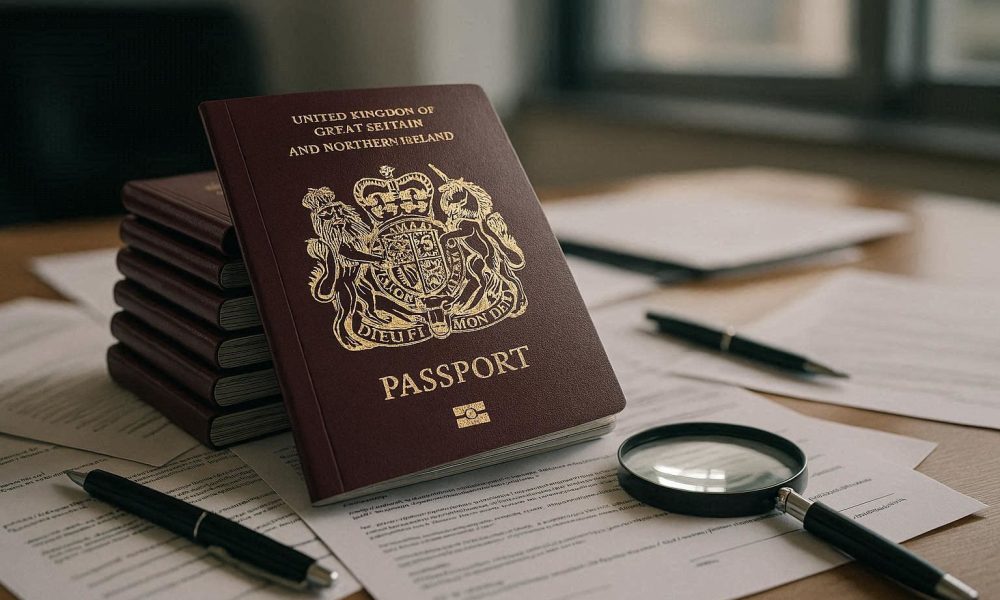
Voice recognition and handwriting experts sealed the case and caught the gang
WASHINGTON, DC, April 28, 2026, the downfall of the passport fraud network was not driven by a single dramatic confession, as investigators built the case through handwriting analysis, voice recognition, fingerprints, surveillance, mobile data, and patient reconstruction of ordinary-looking paperwork.
The Reading Crown Court case showed how forensic science can dismantle organized crime when investigators treat every form, phone call, meeting, photograph, application note, and document handover as part of a wider criminal timeline.
Anthony Beard and Christopher Zietek had helped supply fraudulently obtained genuine passports to serious criminals, with the Guardian reporting on the case describing a scheme that gave fugitives documents used to evade arrest and identification.
The forensic breakthrough mattered because the passports were genuine on the surface, meaning investigators had to prove that the application process itself had been corrupted through false photographs, donor identities, burner phones, and staged verification.
The paperwork became the crime scene
Passport fraud may sound like an administrative offense, but in this case, the application forms became crime scenes because they carried handwriting patterns, fingerprints, contact numbers, applicant details, and evidence of who controlled the process.
Handwriting experts examined hundreds of passport application forms, looking for recurring features that could indicate whether the same person had completed documents supposedly submitted by different applicants in different cases.
That analysis became powerful because Beard was not merely associated with the scheme on suspicion; experts were able to connect his distinctive writing patterns to those used by fugitives and criminal customers.
The forms were supposed to represent genuine citizens applying for passport renewals, yet the handwriting evidence suggested that one organizer was repeatedly shaping applications behind names that were not his own.
That finding helped convert scattered paperwork into a pattern, showing that the applications were not isolated mistakes but part of a managed identity-fraud operation built around repeated methods.
Handwriting still matters in a digital crime era
Modern crime often focuses on encrypted phones, digital wallets, online aliases, and electronic surveillance, but the Beard case proved that handwritten forms can still expose the human hand behind a complex fraud.
A person may change phones, use cash, avoid email, and work through intermediaries, but handwriting can preserve habits formed over decades, including letter shapes, spacing, pressure, rhythm, and signature movement.
Forensic document examination does not simply look for obvious similarities; specialists compare features across many samples to determine whether recurring writing patterns support a common author.
That became critical because the fraudulent applications were designed to appear as separate renewals by different people, even though the same criminal process allegedly lay behind many of them.
The handwriting evidence, therefore, undermined the illusion of independent applicants, showing that the network had a central practical operator who moved documents through the system.
Voice recognition turned phone calls into evidence
The second major forensic tool was voice recognition, as investigators analyzed intercepted calls to the HM Passport Office from someone impersonating the donors named on the forms.
Those calls were important because following up on applications demonstrated active control, not passive involvement, and placed the caller directly within the administrative process used to obtain the fraudulent passports.
Voice specialists examined recordings to determine whether Beard had called officials while impersonating the applicants, creating another forensic link between the paperwork and the person managing the fraud.
That evidence mattered because the criminal method depended on making the Passport Office believe that real citizens were personally advancing their own renewal applications.
If Beard’s voice appeared in calls pretending to be those donors, the applications no longer looked like ordinary renewals, because the voice evidence showed the donors were being displaced by the operator.
The fraud relied on pretending ordinary citizens were speaking
The voice evidence exposed the central deception of the scheme because the passport system depended on the applicant’s identity, intent, and participation being genuine at every step.
When someone calls a government office, posing as the applicant, the fraud goes beyond a false photograph and becomes a coordinated impersonation of a real citizen.
That impersonation was especially serious because vulnerable donors may have surrendered expired passports, but the subsequent administrative communication allegedly advanced the applications without the honest participation of those citizens.
The calls helped investigators show that the fraud was not limited to document collection, as the scheme required active management, follow-up, problem-solving, and manipulation of official procedures.
In criminal identity cases, that kind of follow-up evidence can be decisive because it shows the operator remained involved after the initial donor contact and before the passport was issued.
Surveillance gave the forensic evidence a physical timeline
Handwriting and voice evidence became even stronger when cross-referenced with surveillance footage showing meetings with donors, counter-signatories, and participants connected to the passport applications.
A form can show writing, and a phone call can show impersonation, but surveillance can place people together at moments when investigators need to prove the relationships behind the paperwork.
The timeline became difficult to deny because investigators could connect meetings, forms, calls, donor identities, burner phones, and passport progress into one operational sequence.
That sequence mattered because criminal networks often defend themselves by claiming coincidence, limited knowledge, or distance from the final fraudulent document.
Once surveillance matched the forensic evidence, the case became less about one suspicious form and more about a complete pattern of acquisition, preparation, impersonation, submission, and delivery.
Burner phones became part of the forensic web
The investigation also relied on contact numbers listed on applications because many of those numbers were tied to burner phones used to manage communications related to the fraudulent passport process.
Burner phones are supposed to create distance, yet they can become evidence when repeated use, cell-site data, application details, call records, and surveillance footage connect them to a single operator.
In the Beard case, phone evidence helped show that the same communication infrastructure supported multiple applications that were supposedly connected to different real people.
That was damaging because a genuine passport applicant typically does not exhibit suspicious contact patterns shared by many unrelated applicants within a criminal passport pipeline.
The phones, therefore, helped investigators map the administrative machinery of the fraud, showing how temporary numbers, donor identities, and passport applications were linked through repeated control.
The Scottish connection was exposed through repeated methods
The Scottish connection came into focus because the same forensic signatures appeared across applications linked to fugitives and organized-crime figures from Scotland and other parts of Britain.
Investigators were not looking at only one form or passport, because the scale of the scheme required them to identify recurring methods linking different customers to the same supply chain.
Handwriting evidence, voice evidence, surveillance, and phone data helped show that the passports used by Scottish fugitives were not independent anomalies but products of a shared criminal operation.
That connection was critical because organized crime networks often use intermediaries, making it difficult to prove that distant buyers were supplied through the same London-based document network.
The forensic record helped bridge that distance, connecting the paperwork in one part of the country to criminal customers who needed the documents to escape and continue moving.
Science helped expose the human infrastructure behind organized crime
The passport network was not merely a document factory because it relied on donors, recruiters, brokers, countersignatories, drivers, customers, phones, applications, and handovers, each of which left traces.
Forensic science helped investigators turn those traces into structure, showing how vulnerable donors at the bottom were connected to serious fugitives at the top.
That matters because organized crime often hides behind specialization, where one person recruits donors, another manages documents, another brokers clients, and another handles logistics.
The scientific evidence made the specialization visible, showing how each role contributed to the final criminal product: a passport capable of moving a fugitive across borders.
When investigators can prove the roles, the network becomes harder to dismiss as a loose association, because the evidence shows function, coordination, and shared criminal purpose.
Fraudulently obtained genuine passports required a deeper investigation
The case was challenging because the passports were not crude forgeries, since they were genuine British passports issued through official systems after applications had been manipulated.
That meant investigators had to look behind the booklet, examining who completed the forms, who supplied the photograph, who contacted the Passport Office, and who controlled the supporting details.
A counterfeit document can be detected through printing flaws, altered pages, bad chips, or weak security features, but a fraudulently obtained genuine passport requires an investigation into the application chain.
This is why handwriting experts and voice specialists became so important, because the fraud was hidden in the process, rather than being visible only on the finished passport.
The stronger the document appeared, the more important the forensic reconstruction became, because investigators had to prove that official issuance had been reached through deception.
The method exploited trust inside the passport system
Every passport system depends on the trust that applicants are who they claim to be, that photographs represent the true holder, and that supporting declarations come from honest participants.
The Beard network attacked that trust by using real donor details while allegedly substituting criminal photographs and managing follow-up communications to move the applications toward approval.
That method made the fraud particularly dangerous because the final passport could appear legitimate at borders, hotels, rental desks, and other places where staff rely on government-issued documents.
The criminal value came from official credibility, because a fraudulently obtained passport gives fugitives stronger cover than a cheap counterfeit produced entirely outside government systems.
Forensic evidence was therefore essential because the lie was not obvious on the passport’s face but embedded in the forms, calls, meetings, and donor interactions that produced it.
The United States has seen the same danger in passport fraud
The United States also treats passport fraud and aggravated identity theft as serious crimes because false applications can support fugitive movement, financial crime, immigration fraud, and broader public-safety risks.
A recent U.S. Department of Justice passport fraud case illustrates how federal prosecutors treat false passport applications and stolen-identity material as prison-level offenses rather than administrative mistakes.
That comparison matters because the same basic threat exists across jurisdictions, where a single corrupted document can enable a criminal to travel, bank, rent, communicate, or hide under another identity.
Governments are tightening document systems because passport fraud does not end at the application counter; a fraudulent passport can become the foundation for years of criminal activity.
The Beard case shows why forensic investigation must extend beyond the document itself: the application process is often where the strongest evidence of intent appears.
The recordings undercut the illusion of distance
Criminal organizers often try to create distance from the final offense, claiming that they merely knew someone, handled a form, made a call, or passed along information without knowing the full purpose.
Voice recordings can destroy that distance because they capture the person actively engaging with government processes, making representations, and advancing applications under identities that were not their own.
When the same person is connected to forms, phones, meetings, and calls, the defense of accidental involvement becomes harder to sustain.
That cumulative effect is why the case did not depend on a single forensic tool, but on how handwriting, voice, fingerprints, surveillance, and phone evidence reinforced one another.
The strength came from convergence, as each category of evidence pointed to the same organized process rather than to a series of unrelated administrative events.
The timeline made the fraud visible
A successful identity fraud case often depends on the construction of the timeline, because investigators must show when the donor was approached, when forms were prepared, when calls were made, and when documents were moved.
The timeline in this case linked surveillance footage of meetings with donor activity, passport applications, phone calls, handwriting evidence, and later use by fugitives or criminal customers.
That sequencing mattered because it demonstrated control over the process, from acquisition through application management to the wider criminal supply chain.
A passport in a fugitive’s hands is suspicious, but the timeline explains how that passport got there and who helped make it possible.
The stronger the timeline, the harder it becomes for each participant to claim they were present only at a single harmless moment.
Legal identity planning is the opposite of forensic collapse
The case also shows why lawful identity planning must be built on government-recognized documentation, transparent eligibility, verified records, and procedures that can withstand forensic review later.
Through legal identity planning, the goal is a defensible identity structure, not a paper trail that collapses under scrutiny by experts examining handwriting, calls, applications, and supporting documents.
A lawful identity can be renewed, explained, and verified, whereas a fraudulent identity relies on false procedural steps that become evidence once investigators reconstruct the chain.
That distinction matters in 2026 because modern verification systems increasingly compare documents, biometrics, application histories, travel records, and banking files across time.
Privacy is strongest when the records are lawful and coherent, because secrecy built on forged documents eventually becomes vulnerable to the same forensic tools that caught the passport gang.
Second passports must be supported by lawful records
A legitimate second passport can support family security, business continuity, relocation planning, and emergency travel, but only when the citizenship or status behind it is legally recognized.
People exploring second-passport planning should understand that lawful mobility depends on consistency across passport records, residence claims, tax filings, banking profiles, and travel history.
The Beard case demonstrates the opposite model, in which passports were created through donor exploitation, false photographs, impersonation, and corrupted applications designed to conceal criminal users.
A lawful passport can survive renewal and inspection because it rests on recognized status, while a fraudulent passport becomes weaker as soon as investigators examine how it was obtained.
In a biometric and forensic border era, the question is not only whether the document looks real but also whether the entire identity chain can withstand scrutiny.
The forensic case changed the meaning of passport fraud
The forensic breakthrough showed that passport fraud is not merely about false travel documents, but about the scientific reconstruction of the human actions behind them.
Handwriting experts identified the hand behind the applications, voice specialists identified the person chasing the paperwork, and surveillance tied those acts to meetings with donors and criminal logistics.
That combination turned ordinary administrative details into powerful evidence, proving that science can expose criminal systems that depend on repetition, impersonation, and bureaucratic manipulation.
The Scottish connection did not fall because one passport looked suspicious; it fell when investigators connected the documents to voices, writing, phones, meetings, and customers.
In the end, the gang was caught because every attempt to create a false identity left traces of the real people behind.




