
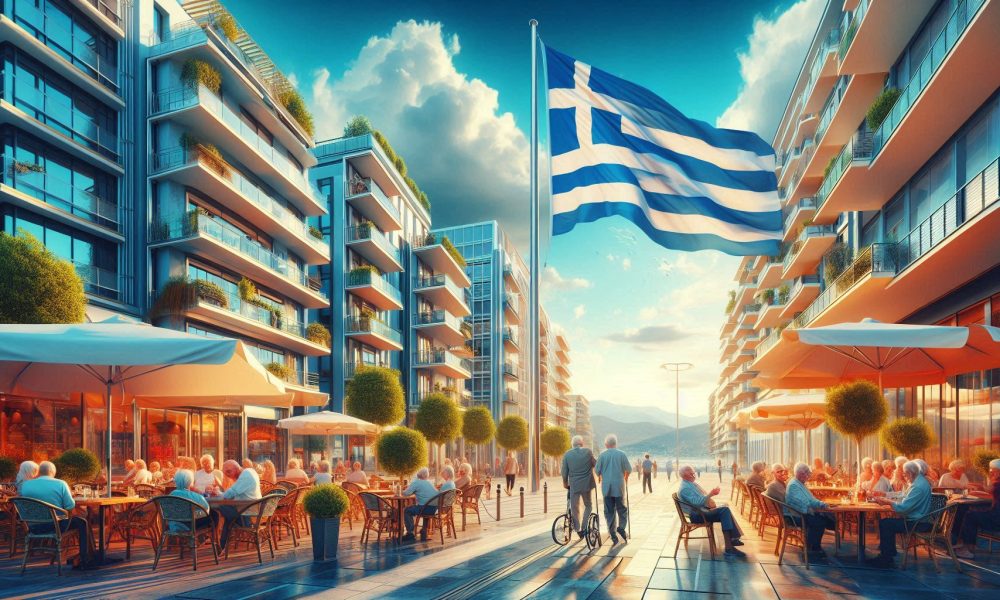
Sunshine, a slower pace, and accessible residency options are pushing Greece higher on many relocation shortlists.
WASHINGTON, DC, March 10, 2026. Greece is moving up fast in the European relocation conversation, and not because it suddenly became the continent’s cheapest destination. It is rising because the people most likely to move in 2026 are recalculating what value really means.
For a growing share of globally mobile buyers, retirees, remote workers, and second residence seekers, Europe is no longer a glamour contest. It is a quality-of-life decision. That shift matters. It is changing which countries feel realistic and which ones increasingly look beautiful but exhausting.
That is where Greece is finding traction.
For years, Spain and Portugal dominated the lifestyle move narrative. They still matter. Italy still has its hold on dreamers. France still wins on status. But as buyers look harder at affordability, climate, bureaucracy, housing pressure, and simple day-to-day ease, Greece is starting to look like one of the most persuasive answers on the board.
Not perfect. Not friction-free. But persuasive.
The case for Greece in 2026 is not built on one thing. It is the blend. Sunlight that still feels like a real quality of life upgrade. A rhythm that many buyers describe as more human and less punishing. Food, public space, and social habits that make ordinary days feel less transactional. And just enough residency flexibility to make the move feel possible rather than theoretical.
That combination is powerful in a year when a lot of would-be movers are less interested in performing the dream than actually living it.
This is the first important point. Greece is not climbing because it is trendy. It is climbing because it fits the mood.
The mood in 2026 is more practical than people admit. Buyers are still drawn to sea views, walkable neighborhoods, and beautiful weather. Of course they are. But they are also tired. Tired of overstretched big cities. Tired of housing markets that feel hostile. Tired of spending fortunes to maintain a life that does not feel particularly good. Tired of destinations that look polished from the outside but deliver stress at ground level.
Greece meets that fatigue with something calmer.
It offers the emotional appeal of Mediterranean Europe without always carrying the same psychological price tag as the region’s most overclaimed markets. That matters more than many real estate brochures let on. People are not only buying a home. They are buying relief. They are buying time outside. They are buying slower mornings, later dinners, easier weekends, and a sense that not every hour has to be optimized.
In that sense, Greece is less a property story than a life story.
That is also why the country appeals to more than one type of mover. Retirees see longevity in it. Families see climate and lifestyle. Remote workers see beauty and flexibility. Midlife professionals see a second act. Some want Athens, not the islands, because they want a real city with culture, airports, hospitals, and everyday infrastructure. Others want Crete, the Peloponnese, Rhodes, or smaller coastal markets where the pace softens further, and the money can still stretch.
The destination is not one place. It is a menu of temperaments.
And that menu looks increasingly compelling as other European options get more crowded, more expensive, or more emotionally demanding.
There is also a subtle but important reason Greece is rising now. Buyers have become more comfortable with a less polished version of Europe.
A decade ago, many internationally mobile households still wanted the fully frictionless European fantasy, the immaculate transit system, the seamless administration, the unmistakable prestige postcode. In 2026, more of them are willing to trade some smoothness for something that feels alive. They are asking a different question. Not, “What is the most efficient place to live in Europe?” but, “Where does daily life feel rich enough to justify the move?”
Greece answers that question well.
It helps that Europe itself is being re-ranked in the minds of relocation buyers. The old gold standard cities remain attractive, but they no longer dominate the aspiration market without resistance. High housing costs, tax anxiety, political fatigue, and general oversaturation have changed the story. The more Europe’s northern and western prestige hubs come to feel financially punishing, the more the Mediterranean regains ground.
Spain still leads that lifestyle category in many ways. But Greece is benefiting from being perceived as the place one step earlier in the cycle. It feels less exhausted. Less overmarketed. Less fully priced in. For relocation buyers, that matters almost as much as law or taxes.
According to advisers at Amicus International Consulting, Greece is increasingly attractive to clients who want a European foothold that still feels livable rather than performative. That distinction is becoming more important as relocation decisions grow less romantic and more strategic. Buyers are not simply asking where they would enjoy a holiday. They are asking where they can build a functional second life, maintain flexibility, and still feel that the move improves the texture of ordinary days.
That texture is central to Greece’s rise.
People who relocate successfully often talk less about monuments and more about habits. Can you walk for coffee in the morning? Is lunch still a social experience? Do evenings belong to people, not only to work? Is the weather good enough to make daily life open outward? Does the built environment invite participation rather than withdrawal? Greece scores well on those unglamorous but decisive questions.
And for many people, especially those coming from North America or the UK, that is the actual luxury now.
The residency side of the equation matters too. Greece is not rising only because it is pleasant. It is rising because it can feel reachable. The country’s official residency pathways have helped make the move more legible for non-EU nationals, particularly people exploring property-linked residence, longer stays, or a more deliberate transition into European life. That does not mean the process is effortless. No serious cross-border move is. But compared with the complexity or cost perception surrounding other European markets, Greece often looks understandable enough to stay on the shortlist.
That accessibility, even when imperfect, has real psychological value.
Once a country begins to feel attainable, it gains momentum. Buyers start researching neighborhoods instead of just admiring them. Families start asking practical questions. Retirees start pricing healthcare, ferries, and winter temperatures. Remote workers stop talking about someday and begin asking what next spring might look like. The shift from fantasy to logistics is exactly where many relocation destinations lose steam. Greece, right now, seems to be holding it.
Still, the strongest case for Greece is not that it offers an easy Europe. It is what makes it more emotionally efficient.
That phrase may sound soft, but it has become a hard metric. People now judge destinations by the amount of psychic energy they consume. Some places drain you with cost. Others with administration. Others with weather, social distancing, or the pressure to keep up. Greece’s appeal lies partly in the belief that it gives more back than it takes, at least for buyers whose priorities are climate, lifestyle, and time quality rather than pure career acceleration.
That is also why Greece is gaining among what might be called lifestyle buyers, people purchasing homes, residence rights, or longer-term options not only for returns but also for personal use, family flexibility, and future planning. They are less obsessed with squeezing every basis point of upside from real estate. They care more about whether the asset doubles as a life raft, a base, a refuge, or a place that can absorb more of the year.
This is where the conversation starts to overlap with broader mobility planning.
At Amicus’s second-passport and contingency-planning practice, advisers frame this kind of move less as a simple real estate purchase and more as part of a wider resilience strategy. In that view, countries like Greece appeal not only because they are pleasant to live in but because they can function as a stabilizing jurisdiction within a larger personal plan. For some households, that means a retirement runway. For others, it means a European base, a second home with legal structure behind it, or a Plan B that feels credible before it feels urgent.
That kind of thinking is much more common in 2026 than it was a few years ago.
It would be misleading, though, to paint Greece as an undisputed bargain or an uncomplicated good. The country’s rise comes with visible pressure points, especially on housing. A recent Reuters report on Greece’s rental squeeze captured the harder side of the story, with Athens rents climbing sharply in recent years and local frustration growing around affordability, foreign demand, and the distortions created by investment-linked residency. That matters because the same forces making Greece attractive to outsiders can also make it harder for locals to stay put.
Any honest assessment has to include that tension.
It also means that buyers rethinking Europe need to separate the two different Greeces in their minds. One is the Greece of aspiration, sea, sun, terraces, slow lunches, and a cultural tempo that seems to reward human presence. The other is the Greece of rising urban rents, uneven administration, local political pressures, and a property market whose most desirable pockets are no longer cheap in the way old lifestyle narratives sometimes pretend.
Both are real.
But that duality does not weaken the core argument. In some ways, it sharpens it. Greece is climbing not because it is undiscovered, but because it still looks favorable even after buyers account for the complications. That is a more durable kind of interest. It suggests the country is no longer being judged as a fantasy add-on. It is being judged as a real-life option.
And when Greece is measured against real-life alternatives, it compares well.
Compare it with the northern European model, Greece offers better climate and, for many, a more appealing social rhythm. Compare it with Portugal, some buyers see a market with a little more breathing room and less saturation in public perception. Compare it with Spain and the contest becomes closer, but Greece still wins with people who want something slightly less polished, slightly less crowded, and slightly more emotionally loose. Compare it with Italy, Greece often feels simpler to understand.
That may be why it is climbing so fast. It does not have to beat every rival on every metric. It only has to win the composite score that matters to the buyer in front of it.
For many in 2026, that composite score looks something like this: enough legal accessibility to make the move feasible, enough climate appeal to justify the effort, enough daily pleasure to improve actual life, and enough remaining value to keep the dream from feeling financially absurd.
Greece checks more of those boxes than it used to.
So the country’s rise is not really about sunshine, though the sunshine helps. It is not only about property, though real estate remains central. It is not just about residency routes, though those make the story investable. It is about a bigger European reset.
Lifestyle buyers are rethinking what they want from the continent. Less status. More use. Less fantasy. More function. Less speed. More life.
In that reset, Greece looks newly well placed.
Not because it has solved Europe. Not because it is the cheapest answer. Not because every island, neighborhood, or permit route makes equal sense, but because it offers something rarer than perfection to a widening group of buyers.
It offers plausibility.
And in the relocation market of 2026, plausibility is exactly what is climbing fastest.




