
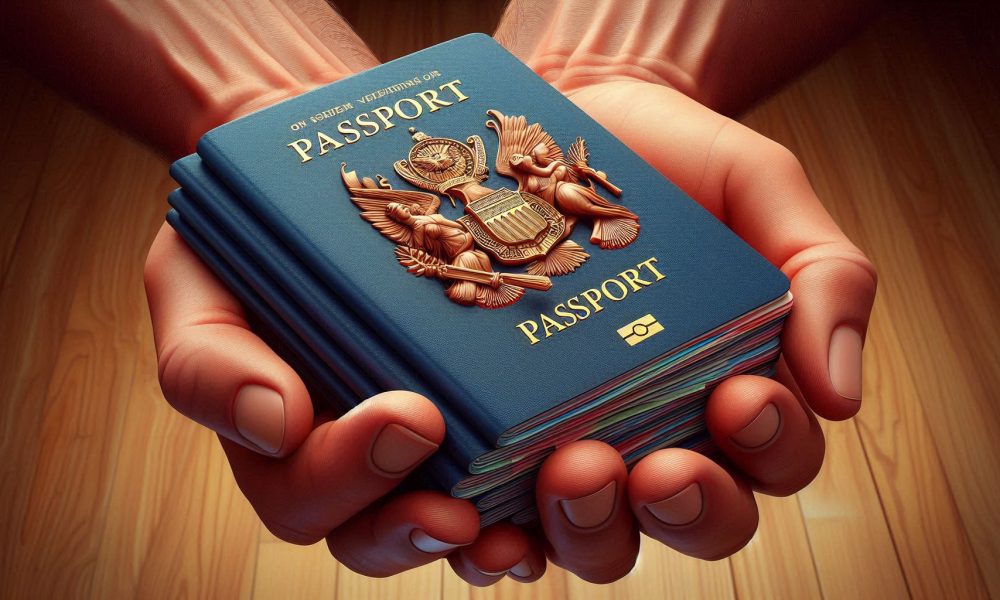
Authorities are tracking fake brokers, forged status claims, and cross-border payment trails tied to buying diplomatic passport offers.
WASHINGTON, DC, March 6, 2026.
The phrase sounds like a luxury service. The reality usually looks more like a fraud file.
Across encrypted chats, anonymous websites, and private referral circles, brokers continue pitching “diplomatic passport packages” to buyers who want easier travel, elite status, or a layer of protection from ordinary scrutiny. The sales language is always polished. The package is described as discreet, exclusive, and politically connected. The buyer is promised speed, privacy, and some version of special treatment at borders or with authorities. But once investigators, foreign ministries, or compliance teams look closely, many of these offers fall apart fast. They are not selling lawful diplomatic status in the way the marketing suggests. They are selling confusion.
That confusion is the fuel that keeps the market alive. Most buyers do not realize that a diplomatic passport, a diplomatic appointment, and recognized diplomatic status are three different things. Online sellers blur them together on purpose. They market the booklet as if it automatically creates the role, and they market the role as if it automatically creates immunity. In real life, official status turns on government function, formal documentation, and recognition by the receiving state. As the U.S. State Department explains, applicants in diplomatic visa categories generally need a diplomatic note from their government confirming their status and official purpose of travel, and possession of a diplomatic passport alone is not enough to qualify automatically for diplomatic treatment or even a no-fee visa exemption.
That one legal point destroys most of the online pitch.
A real diplomatic framework is bureaucratic, political, and conditional. A broker’s version is glamorous, frictionless, and for sale. That gap is where scams thrive. The buyer is told there is a quiet back channel inside a ministry. A title will be arranged. A passport will be printed. Questions about accreditation are waved away as technicalities. The broker says discretion is the whole value, so there should be little paperwork and even less transparency. But real estate systems are not designed to work like boutique concierge services for private clients who want prestige or insulation. They are designed to document official service. When the sales script becomes more secretive as the promised benefits grow larger, that is usually not sophistication. It is a warning.
Authorities are increasingly focused on the document side of the problem because document fraud is no longer limited to obvious counterfeits. Interpol’s document fraud guidance makes clear that the risk includes counterfeit documents, forged documents, pseudo documents that are not officially recognized, fraudulently obtained genuine documents, and genuine documents misused by impostors. That matters because many buyers still assume the only real danger is a crude fake. In fact, a passport can be genuine and still be fraudulently obtained, irregularly issued, misused outside its lawful purpose, or sold with wildly false claims about what it can do. That is part of why border agencies and investigators rely on databases, reference tools, and forensic support rather than taking a document’s appearance at face value.
The online “package” market also thrives because it sells more than paper. It sells a story. To one buyer, the story is easier airport treatment. To another, it is immunity from local headaches. To a nervous businessperson, it may sound like a hedge against geopolitical instability or reputation risk. To someone already under legal pressure, it may sound like a shield from warrants, civil claims, or extradition concerns. This is where sober analysis matters. In its discussion of diplomatic passports and immunity, Amicus International Consulting makes the key distinction that having a diplomatic passport does not automatically grant immunity, because the host country still decides whether the holder is recognized and accredited as a diplomat. That is not a small technicality. It is the whole difference between status and theater.
Once money moves, the schemes often become easier to spot. Brokers typically ask for fast transfers, staged payments, or third-party routing through consultants, fixers, or shell intermediaries. The paperwork is thin. The assurances are broad. The promised status is vague enough to sound impressive but too vague to verify. Sometimes the seller offers a title, sometimes a protocol letter, sometimes a “special mission” explanation that seems to float above ordinary law. By the time a buyer starts asking which ministry approved the role, whether the host state will recognize it, or what official purpose justifies the credential, the broker often pivots back to confidentiality. Investigators read that pattern very differently. They see an inducement structure, a documentation gap, and a payment trail that may cross borders faster than the client realizes.
Reported enforcement cases show why this world attracts anti-corruption and fraud investigators. In one widely cited example, Reuters reported that Sierra Leone’s anti-corruption commissioner said corrupt officials had been selling fraudulent service and diplomatic passports for thousands of dollars to individuals hoping to use them in U.S. visa applications. That case remains useful because it strips away the fantasy. What looks online like privileged access often looks in an investigation like public corruption, misuse of state access, and buyers gambling that an official-looking document will survive scrutiny long enough to be useful.
Another red flag is the way many offers confuse travel documents with privileges. In legitimate systems, official travel passports are tied to official business. Canada’s passport guidance says its official passports are meant to show that the bearer is traveling on official business and representing Canada abroad, and it explicitly says the official passport is not designed to give advantages to the bearer. Its newer guidance goes further, stating that diplomatic or special passports must be used for official business and can be canceled or taken back if they are used inappropriately. That is the opposite of the online pitch, which treats the document itself as a premium perk. States describe these passports as instruments of function. Scammers describe them as instruments of personal advantage.
That difference becomes even sharper at the border. A buyer may think a diplomatic cover solves everything. In practice, border officers, visa officials, and compliance teams often look beyond the booklet to the entire story around it. What is the person’s role? Who appointed them? What is the official purpose of travel? Is there a diplomatic note? Is there accreditation? Is the claimed status current? Does the traveler’s profile make sense in light of the title being used? Even where some fee exemptions or courtesies may exist, the U.S. government says possession of a diplomatic passport alone is not enough. That means the high-priced package may not deliver the frictionless treatment the buyer imagined. In some cases, it may trigger more questions, not fewer.
The forged status claim is often the most dangerous part of the scheme. Some brokers are not even focused on producing an impeccable document. They are focused on producing a convincing story around a document, real or fake. The holder is instructed to say he is a special envoy, trade representative, adviser, or unofficial delegate. Those labels can sound impressive to a nervous client, but if they cannot be independently verified, they may collapse under minimal scrutiny. Interpol’s categories matter here because pseudo documents and fraudulently obtained genuine documents can be just as operationally dangerous as obvious counterfeits. A real-looking passport paired with a false or inflated claim of status can still lead to immigration trouble, criminal exposure, or financial compliance consequences.
This is also why the market has become global in form, even when individual cases are local. The advertising may start in one country, the issuer may be claimed to sit in another, the payment may move through a third, and the intended use may be at borders or banks somewhere else entirely. That international spread is part of the appeal to scammers. It creates confusion about which authority should be asked, which law governs the claim, and how a buyer can verify anything before paying. But the same cross-border structure also gives investigators multiple entry points. Payment records, messaging histories, ministry records, visa applications, and document checks can all start revealing the same thing, which is that the “package” was never a recognized diplomatic pathway at all.
The practical lesson is less glamorous than the sales copy. A diplomatic passport that sits inside a real diplomatic framework is part of a formal state system. A diplomatic passport package sold online is usually trying to imitate the appearance of that system without the underlying legal structure that makes it meaningful. That is why the most responsible experts keep asking questions the brokers hate. Which authority issued it? What official function justifies it? What evidence of recognition exists? What country is expected to honor the claim? What happens if the receiving state says no? The silence or evasion that follows is often more revealing than any glossy scan of a passport page.
In the end, the red flags are remarkably consistent worldwide. Big promises. Thin documentation. Vague titles. Fast money. Heavy secrecy. Absolute claims about immunity or border treatment. Little attention to accreditation, host state recognition, or official purpose. The buyer thinks he is purchasing privileged access. Investigators often see a very different product, forged claims, misuse of genuine documents, or a corruption trail waiting to be mapped. That is why “buying a diplomatic passport package” is not understood by authorities as a clever shortcut. It is increasingly understood as a high-risk proposition that can end in a fraud complaint, a canceled document, a border stop, or a criminal file.
The final truth is the simplest one. Diplomatic status is not just something that can be printed. It has to be recognized. When an online seller tries to skip that part, the package is no longer a diplomatic solution. It is a red flag wearing official colors.




