
According to Persistence Market Research, the lubricant packaging market is witnessing steady expansion, driven by the growing need for safe, durable, and efficient packaging solutions across automotive and industrial sectors. Lubricant packaging plays a vital role in preserving product integrity, preventing contamination, and ensuring convenient dispensing across supply chains. With increasing global automotive production and rising industrial activities, demand for high performance lubricant containers, bottles, pails, and drums continues to accelerate. Manufacturers are focusing on innovative packaging designs that enhance storage stability and transportation safety. The market also benefits from expanding aftermarket servicing networks and higher consumption of engine oils and industrial lubricants worldwide.
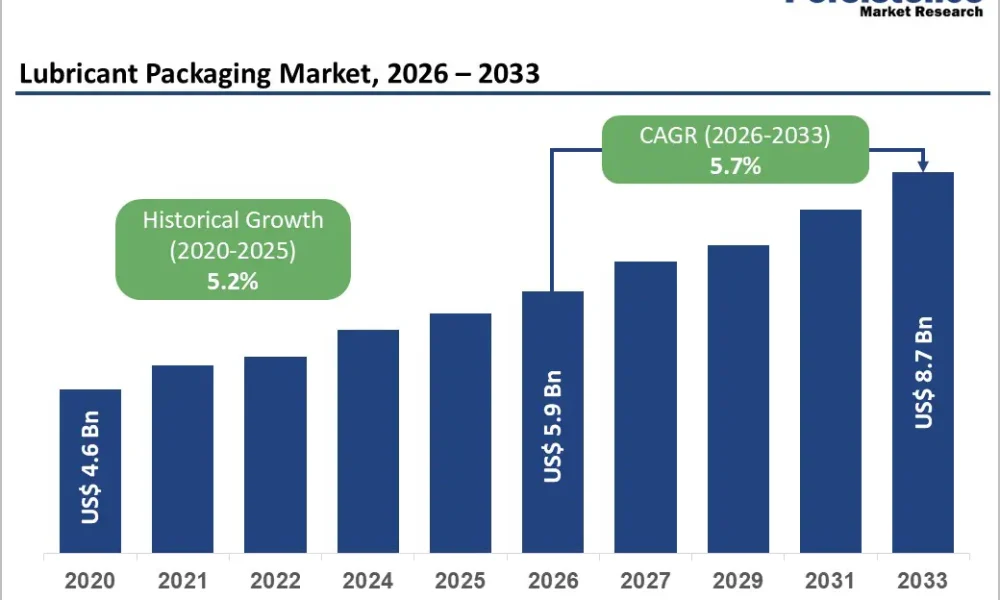
As per Persistence Market Research, the global lubricant packaging market size is likely to be valued at US$ 5.9 billion in 2026 and is expected to reach US$ 8.7 billion by 2033, growing at a CAGR of 5.7% between 2026 and 2033. This consistent growth trajectory reflects strong demand from automotive OEMs, fleet operators, and manufacturing industries. Rising automotive production volumes and expanding aftermarket servicing activities remain central growth drivers. Increasing industrial lubrication demand from manufacturing and power generation sectors further strengthens market expansion. Leading segments are expected to include rigid packaging formats due to their durability and leak resistance. Geographically, Asia Pacific is projected to lead the market owing to strong automotive production and rapid industrialization.
Explore Full Report Quality – Free Sample Inside :https://www.persistencemarketresearch.com/samples/36036
Key Highlights from the Report
➤ The lubricant packaging market is projected to expand at a CAGR of 5.7% between 2026 and 2033.
➤ Global market valuation is expected to increase from US$ 5.9 billion in 2026 to US$ 8.7 billion by 2033.
➤ Rising automotive production volumes are significantly boosting lubricant packaging demand.
➤ Expanding aftermarket servicing activities are driving repeat lubricant consumption globally.
➤ Industrial lubrication demand from manufacturing and power generation sectors supports steady growth.
➤ Asia Pacific is anticipated to remain the leading regional market due to rapid industrial and automotive expansion.
Market Segmentation
The lubricant packaging market can be segmented based on product type, material type, and end user industries. Product categories typically include bottles, cans, pails, drums, and intermediate bulk containers. Rigid packaging formats are expected to dominate due to their structural strength, spill prevention capabilities, and ease of handling during transportation. Plastic based packaging remains widely adopted due to its lightweight nature and cost efficiency. Metal containers also maintain relevance for heavy duty industrial applications where enhanced durability is required. Manufacturers are increasingly focusing on ergonomic designs that improve usability and dispensing efficiency for automotive workshops and industrial facilities.
In terms of end users, the automotive sector represents a leading segment, supported by increasing vehicle production and servicing frequency. Passenger vehicles, commercial vehicles, and two wheelers collectively drive consistent lubricant consumption. The industrial segment, including manufacturing plants and power generation facilities, also contributes significantly to lubricant packaging demand. Growing machinery usage and preventive maintenance practices increase the requirement for reliable lubricant storage solutions. Aftermarket servicing channels further expand packaging demand as vehicle owners rely on regular oil changes and maintenance services. These diverse end use applications ensure stable and recurring market growth.
Regional Insights
Asia Pacific is expected to dominate the lubricant packaging market due to strong automotive production hubs and expanding manufacturing activities. Countries with high vehicle output and industrial investments contribute significantly to lubricant demand. Rapid urbanization and infrastructure development further increase machinery and equipment usage, strengthening lubricant consumption patterns. Growing power generation capacity in developing economies also fuels industrial lubrication requirements. As a result, packaging manufacturers are expanding production capacities across the region to meet rising demand.
North America and Europe continue to represent established markets driven by advanced automotive industries and well developed aftermarket networks. High vehicle ownership rates and structured maintenance schedules ensure consistent lubricant usage. Industrial automation and energy sector activities further contribute to stable demand. These regions also emphasize packaging quality, safety compliance, and operational efficiency, supporting steady growth in lubricant packaging solutions across multiple applications.
Market Drivers
The primary driver of the lubricant packaging market is the continuous rise in automotive production volumes worldwide. Increasing vehicle ownership and fleet expansion directly translate into higher lubricant consumption. Every new vehicle requires periodic oil changes and maintenance, generating recurring demand for packaged lubricants. Expanding aftermarket servicing activities further amplify packaging needs, as service centers depend on reliable and convenient lubricant containers. This recurring consumption pattern ensures long term market stability.
Another significant growth driver is the rising industrial lubrication demand from manufacturing and power generation sectors. Heavy machinery, turbines, and production equipment require regular lubrication to maintain operational efficiency. As industrial output grows, lubricant consumption also increases proportionately. This surge necessitates durable and secure packaging formats capable of handling large volumes. Consequently, industrial expansion plays a central role in accelerating lubricant packaging demand globally.
Make This Report Fit Your Needs – Customize Now : https://www.persistencemarketresearch.com/request-customization/36036
Market Restraints
Despite steady growth, the lubricant packaging market faces certain restraints related to raw material cost fluctuations. Variability in input costs can influence overall packaging production expenses. This may impact pricing strategies and profit margins for manufacturers. Additionally, supply chain disruptions can affect the timely availability of packaging materials, creating operational challenges for producers and lubricant suppliers.
Environmental concerns associated with packaging waste also pose limitations. Increasing scrutiny on plastic usage and waste management practices can influence packaging preferences. Regulatory pressures may require manufacturers to adapt production processes and materials. Compliance with environmental standards may increase operational costs, potentially affecting market dynamics in the short to medium term.
Market Opportunities
The lubricant packaging market presents significant opportunities through innovation in packaging design and functionality. Manufacturers can focus on developing lightweight yet durable solutions that enhance transportation efficiency. Improved dispensing mechanisms and ergonomic designs can add value for automotive workshops and industrial users. Such advancements can strengthen brand differentiation and customer loyalty.
Another major opportunity lies in expanding industrial and automotive infrastructure in emerging economies. Rapid urban development and rising manufacturing investments create new avenues for lubricant consumption. As machinery deployment increases, so does the need for reliable packaging solutions. Companies that strategically expand their production footprint in high growth regions can capitalize on rising demand and secure long term revenue growth.
Complete Your Order – Get Full Report Immediately : https://www.persistencemarketresearch.com/checkout/36036
Company Insights
Key players operating in the lubricant packaging market include
- Greif
- SCHÜTZ
- Mauser Packaging Solutions
- Berry Global
- Crown Holdings
- Amcor
- Graham Packaging
- Plastipak Packaging
- Time Technoplast
- Balmer Lawrie
- Hoover CS
- DS Smith
- Ardagh Group
- Can-Pack
- Nampak
- Mondi Group
- ALPLA
- BWAY Holding
Recent Developments
January 2024 Company expansion initiatives focused on strengthening production capabilities for industrial packaging solutions.
September 2023 Strategic investments were directed toward enhancing packaging efficiency and expanding regional distribution networks.
Future Opportunities and Growth Prospects
The lubricant packaging market is poised for sustained growth, supported by rising automotive production, expanding aftermarket servicing, and increasing industrial lubrication demand. With the market projected to grow from US$ 5.9 billion in 2026 to US$ 8.7 billion by 2033 at a CAGR of 5.7%, industry participants are expected to focus on innovation, regional expansion, and operational efficiency. Strategic investments and capacity expansions will likely shape competitive dynamics in the coming years, reinforcing steady growth across automotive and industrial sectors.




