
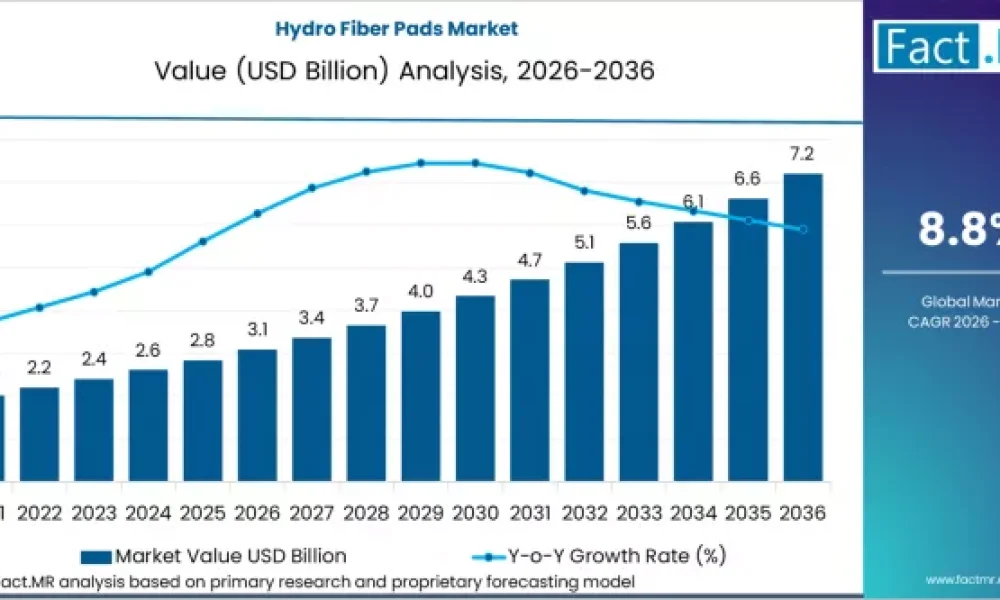
The global hydrofiber pads market is entering a transformative era, driven by a surge in chronic wound prevalence and the rapid adoption of “intelligent” moisture-management technologies. As healthcare systems worldwide prioritize infection control and faster patient recovery times, the specialized hydrofiber dressing segment is projected to reach an estimated USD 3.1 billion by the end of 2026, growing at a steady CAGR of approximately 8.8% through the end of the decade.
Operating at the intersection of material science and clinical dermatology, hydrofiber pads—comprised of sodium carboxymethylcellulose—are fundamentally changing the “Who, What, and How” of modern wound management. Unlike traditional gauze or alginate dressings, these advanced non-woven pads transform into a cohesive gel upon contact with wound fluid, locking in harmful bacteria and maintaining a moist environment critical for cellular repair.
Request for Sample Report | Customize Report |purchase Full Report – https://www.factmr.com/connectus/sample?flag=S&rep_id=14018
The Science of Healing: Moisture Balance and Infection Control
The current market momentum is centered on the unique “vertical wicking” property of hydrofiber technology. This mechanism prevents the lateral spread of exudate, effectively protecting the “periwound” skin from maceration—a leading cause of treatment failure in chronic ulcers.
Medical providers and specialized wound clinics are increasingly utilizing these pads for:
- Chronic Lesions: Managing diabetic foot ulcers (DFU) and venous leg ulcers where fluid control is paramount.
- Surgical & Traumatic Care: Providing a sterile, non-adherent barrier for post-operative incisions and partial-thickness burns.
- Silver-Infused Solutions: Utilizing antimicrobial silver-ion variants to combat multidrug-resistant organisms (MDROs) and disrupt bacterial biofilms in infected wounds.
Strategic Market Drivers: Aging Populations and Home Healthcare
Three primary factors are sustaining the demand for hydrofiber innovations in 2026:
- Epidemiological Shifts: The global rise in diabetes and an aging demographic have led to an increase in complex, non-healing wounds, expanding the target patient base for advanced wound care products by over 15% annually.
- The Rise of Home Healthcare: As hospital beds remain at a premium, more patients are transitioning to home-based care. The ease of use and reduced dressing-change frequency of hydrofiber pads—which can stay in place for up to 7 days—makes them a preferred choice for home-care nurses and caregivers.
- Digital Health Integration: Market leaders are now testing “smart” hydrofiber formats embedded with pH and temperature sensors, allowing clinicians to monitor healing progress remotely via telehealth platforms.
Regional Outlook and Competitive Landscape
North America remains the largest market for hydrofiber pads, accounting for roughly 35% of global revenue, supported by a robust reimbursement framework for advanced dressings. However, the Asia-Pacific region—specifically India and China—is emerging as the fastest-growing segment. This growth is fueled by massive investments in specialized burn centers and a shift toward modern retail and e-commerce channels for medical supplies.
Key industry players currently shaping the global landscape include ConvaTec Inc. (the pioneer of Hydrofiber® Technology), 3M Company, Mölnlycke Health Care, Coloplast AS, and Smith & Nephew. These organizations are increasingly focusing on “bioengineered composites” and energy-efficient manufacturing to align with new global sustainability mandates.
Future Outlook: Toward Bioactive and Green Formats
As the market moves toward 2030, the focus is shifting from simple fluid management to bioactive healing. Researchers are currently developing hydrofiber pads infused with growth factors and nitric oxide-releasing agents to further accelerate granulation in “hard-to-heal” cases. Additionally, a new wave of biodegradable, plant-based carboxymethylcellulose fibers is set to enter the market, addressing the growing demand for eco-friendly medical waste solutions.
About the Market Report: This analysis provides an authoritative overview of the hydrofiber and advanced wound dressing market for the 2026 fiscal year. Data is synthesized from current clinical performance benchmarks, global healthcare spending reports, and regulatory filings from leading medical device manufacturers.
About Fact.MR
Fact.MR is a global market research and consulting firm, trusted by Fortune 500 companies and emerging businesses for reliable insights and strategic intelligence. With a presence across the U.S., UK, India, and Dubai, we deliver data-driven research and tailored consulting solutions across 30+ industries and 1,000+ markets. Backed by deep expertise and advanced analytics, Fact.MR helps organizations uncover opportunities, reduce risks, and make informed decisions for sustainable growth.



