
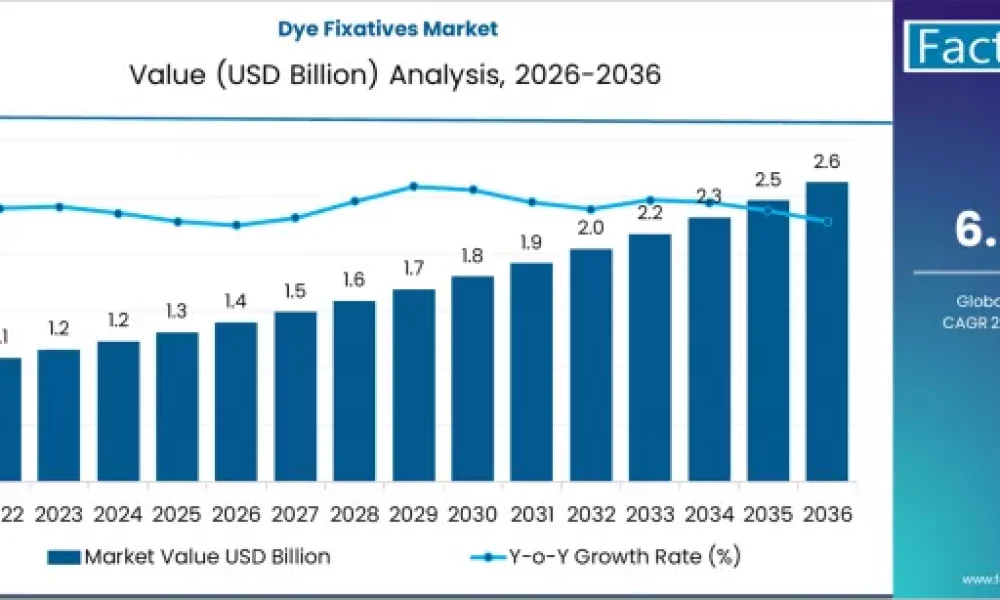
As the global textile industry faces mounting pressure to reduce water pollution while meeting the “ultra-fast” fashion cycle, the Dye Fixatives Market has emerged as a critical technological bridge. Driven by the need for superior color retention in sustainable fabrics and the rapid expansion of the Asia-Pacific garment sector, the market is undergoing a fundamental shift toward eco-friendly, formaldehyde-free chemistry.
In early 2026, the sector is moving beyond basic “color-locking.” High-performance fixatives are now engineered to ensure that vibrant shades remain intact through dozens of laundry cycles, directly addressing consumer demand for durable, long-lasting apparel. By preventing dye migration and bleeding, these auxiliaries are essential for the high-end activewear, home decor, and industrial textile segments.
The Fixation Mandate: Who, What, and Why
The acceleration of the dye fixatives market is being spearheaded by global specialty chemical leaders and textile auxiliary specialists, including Archroma, Huntsman International LLC, DyStar Group, CHT Group, and Kiri Industries Ltd. In India, regional powerhouses such as Rossari Biotech, Fineotex Chemical Limited (FCL), and Sarex Chemicals are driving innovation in “Green Fixatives” that comply with stringent ZDHC (Zero Discharge of Hazardous Chemicals) Level 3 standards.
The “why” behind this market evolution is rooted in three key industrial drivers:
- Strict Effluent Regulations: With new environmental laws in China, India, and the EU, manufacturers are prioritizing fixatives that allow for lower water usage and reduced chemical discharge during the finishing process.
- The Rise of Recycled Fibers: As brands pivot toward recycled polyester and organic cotton, specialized fixatives are required to manage the unique absorption profiles of these materials, ensuring color consistency across varied batches.
- High-Performance Activewear: The boom in “athleisure” has created a demand for fixatives that can withstand high-intensity perspiration and frequent hot-water washing without losing color brilliance.
Request for Sample Report | Customize Report |purchase Full Report – https://www.factmr.com/connectus/sample?flag=S&rep_id=13615
Market Context and Data-Driven Insights
The 2026 economic landscape for the textile chemicals sector reveals a robust growth trajectory, with the global textile dyes market now valued at $12.35 billion. This industry is maintaining a strong momentum, projected to expand at a steady 9.2% CAGR through 2035. This growth is heavily influenced by the rising demand for high-performance finishing agents that ensure color longevity while meeting new environmental standards.
Geographically, the Asia-Pacific region continues to hold its position as the dominant force in the market, currently targeting an estimated 38% market share due to the massive textile manufacturing hubs in India, China, and Vietnam. A defining trend within this market is the aggressive pivot toward formaldehyde-free and phenol-free formulations. As global brands align with more stringent safety and sustainability protocols, these non-toxic fixative chemistries are rapidly becoming the mandatory standard for export-quality textiles.
Technological Benchmarks: Formaldehyde-Free Innovation
The 2026 landscape is defined by the transition from traditional resin-based fixatives to Cationic Polyamine and PolyDADMAC technologies.
- Safety First: R&D is heavily focused on Formaldehyde-Free agents. These next-generation fixatives, such as Sarex’s FIXANOL, offer the same “wash-fastness” as legacy products without the associated toxicity or skin irritation risks.
- Nylon and Polyamide Specialty: With the growth of synthetic textiles, “Phenol-free” fixatives for acid dyes on nylon are becoming the industry standard to prevent yellowing and maintain the “hand-feel” of the fabric.
- Liquid Concentration Dominance: Approximately 40% of the market has shifted toward liquid concentrates, which allow for automated dosing and more precise application in high-volume padding and exhaust methods.
Regional Outlook: Asia-Pacific at the Core
Asia-Pacific continues to dominate the dye fixatives market, accounting for approximately 38% of global demand. This is largely driven by the “Make in India” initiative and the massive production volumes in China, Bangladesh, and Vietnam. However, North America is currently the fastest-growing region for high-value fixatives used in technical textiles and premium activewear, fueled by a resurgence in domestic “near-shoring” manufacturing.
“Color-fastness is no longer just an aesthetic choice; it’s a sustainability metric,” says a lead textile chemist. “In 2026, the best fixative is the one that keeps the dye on the shirt and out of the river.”
Strategic Outlook for 2026 and Beyond
For investors and mill operators, the focus is shifting toward “System-Level” solutions. Companies that bundle high-fixation dyes with matching eco-friendly fixatives are capturing the highest market share. As digital textile printing continues to grow, the demand for “Ink-Fixing” agents tailored for inkjet systems is expected to become the next major growth frontier through 2030.
About the Dye Fixatives Market Intelligence:
This press release summarizes the latest 2026 market trends and data points regarding the global transition toward automated and sustainable textile finishing solutions.
About Fact.MR
Fact.MR is a global market research and consulting firm, trusted by Fortune 500 companies and emerging businesses for reliable insights and strategic intelligence. With a presence across the U.S., UK, India, and Dubai, we deliver data-driven research and tailored consulting solutions across 30+ industries and 1,000+ markets. Backed by deep expertise and advanced analytics, Fact.MR helps organizations uncover opportunities, reduce risks, and make informed decisions for sustainable growth.



