
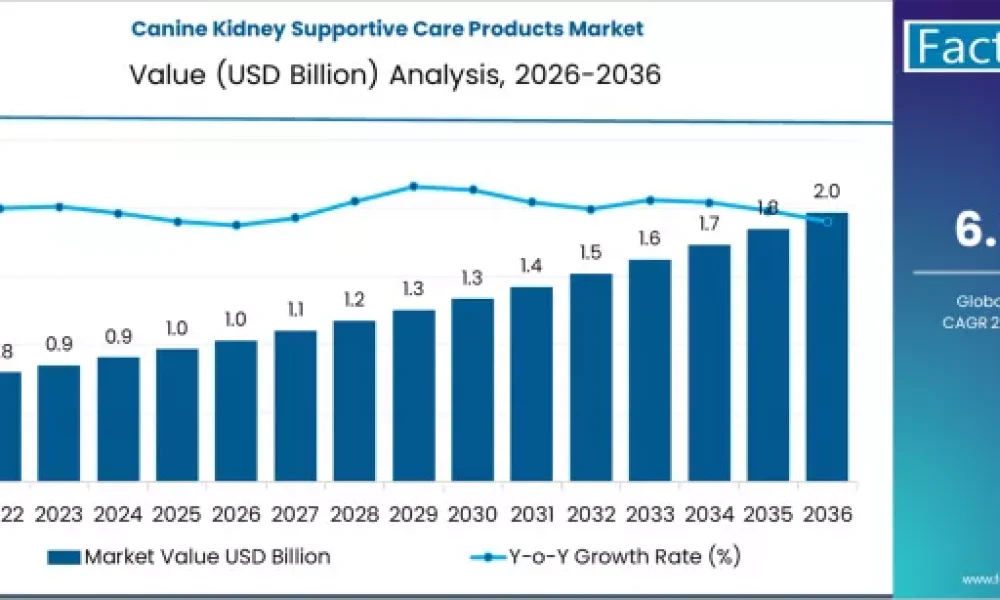
As the global “pet humanization” trend continues to reshape the veterinary landscape, the Canine Kidney Supportive Care Products Market has entered a period of significant acceleration. Driven by an aging canine population and the integration of AI-powered early diagnostic tools, the market is no longer focused solely on end-stage management but has shifted toward proactive, lifelong renal wellness.
As of early 2026, Chronic Kidney Disease (CKD) remains a primary health challenge for senior dogs, affecting nearly 1.5% to 3.7% of the general canine population—a figure that climbs dramatically in predisposed breeds. To meet this challenge, the industry is witnessing a surge in specialized therapeutic diets, phosphate binders, and advanced nutraceuticals designed to slow disease progression and enhance quality of life.
The Proactive Care Shift: Who, What, and Why
The rapid growth of the canine renal care sector is being propelled by a coalition of global animal health leaders, including Zoetis Inc., Mars Incorporated (Royal Canin), Nestlé Purina PetCare, and Hill’s Pet Nutrition. These organizations are working alongside diagnostic innovators like IDEXX Laboratories and Antech Diagnostics to bridge the gap between detection and treatment.
The “why” behind this market expansion is rooted in three key industrial drivers:
- Extended Lifespans: Advances in general veterinary nutrition and care mean dogs are living longer, increasing the statistical likelihood of age-related renal degeneration.
- Early Intervention Tools: New diagnostic benchmarks, such as the SDMA (Symmetric Dimethylarginine) test, allow veterinarians to identify kidney dysfunction up to months or even years earlier than traditional creatinine-based testing.
- Owner Education and Premiumization: Today’s pet owners view their dogs as family members and are increasingly willing to invest in premium, prescription-based renal supports that offer a measurable ROI in terms of “healthy years.”
Request for Sample Report | Customize Report |purchase Full Report – https://www.factmr.com/connectus/sample?flag=S&rep_id=13592
Market Context and Data-Driven Insights
The canine segment maintains a dominant position within the broader veterinary renal disease treatment market, which has achieved a total valuation exceeding USD 1.04 billion in 2026. This specialized supportive care niche is characterized by a robust compound annual growth rate (CAGR) of 6.6%, a trajectory that analysts expect to sustain through 2036. The continued momentum is fueled by the rising prevalence of chronic kidney disease (CKD), which now accounts for a significant 68% share of all renal care applications as the aging pet population requires more intensive long-term management.
Within this market, the canine-specific supportive care segment is valued at approximately $2.4 million, with therapeutic foods standing out as a primary revenue driver, securing 42% of the segment’s total income. While developed markets remain steady, the Asia-Pacific region has emerged as the global leader in growth, targeting an impressive 8.8% CAGR. This regional surge is largely attributed to the rapid “humanization” of pets and increasing disposable income in emerging economies, where owners are increasingly investing in high-quality nutritional and medical interventions to preserve their pets’ renal health.
Technological Innovations Shaping 2026
The current year marks a turning point in how renal supportive products are formulated and delivered. R&D is shifting away from “one-size-fits-all” solutions toward Precision Nephrology.
- Phosphate Management: New-generation phosphate binders are becoming more palatable and efficient, allowing for better compliance in dogs that have traditionally suffered from “renal-related anorexia.”
- AI-Enhanced Diagnostics: Platforms like RenalTech® are now utilizing over two decades of real-world data to predict CKD in patients before clinical symptoms manifest, allowing for the immediate introduction of supportive care.
- Nutraceutical Integration: The rise of omega-3 fatty acids, antioxidants, and B-complex vitamins as standard additives in renal diets is helping to manage common comorbidities like hypertension and inflammation.
Regional Outlook: North America Leads, Emerging Markets Surge
North America remains the largest market for canine renal care, accounting for over 42% of global revenue. This is attributed to high pet insurance penetration and an established infrastructure of specialty veterinary hospitals. However, the Asia-Pacific region, led by India and China, is projected to see the highest growth rates (exceeding 8%) due to rising middle-class disposable income and a rapid increase in pet ownership.
“We are moving from a reactive ‘crisis management’ model to a ‘predictive support’ model,” states a senior veterinary analyst. “In 2026, kidney care is about intervention at Stage 1, not just palliation at Stage 4.”
Strategic Outlook for 2026 and Beyond
For investors and industry professionals, the focus is now on Multi-Modal Therapy. Companies that can provide a “holistic loop”—connecting early diagnostic kits with specialized prescription diets and digital monitoring apps—are set to dominate the market. As e-commerce platforms continue to improve accessibility to prescription products, the “Subscribe and Save” model is becoming the standard for long-term renal management.
About the Canine Kidney Supportive Care Market Report:
This press release is based on 2026 market intelligence, summarizing the economic and technological shifts within the global pet health sector. It serves as a resource for analysts, investors, and veterinary industry leaders.
About Fact.MR
Fact.MR is a global market research and consulting firm, trusted by Fortune 500 companies and emerging businesses for reliable insights and strategic intelligence. With a presence across the U.S., UK, India, and Dubai, we deliver data-driven research and tailored consulting solutions across 30+ industries and 1,000+ markets. Backed by deep expertise and advanced analytics, Fact.MR helps organizations uncover opportunities, reduce risks, and make informed decisions for sustainable growth.



