
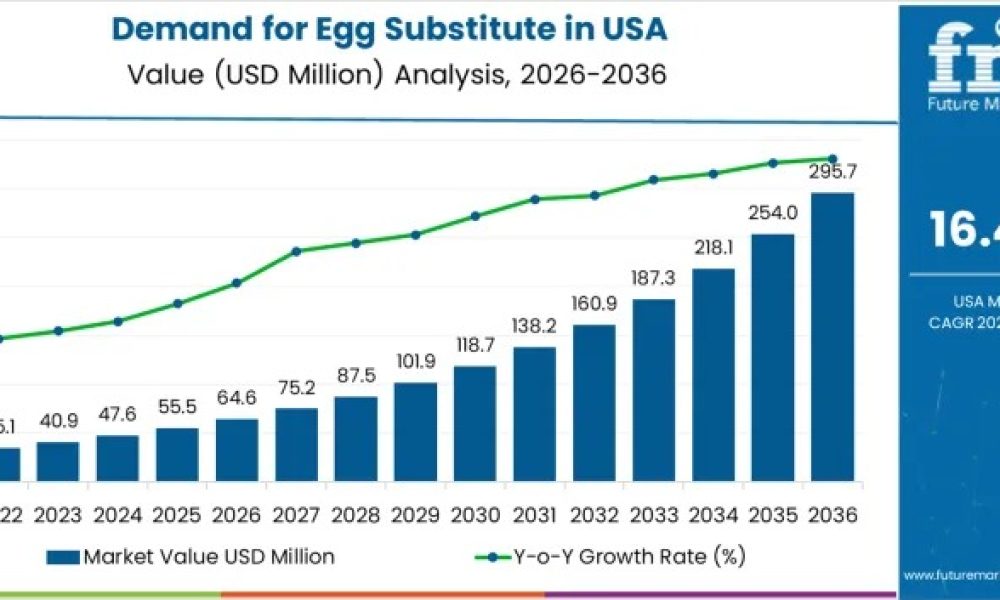
The demand for egg substitutes in the USA is gaining unprecedented momentum, valued at USD 64.6 million in 2026 and projected to reach USD 295.7 million by 2036, representing a CAGR of 16.4%. Growth is primarily driven by rising adoption of plant-based diets, increased awareness of egg allergies, and robust use of alternatives in commercial baking and food manufacturing. Volatility in shell egg supply and price fluctuations further encourage manufacturers and foodservice operators to transition toward stable, formulation-friendly substitutes.
Dry egg substitutes lead the market due to their extended shelf life, easy storage, and consistent functional performance in binding, leavening, and emulsification. Manufacturers are increasingly strengthening formulations with protein isolates, starches, and fiber-based systems to mimic the texture and aeration properties of conventional eggs. Their convenience and scalability for industrial bakery operations further enhance their adoption.
Explore trends before investing – Request a sample report today!
The West, South, and Northeast regions show the highest demand, driven by health-conscious consumer bases and active food innovation ecosystems. Leading suppliers include Tate and Lyle, Ingredion Inc., Corbion Puratos, Danone Nutricia, Florida Food Products LLC, and Fiberstar Inc. These players focus on clean-label formulations, improved sensory performance, and ingredient systems tailored for bakery, confectionery, and ready-meal applications, all requiring reliable egg alternatives.
Early vs. Late Growth Curve in USA Egg Substitutes
Initial adoption of egg substitutes remained modest, concentrated in niche segments such as vegan baking, allergy-specific diets, and select industrial applications. Limited familiarity, functional variability, and constrained distribution channels shaped a shallow early-growth curve.
However, late-stage growth is accelerating. As product formulations improve, functional performance aligns more closely with conventional eggs, attracting broader consumer interest. Commercial bakeries and packaged food producers integrate substitutes to manage costs and supply variability, while institutional buyers expand usage in controlled-diet settings. This shift represents a transition from a niche, awareness-driven early stage to a robust, mainstream late-stage market fueled by improved accessibility and diversified applications.
Market Insights: Forms and Sources
- By Form:
- Dry egg substitutes: 60% of demand. Offer long shelf life, blending versatility, and stable performance in industrial mixes.
- Liquid substitutes: 40% of demand. Preferred in commercial kitchens for ready-use workflows, though they require cold storage.
- By Source:
- Plant-based substitutes: 75% of demand. Align with vegan and allergen-free formulations, supporting sustainability and functional performance.
- Animal-based substitutes: 25% of demand. Used in niche or partial replacement applications where conventional protein structures are preferred.
Key Dynamics Shaping Market Growth
The surge in egg substitute demand is influenced by food manufacturing needs, dietary preferences, and supply stability:
- US bakeries, packaged food producers, and foodservice chains adopt substitutes to maintain consistent performance during periods of egg price volatility.
- Plant-based diets expand interest in non-egg binding and leavening agents.
- Large-scale processors value substitutes that deliver stable moisture retention, emulsification, and batch consistency.
Challenges include cost differentials, functional variability, and regulatory labeling requirements, which may limit adoption in smaller-scale operations. In response, manufacturers focus on ingredient innovation, clean-label reformulations, and plant-protein diversification, utilizing pea protein, mung bean protein, and starch blends to improve foaming and binding properties.
Regional Demand Snapshot
- West USA: CAGR 18.9% – driven by plant-forward diets, R&D facilities, and continuous adoption across retail, foodservice, and packaged food sectors.
- South USA: CAGR 16.9% – expanding retail penetration and high consumption of packaged foods with egg alternatives.
- Northeast USA: CAGR 15.1% – dense food-processing activities, institutional buyers, and diversified dietary patterns.
- Midwest USA: CAGR 13.1% – extensive food manufacturing, bakery production, and stable retail and institutional consumption.
Unlock the complete analysis—Get the full report now.
Competitive Landscape
The market is led by Tate and Lyle and Ingredion Inc., offering broad portfolios of starches, hydrocolloids, and texturizing systems. Corbion Puratos strengthens dough structure and moisture control through enzyme-based solutions. Danone Nutricia addresses nutritional formulations for allergen-specific diets, while Florida Food Products and Fiberstar Inc. deliver vegetable and citrus fiber solutions for clean-label applications.
The USA egg substitute market is expected to continue its upward trajectory, with functional innovation, clean-label reformulations, and plant-protein diversification at the forefront. This growth reflects a shift in consumer preferences, industrial adoption, and regulatory clarity, positioning substitutes as a reliable, sustainable, and versatile ingredient for the next decade.
About Future Market Insights (FMI)
Future Market Insights, Inc. (FMI) is an ESOMAR-certified, ISO 9001:2015 market research and consulting organization, trusted by Fortune 500 clients and global enterprises. With operations in the U.S., UK, India, and Dubai, FMI provides data-backed insights and strategic intelligence across 30+ industries and 1200 markets worldwide.



