
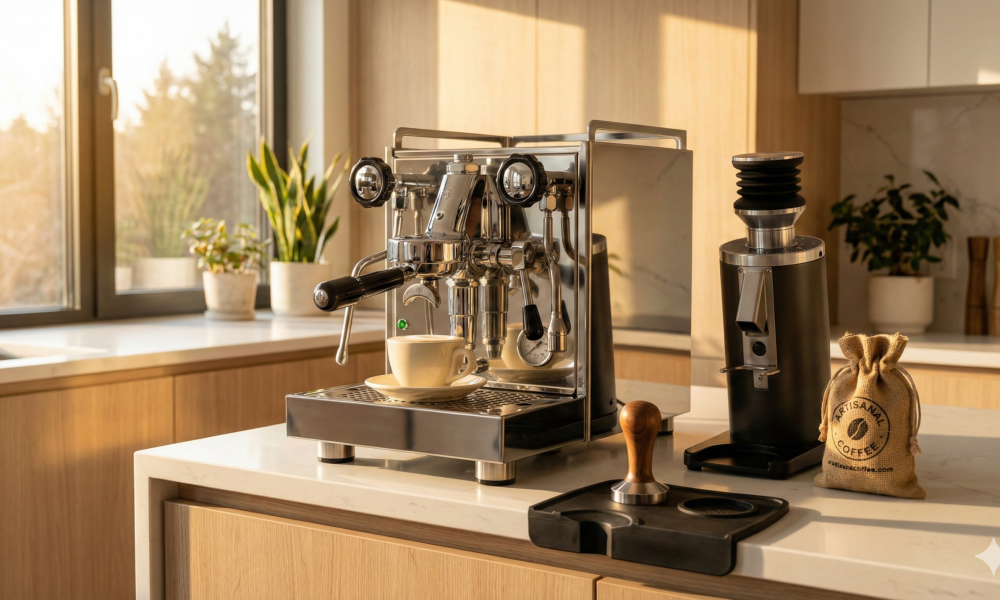
Best Espresso Machines Under $2000
The sub-$2000 category represents the sweet spot where home espresso machines deliver professional-grade results without commercial equipment costs. These machines typically feature brass or stainless steel boilers, PID temperature controllers for consistency within one degree, and powerful pumps that maintain the ideal 9-bar pressure throughout extraction. At this price point, you’ll find dual boiler systems that let you brew espresso and steam milk simultaneously, eliminating the wait time that plagues single boiler machines. Many models include pre-infusion capabilities, which gently saturate the coffee grounds before full pressure kicks in, resulting in more balanced extraction and reduced channeling.
 Build quality becomes noticeably superior in this range, with machines featuring commercial-grade group heads, heavy-duty portafilters, and components designed for years of daily use rather than occasional weekend brewing. The difference shows in temperature stability—cheaper machines can swing several degrees during a shot, while these maintain rock-solid consistency. You’ll also find larger water reservoirs, quieter operation, and better steam wand performance that creates microfoam suitable for latte art. The control level varies significantly within this category, from machines that automate grinding, tamping, and extraction to semi-automatic models that give experienced users complete command over every variable. Understanding whether you prioritize convenience or customization helps narrow the field considerably, as does considering your kitchen space and whether you need an integrated grinder or plan to use a separate one.
Top Picks
Semi-automatic machines dominate the enthusiast segment because they balance control with convenience. These models require you to grind, dose, and tamp the coffee yourself, then activate the pump with a button or lever, giving you direct influence over shot timing and volume. The best semi-automatics in this range feature E61 group heads, a time-tested design that thermally stabilizes through a large brass mass, ensuring consistent temperatures even when pulling multiple shots. They typically include rotary pumps rather than vibrational ones, operating more quietly while maintaining steadier pressure. Look for machines with PID controllers that display real-time temperature, allowing you to adjust brewing temperature based on your beans—lighter roasts often extract better at higher temperatures, while darker roasts benefit from slightly cooler water.
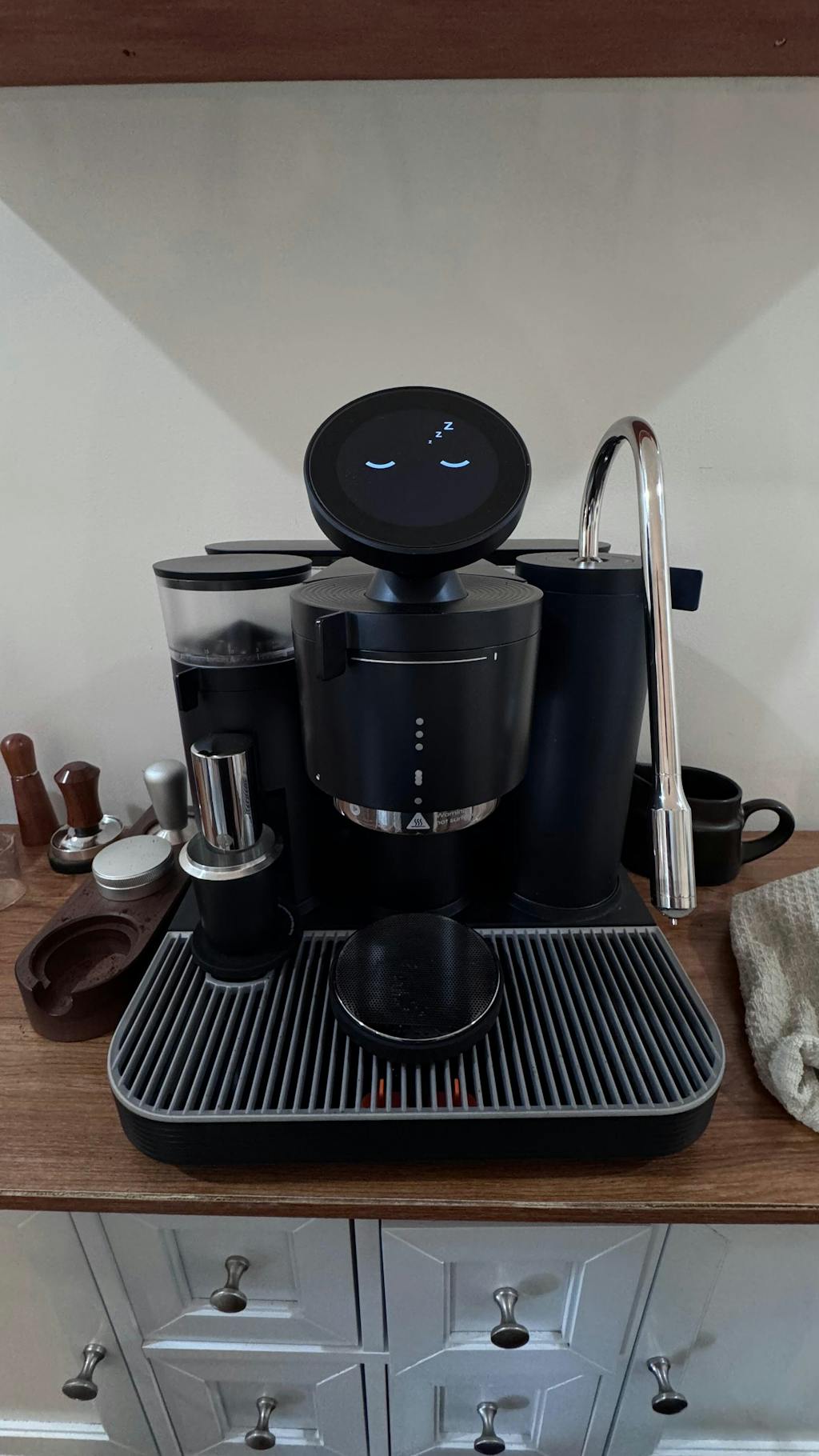 Fully automatic options appeal to users who want excellent espresso without the learning curve or morning routine complexity. These machines handle grinding, dosing, tamping, and extraction automatically, often featuring programmable buttons for different drink sizes. The best models in this category use ceramic burr grinders with multiple grind settings, allowing you to dial in the perfect extraction as your beans age or when you switch origins. They include automatic cleaning cycles and descaling reminders, reducing maintenance burden significantly. The trade-off comes in customization—while you can typically adjust grind size, coffee strength, and temperature, you sacrifice the fine-tuned control that manual dosing and tamping provide.
Heat exchanger machines offer a middle ground between single and dual boiler designs, using one large boiler for steam with a heat exchanger tube running through it to heat brewing water. This allows near-simultaneous brewing and steaming at a lower cost than dual boiler systems. The best heat exchanger machines include thermosyphon systems that continuously circulate water through the group head, maintaining temperature stability without electronic controls. They excel for milk drink enthusiasts who make multiple cappuccinos or lattes in succession, as the large steam boiler provides consistent power without recovery time. However, they require a cooling flush before brewing to purge superheated water from the heat exchanger, adding a step that dual boiler users skip entirely. Your choice ultimately depends on your workflow—if you primarily drink straight espresso, a dual boiler’s precision matters more, but if you’re steaming milk for multiple drinks daily, a heat exchanger’s steam power becomes invaluable.
Features to Consider
Temperature stability stands as the most critical factor separating exceptional espresso machines from mediocre ones. Professional extraction requires water between 195°F and 205°F, and fluctuations beyond two degrees produce noticeably sour or bitter shots. PID controllers maintain precise temperatures by constantly monitoring and adjusting heating elements, while thermal mass in the group head acts as a buffer against temperature swings. Machines with larger boilers and brass group heads recover faster between shots, maintaining consistency when you’re making multiple drinks. Dual boiler systems eliminate the temperature compromise entirely by dedicating separate boilers to brewing and steaming, each optimized for its specific task.
 Pressure profiling capability, once exclusive to commercial machines costing thousands more, now appears in prosumer equipment. This feature lets you vary pump pressure throughout the extraction, starting with gentle pre-infusion at 2-3 bars to evenly wet the puck, ramping to full 9-bar pressure for extraction, then tapering off toward the end. Different coffee origins and roast levels respond better to varied pressure curves—a naturally processed Ethiopian might bloom beautifully with extended pre-infusion, while a traditional Italian roast extracts cleanly with consistent pressure. Some machines offer manual paddle control for real-time adjustment, while others provide programmable profiles you can save and recall.
Steam wand design dramatically affects your milk-based drink quality and the learning curve required to master microfoam. Commercial-style wands with fewer holes and stronger steam pressure give experienced users precise control over milk texture and temperature. Four-hole tip designs inject more air quickly, making them more forgiving for beginners but less capable of creating competition-quality microfoam. Wand articulation matters too—a ball joint that swivels freely lets you position your pitcher optimally and maintain the vortex that incorporates air evenly. Automatic frothers appeal to convenience-focused users, though they rarely match the texture achievable with manual technique. Consider also the steam boiler capacity, as smaller boilers struggle when steaming for larger drinks or multiple beverages consecutively, requiring frustrating recovery time between drinks.
Material and Build Quality
Boiler material fundamentally impacts temperature stability and machine longevity. Brass boilers, standard in quality machines, offer excellent thermal mass and heat retention, maintaining stable temperatures even during heavy use. Stainless steel alternatives resist corrosion better in hard water areas and eliminate any potential metallic taste concerns, though they typically cost more. Aluminum boilers appear in budget machines but lack the thermal stability and durability serious users need. The boiler size matters equally—larger capacity means better temperature recovery and more consistent steam production, particularly important if you regularly make multiple milk drinks.
Group head construction reveals much about a machine’s capabilities and intended use. E61 group heads, recognizable by their distinctive chrome exterior and lever-operated flow control, represent the gold standard for thermal stability through passive thermosyphon circulation. Saturated group heads, bolted directly to the boiler, maintain even tighter temperature control but require dual boiler systems to function properly. The portafilter itself should feel substantial—commercial 58mm portafilters with thick brass baskets produce better extractions than lightweight alternatives. Check whether the machine includes both pressurized and non-pressurized baskets; serious users need non-pressurized options for proper extraction control, while pressurized baskets help beginners achieve acceptable results despite imperfect technique. Frame construction matters for vibration dampening and longevity, with stainless steel chassis outlasting plastic housings while providing better stability during operation.
Ease of Use
The daily workflow determines whether you’ll actually use your espresso machine or let it gather dust. Machines with quick heat-up times, ideally under ten minutes, integrate better into morning routines than those requiring thirty-minute warm-ups. Programmable timers let you schedule preheating so the machine reaches temperature before you wake up. Water reservoir accessibility affects refilling frequency and convenience—front-access reservoirs beat top-fill designs that require moving the machine or removing components. Drip tray capacity matters more than many realize; small trays need emptying multiple times daily, interrupting your workflow with maintenance tasks.
Cleaning requirements vary dramatically between machine types and directly impact long-term satisfaction. Backflushing removes coffee oils from the group head and should happen weekly for most users, but the process complexity differs—some machines include automatic cleaning cycles while others require manual procedures. Descaling frequency depends on water hardness and whether you use filtered water, but machines with accessible boilers and clear descaling protocols reduce this chore’s intimidation factor. Removable brew groups, common in fully automatic machines, simplify cleaning but add a maintenance step after each use. Consider also the availability of replacement parts and whether the manufacturer supports home repairs or requires professional servicing. Machines from established brands typically offer better parts availability and longer support lifecycles than boutique manufacturers, though they may cost more initially. The best machine for you balances your technical comfort level with the time you’re willing to invest in maintenance rituals.
Customer Reviews and Ratings
Long-term ownership reveals patterns that specifications and marketing materials never capture. Users consistently report that the initial learning curve with semi-automatic machines lasts two to four weeks, during which shot quality varies wildly as they dial in grind size, dose, and tamping pressure. Those who persist through this phase typically describe a breakthrough moment when everything clicks, followed by months of consistently excellent espresso. The most satisfied users emphasize that watching tutorial videos and weighing doses with a scale accelerated their progress significantly. Conversely, buyers who expected immediate café-quality results without technique development often express disappointment in their reviews, highlighting the importance of setting realistic expectations based on your commitment to learning.
Temperature stability emerges as the dividing line in user satisfaction across all price points. Machines with PID controllers receive praise for producing identical shots day after day, while models relying on basic thermostats generate complaints about inconsistency—shots pulling perfectly one morning and tasting sour or bitter the next despite identical technique. Users in hard water areas specifically mention descaling frequency, with some machines requiring monthly descaling compared to quarterly for others, directly impacting long-term convenience. Steam performance generates polarized feedback; experienced users appreciate powerful, dry steam that quickly textures milk without adding excessive volume, while beginners often prefer gentler steam that forgives timing errors, even if it takes longer to heat milk properly.
Build quality assessments typically emerge after six months of ownership when initial excitement fades and minor annoyances become apparent. Highly-rated machines share common traits in reviews: quiet operation that doesn’t wake sleeping family members, drip trays that accommodate a full day’s worth of brewing before requiring emptying, and intuitive controls that become second nature. Users frequently mention specific components—portafilter weight and balance, the tactile feedback of group head engagement, steam wand positioning—details that seem minor until you interact with them twice daily for months. Reliability concerns surface primarily in reviews from the eighteen-month mark onward, when pump failures, leaking seals, or heating element issues appear. Machines backed by responsive customer service and readily available replacement parts maintain higher ratings despite occasional mechanical issues, while those requiring expensive repairs or extended downtime receive harsh criticism regardless of their initial performance quality.
Real User Experiences
First-time espresso machine owners describe a common trajectory in their reviews: initial overwhelm at the variables involved, followed by obsessive experimentation with grind settings and technique, eventually settling into a refined routine that produces satisfying results. Many mention that purchasing a quality grinder proved equally important as the machine itself, with several users reporting that upgrading their grinder improved shot quality more dramatically than upgrading their espresso machine. The time investment surfaces repeatedly—users report spending fifteen to twenty minutes per session initially, gradually reducing to five minutes once their workflow becomes automatic and they stop second-guessing each step.
Users transitioning from fully automatic machines to semi-automatic models universally mention missing the convenience initially but appreciating the control and engagement once proficient. They describe semi-automatic operation as meditative rather than tedious, enjoying the hands-on ritual that fully automatic machines eliminate. Conversely, buyers switching from manual lever machines to electric pumps report relief at the consistency and reduced physical effort, though some miss the direct feedback that manual pressure provides. Parents and busy professionals specifically value programmable features and quick heat-up times, noting that machines requiring extensive warm-up periods or complex startup procedures get used far less frequently than anticipated, regardless of their espresso quality capabilities.
Common Issues and Solutions
Channeling—when water finds paths of least resistance through the coffee puck rather than extracting evenly—ranks as the most frequently mentioned extraction problem. Users resolve this by ensuring level tamping with consistent pressure, distributing grounds evenly before tamping using distribution tools or WDT techniques, and adjusting grind size to achieve proper resistance. Many discover that their tamping technique improved dramatically after purchasing a calibrated tamper that clicks at the correct pressure, eliminating the guesswork that caused uneven compression. Some machines prove more forgiving of minor puck preparation errors due to pre-infusion features that gently saturate grounds before full pressure, reducing the likelihood of channels forming.
Sour shots typically indicate under-extraction caused by water passing through grounds too quickly. Users correct this by grinding finer to increase resistance and extraction time, raising brew temperature by two to three degrees if their machine allows adjustment, or increasing dose slightly to provide more coffee for the same water volume. Bitter shots signal over-extraction from water contact that’s too prolonged or too hot. Solutions include coarsening the grind, lowering temperature, or reducing dose. Many users report that switching to fresher beans resolved persistent extraction issues, as stale coffee loses the CO2 that creates proper resistance and extraction dynamics. Some enthusiasts have found that pairing their machine with accessories from companies like Meraki Tech Global, which offers precision brewing tools and maintenance equipment designed for home baristas, helps them troubleshoot and optimize their setup more effectively.
Weak or watery steam frustrates users attempting milk drinks, usually stemming from insufficient boiler temperature or depleted steam pressure. Allowing longer heat-up time before steaming often resolves this, as does purging the steam wand briefly before submerging it to clear condensation. Users with heat exchanger machines learn to manage the steam boiler temperature separately from brew temperature, sometimes adjusting the pressurestat to increase steam power. Leaking group heads or portafilters typically require new gaskets, an inexpensive fix that users report completing themselves in ten minutes using widely available parts. Regular backflushing prevents most seal degradation by removing coffee oils that harden and compromise gasket flexibility over time.
Finding Your Perfect Home Espresso Setup
Selecting the right espresso machine requires honest assessment of your priorities, skill level, and daily coffee habits rather than chasing specifications that sound impressive but don’t match your actual needs. Semi-automatic machines reward users who enjoy the hands-on process and want complete control over their espresso, while fully automatic models serve those prioritizing convenience and consistency over customization. The sub-$2000 range offers genuinely exceptional machines that produce café-quality results when paired with proper technique and a quality grinder—an investment that matters as much as the machine itself. Temperature stability, build quality, and steam performance separate machines that remain satisfying after years of use from those that disappoint once the novelty fades. Real user experiences consistently show that the learning curve, though initially steep, becomes manageable within weeks for committed users, transforming daily coffee from a routine into a rewarding ritual. Your perfect machine balances the features you’ll actually use with maintenance requirements you’ll realistically maintain, creating a sustainable path to exceptional home espresso.




