
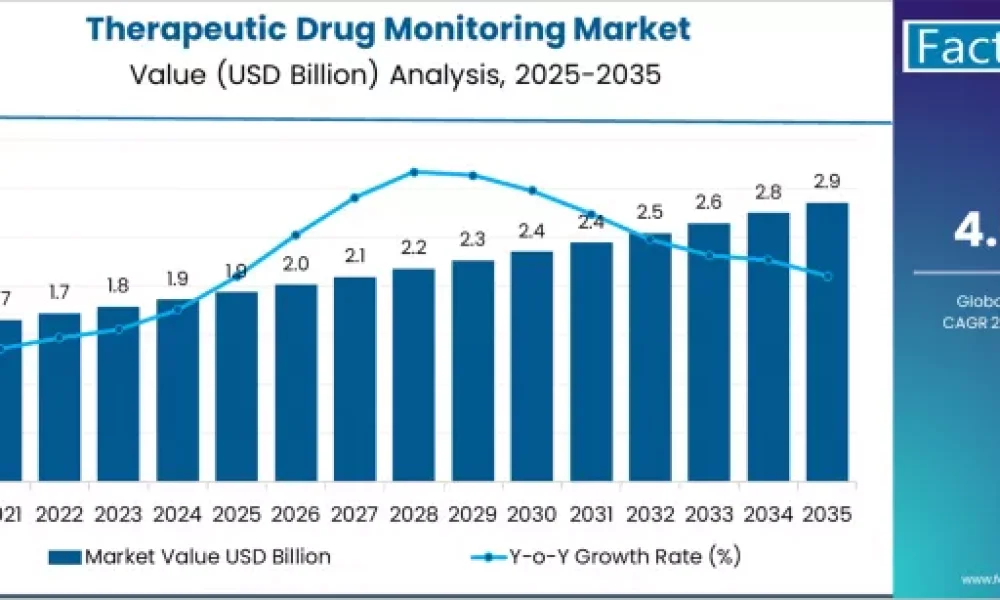
The U.S. therapeutic drug monitoring (TDM) market is poised for steady growth from 2025 to 2035, driven by the increasing adoption of personalized medicine, rising emphasis on patient safety, and the need for optimized dosing strategies across healthcare settings. Therapeutic drug monitoring—including consumables and equipment such as immunoassay analyzers—plays a critical role in ensuring precise medication levels, preventing adverse drug reactions, and supporting clinical decision-making in hospitals, diagnostic centers, and specialized healthcare facilities. This report highlights market size, growth drivers, U.S. regional dynamics, technology trends, and strategic implications for stakeholders.
Market Size and Growth
The U.S. TDM market is projected to grow from approximately USD 1.94 billion in 2025 to around USD 2.86 billion by 2035, reflecting a compound annual growth rate (CAGR) of 4.0%. Consumables dominate the market, accounting for 65.4% of overall revenue, while immunoassay analyzers represent 50% of equipment demand due to their efficiency and high analytical performance. Hospitals are the leading end users, representing 60% of the market, followed by diagnostic centers at 30%. This moderate yet steady growth reflects the sector’s resilience, driven by the increasing need for treatment optimization and clinical safety protocols.
To access the complete data tables and in-depth insights, request a Discount On The Report here: https://www.factmr.com/connectus/sample?flag=S&rep_id=11757
Key Growth Drivers
Rising adoption of personalized medicine: Tailored treatment regimens and precision dosing require accurate therapeutic drug monitoring to minimize adverse events and maximize efficacy.
Patient safety emphasis: Healthcare providers are increasingly focused on systems that reduce dosing errors and optimize therapy outcomes, particularly for critical medications such as antiarrhythmic and immunosuppressant drugs.
Chronic disease management: Growing prevalence of cardiovascular, neurological, and transplant-related conditions fuels demand for consistent monitoring of drug levels.
Technological innovation: Advances in automated analyzers, immunoassay technologies, and real-time monitoring systems are enhancing analytical accuracy and operational efficiency across clinical laboratories.
U.S. Market Insights
The United States represents a mature and strategically significant market for TDM, characterized by strong adoption in hospitals and diagnostic centers. Antiarrhythmic drugs lead the monitored drug classes, representing 45% of the market due to their critical dosing requirements. Consumables remain dominant, while equipment adoption is significant where high analytical precision and laboratory infrastructure are prioritized. Key market players include Abbott, Beckman Coulter, Thermo Fisher Scientific, Siemens Healthineers, Bio-Rad Laboratories, Roche, and Randox Laboratories, all competing through advanced analytical systems and specialized TDM solutions.
Challenges in the U.S. market include the high cost of equipment, technical complexity, and the need for trained personnel to operate sophisticated analytical systems. Providers must balance investment in advanced systems with operational efficiency and cost-effectiveness.
Technology Trends and Competition
Key trends in the U.S. TDM market include:
- Integration of automated immunoassay analyzers for high-throughput monitoring.
- Development of real-time monitoring and connected laboratory systems.
- Customized solutions for specific therapeutic classes and patient populations.
- Emphasis on consumables efficiency to reduce operational costs while maintaining analytical reliability.
These innovations enhance workflow efficiency, improve diagnostic precision, and support optimal patient outcomes.
Strategic Implications
For manufacturers and distributors: Focus on advanced, high-precision systems and consumables optimized for hospitals and diagnostic centers. Emphasize connectivity, automation, and specialized drug-class solutions.
For healthcare providers: Integrate TDM systems into routine clinical workflows to enhance treatment accuracy, patient safety, and chronic disease management.
For investors: The market offers resilient growth driven by personalized medicine adoption, patient safety requirements, and regulatory mandates in healthcare operations.
Outlook Summary
From 2025 to 2035, the U.S. therapeutic drug monitoring market is expected to grow steadily, driven by increasing adoption of precision medicine, technological advancements, and growing demand for patient-centric care. Consumables and immunoassay analyzers will remain critical product segments, while hospitals and diagnostic centers dominate end-use applications. Despite challenges related to equipment costs and technical complexity, the sector presents strong opportunities for manufacturers, healthcare providers, and investors committed to improving therapeutic outcomes, safety, and operational efficiency in U.S. clinical settings.
Have a specific Requirements and Need Assistant on Report Pricing or Limited Budget please contact us – [email protected]
About Fact.MR
Fact.MR is a global market research and consulting firm, trusted by Fortune 500 companies and emerging businesses for reliable insights and strategic intelligence. With a presence across the U.S., UK, India, and Dubai, we deliver data-driven research and tailored consulting solutions across 30+ industries and 1,000+ markets. Backed by deep expertise and advanced analytics, Fact.MR helps organizations uncover opportunities, reduce risks, and make informed decisions for sustainable growth.



