
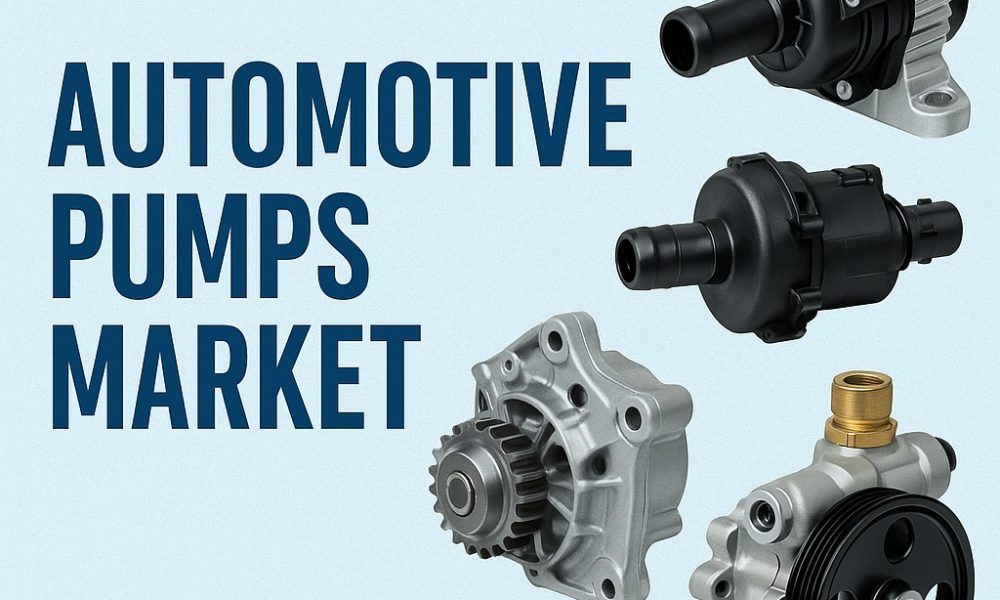
The global automotive pumps market is entering a pivotal decade of transformation, propelled by the rapid evolution of vehicle propulsion technologies, tightening emission standards, and the rising integration of electronically controlled fluid systems. According to the latest industry assessment, the market is projected to increase from USD 62.8 billion in 2025 to USD 88.9 billion by 2035, advancing at a 3.5% CAGR. Growth momentum is being reinforced by the broad deployment of high-efficiency lubrication, cooling, and fuel handling systems across internal combustion engine (ICE), hybrid, and electrified vehicle platforms.
Electrification, lightweighting, and precision thermal management have become foundational elements in modern automotive engineering. As OEMs reconfigure vehicle architectures around efficient fluid circulation and emissions-compliant powertrains, demand for advanced pump technologies continues to rise across global production hubs.
Digitally Controlled Pump Systems Driving Market Expansion
The transition from mechanical to electronically actuated pump systems is accelerating worldwide. Next-generation vehicles are increasingly being equipped with variable-displacement oil pumps, electric coolant pumps, electronic fuel supply pumps, and adaptive vacuum pumps, each engineered to reduce parasitic losses and enhance fluid control accuracy.
In January 2025, Continental AG reaffirmed its strategic commitment to precision fluid dynamics. In an interview with Motoring Trends, Prashanth Doreswamy, President and CEO of Continental India, emphasized that “energy efficiency is being deeply re-engineered in components like electric vacuum pumps, which reduce engine load while maintaining braking reliability.” The statement reflects a broader industry shift toward electronically controlled and duty-cycle-optimized pump systems.
Subscribe for Year-Round Insights → Stay ahead with quarterly and annual data updates
https://www.futuremarketinsights.com/reports/sample/rep-gb-541
This transition is also echoed in the electric power steering ecosystem. Bosch Automotive Steering, in its 2025 earnings disclosure, reported higher production volumes of electric steering pumps, driven by rapid expansion of global electric vehicle (EV) platforms. Similarly, the fuel system segment is undergoing significant technological uplift. In April 2024, Denso Corporation introduced a high-pressure fuel pump for gasoline direct injection (GDI) systems, delivering a 15% improvement in flow rate and improved atomization—factors critical to achieving cleaner combustion and meeting global emissions standards.
Electric Pump Technologies to Capture Over 55% Market Share by 2025
Electric automotive pumps continue to demonstrate substantial growth potential, supported by the rising adoption of 48V mild hybrid systems, plug-in hybrids, and battery electric vehicles (BEVs). Electric pumps are projected to represent approximately 55% of the total automotive pumps market value in 2025, expanding at a 5.3% CAGR through 2035.
Electric pumps are increasingly prioritized for their operational flexibility, independent actuation from engine speed, lower noise output, and compatibility with thermal management systems. Key areas of application include:
- Battery and e-motor cooling
- Transmission lubrication
- Brake vacuum generation
- Start-stop system optimization
- Fuel delivery stability across hybrid platforms
As vehicle architectures shift toward modular, software-managed designs, suppliers of electric pump systems are being strategically positioned to benefit from long-term component transition cycles.
Fuel Supply Pumps to Account for 44% of Sales by 2025
Despite rising electrification, fuel supply pumps remain vital to both ICE and hybrid vehicles. In 2025, the segment is expected to represent around 44% of total pump demand, with a projected 3.8% CAGR through 2035.
Key factors sustaining this demand include:
- High-volume production of gasoline and diesel vehicles in Asia and Eastern Europe
- Regulatory pressure for low-emission, high-efficiency combustion systems
- Upgrades in pump durability, ethanol-blend compatibility, and pressure handling
- A strong aftermarket supported by an aging global vehicle parc
The shift toward brushless motors, corrosion-resistant materials, and modular pump assemblies is enabling OEMs to meet stringent emission and fuel-efficiency targets while extending component life cycles.
Personalize Your Experience: Ask for Customization to Meet Your Requirements
https://www.futuremarketinsights.com/customization-available/rep-gb-541
Challenges: BEV Adoption and Engineering Complexity
The market faces several strategic challenges:
Impact of Battery Electric Vehicles
The long-term decline of mechanical pumps—fuel injection pumps, belt-driven oil pumps, and engine-driven vacuum pumps—poses a structural challenge for suppliers. BEVs rely exclusively on electric and software-driven pump systems, requiring manufacturers to reallocate R&D resources toward battery cooling, e-motor lubrication, and integrated thermal module solutions.
Design and Integration Barriers
Manufacturers must engineer pumps that are compact, low-noise, thermally resilient, and sensor-enabled, increasing both design complexity and production costs. OEM expectations for extended durability, fluid compatibility, and heat resistance across hybrid and EV environments further heighten technical requirements.
Opportunities: Hybridization and Smart Pump Technologies
Hybrid vehicles—including HEVs, PHEVs, and 48V mild hybrids—represent a substantial opportunity, as they utilize both mechanical and electric pumps for cooling, lubrication, and braking systems. Electric pumps such as e-water pumps and e-oil pumps enable auxiliary systems to operate independently of engine speed, optimizing emissions performance and improving thermal stability.
The next wave of innovation lies in smart pumps, capable of load-based flow modulation, sensor-driven diagnostics, and real-time communication with electronic control units. These intelligent systems are increasingly being adopted in luxury, performance, and autonomous vehicles, signaling a long-term shift toward predictive and adaptive fluid management.
Country-Level Insights
United States (CAGR 3.6%)
Growth driven by strong ICE and hybrid vehicle sales, widespread start-stop technologies, and rising integration of electric coolant and oil pumps.
United Kingdom (CAGR 3.3%)
The transition toward mild hybrids and EVs is increasing demand for electric auxiliary pumps and vacuum systems, while LCV production continues to support mechanical pump use.
European Union (CAGR 3.5%)
The EU maintains high demand for 48V hybrid systems, smart thermal management pumps, and energy-efficient oil and fuel pumps.
Japan (CAGR 3.2%)
A global leader in hybrid vehicle development, Japan drives strong demand for compact, dual-function electric pumps.
South Korea (CAGR 3.7%)
Rapid EV adoption is generating strong demand for battery cooling pumps, electric oil pumps, and modular pump systems.
Competitive Landscape
The automotive pumps market is moderately consolidated. The top five manufacturers hold 48% to 52% of the global market, while numerous regional and specialized suppliers serve niche OEM and aftermarket segments. Competitive strategies center on material innovation, noise reduction, electrohydraulic integration, and R&D investments in EV-compatible pump systems.
Why Choose FMI: Empowering Decisions that Drive Real-World Outcomes:
https://www.futuremarketinsights.com/why-fmi
About Future Market Insights (FMI)
Future Market Insights, Inc. (FMI) is an ESOMAR-certified, ISO 9001:2015 market research and consulting organization, trusted by Fortune 500 clients and global enterprises. With operations in the U.S., UK, India, and Dubai, FMI provides data-backed insights and strategic intelligence across 30+ industries and 1200 markets worldwide.



