
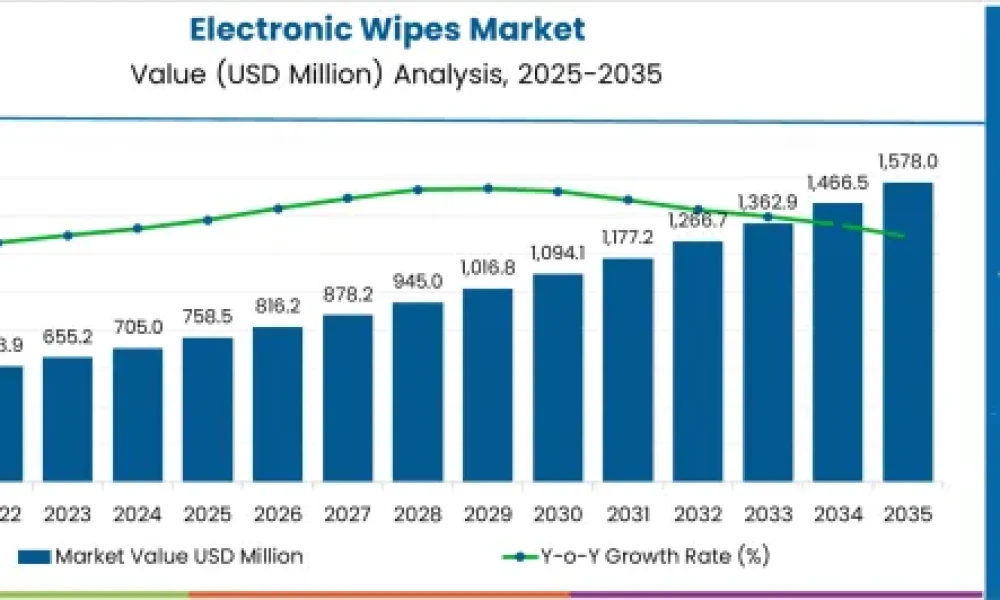
The global Electronic Wipes Market is poised for robust growth, with its valuation projected to soar from USD 758.5 million in 2025 to an impressive USD 1578.0 million by 2035. This surge reflects a compound annual growth rate (CAGR) of 7.6% over the forecast period, underscoring increasing demand for specialized cleaning solutions designed specifically for electronic devices.
Rising Demand Driven by Hygiene and Device Maintenance Awareness
The growing emphasis on hygiene and the proper maintenance of electronic gadgets is a primary driver for this expanding market. With the proliferation of smartphones, tablets, laptops, and other personal electronics in both residential and commercial settings, consumers and businesses alike are seeking reliable cleaning products that ensure device longevity and optimal performance.
Factors fueling market growth include:
- The rise of remote working trends leading to increased usage of personal devices at home.
- Enhanced consumer awareness of microbial contamination, fingerprints, dust, and smudges on device surfaces.
- Innovation in cleaning formulations that disinfect without damaging sensitive screens and components.
- Growing preference for eco-friendly and gentle materials that safeguard delicate electronic parts.
Subscribe for Year-Round Insights → Stay ahead with quarterly and annual data updates: https://www.futuremarketinsights.com/reports/sample/rep-gb-8130
Market Segmentation: Key Insights
The Electronic Wipes Market is segmented by product type, material, end user, distribution channel, and region.
- Product Type: Among the various categories, Pre-saturated Wipes are expected to lead with a 35% market share in 2025. These ready-to-use wipes offer unmatched convenience and efficient cleaning, eliminating the need for additional sprays or liquids. Their portability and user-friendly packaging make them especially popular for on-the-go cleaning.
- Material Type: The Cotton segment is projected to hold 30% of the market revenue by 2025. Cotton wipes are favored for their softness, absorbency, and gentle cleaning properties, making them ideal for delicate electronic surfaces. Additionally, cotton’s biodegradable nature appeals to environmentally conscious consumers seeking sustainable alternatives.
- End User: The Residential segment dominates the market, accounting for 60% of revenue in 2025. This trend is attributed to the widespread use of personal electronics in households and the increasing demand for quick, safe cleaning solutions amid heightened hygiene awareness.
Regional Growth Dynamics
Geographically, North America, Asia-Pacific, and Europe are the key growth regions driving the Electronic Wipes Market.
- Asia-Pacific leads with the fastest growth, propelled by countries like China and India, which show impressive CAGRs of 10.3% and 9.5%, respectively.
- Developed markets such as Germany, France, and the UK demonstrate steady expansion, benefiting from increased adoption of advanced electronic devices and hygiene practices. Germany, in particular, is expected to grow at a CAGR of 8.7%.
- The United States market is significant as well, valued at USD 268.2 million in 2025 and forecast to reach USD 501.6 million by 2035, growing at a CAGR of 6.5%.
Key Market Players
The competitive landscape is marked by prominent companies including:
- 3M
- Antec
- S. C. Johnson & Son
- iCloth
- Weiman Products
- Norazza
- Staples
- Georgia-Pacific Consumer Products
- Essentra
- Tech Spray
- Falcon Safety Products
These players focus on innovation, quality, and expanding their product portfolios to meet evolving consumer needs. Many are investing in eco-friendly formulations and user-centric designs to maintain market leadership.
Innovations Fueling Market Growth
Innovation remains at the forefront of the Electronic Wipes Market, with manufacturers introducing features such as:
- Non-static wipes that prevent dust attraction.
- Fingerprint-resistant wipes that keep screens clearer for longer.
- Chemical-free and hypoallergenic wipes suitable for sensitive users and devices.
These developments enhance user convenience and device safety, further boosting demand.
Distribution Channels and Consumer Convenience
Electronic wipes are increasingly accessible through a variety of channels including hypermarkets, specialty stores, multi-brand outlets, independent small stores, and online platforms. The rise of e-commerce has notably expanded market reach, enabling consumers to purchase innovative and specialty wipes with ease.
Market Outlook and Future Trends
Looking ahead to 2035, the Electronic Wipes Market is expected to sustain its strong growth trajectory, driven by:
- Increasing digitalization and device usage worldwide.
- Heightened focus on personal and workplace hygiene.
- Rising consumer preference for sustainable and effective cleaning solutions.
- Expanding product availability in emerging markets.
The convergence of these factors suggests that electronic wipes will become an essential household and office item, akin to other hygiene and maintenance products.
Have a specific Requirements and Need Assistant on Report Pricing or Limited Budget please contact us – [email protected]
About Future Market Insights (FMI)
Future Market Insights, Inc. (FMI) is an ESOMAR-certified, ISO 9001:2015 market research and consulting organization, trusted by Fortune 500 clients and global enterprises. With operations in the U.S., UK, India, and Dubai, FMI provides data-backed insights and strategic intelligence across 30+ industries and 1200 markets worldwide.



