
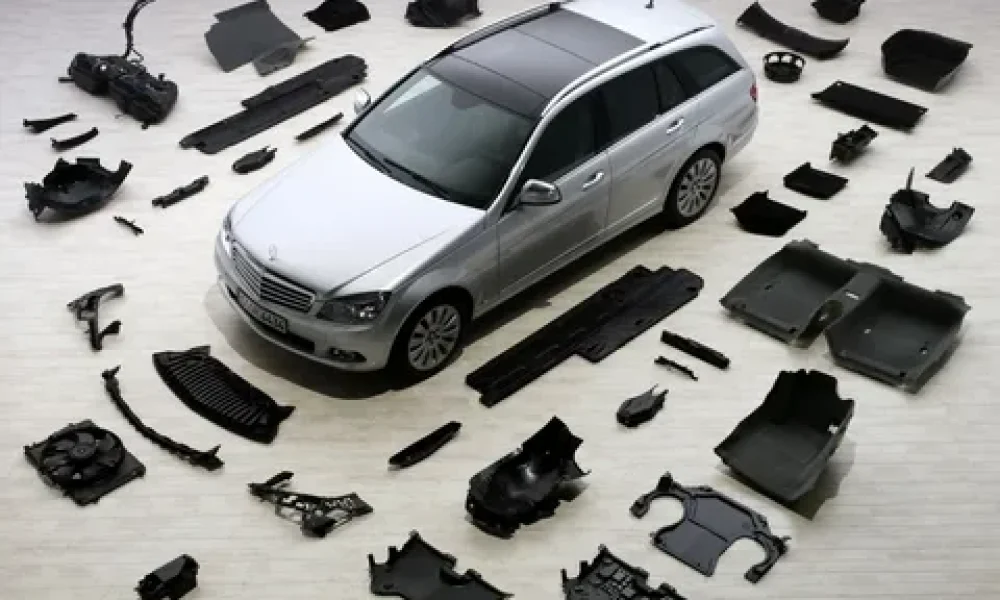
The automotive plastic market across BRIC nations—Brazil, Russia, India, and China—is entering a period of accelerated expansion, with the market size projected to nearly double from USD 80.4 billion in 2025 to USD 155.9 billion by 2035, reflecting a robust CAGR of 6.9%. The market’s strong performance is underpinned by rising vehicle production, swift adoption of lightweight materials, evolving emission regulations, and a rapidly growing electric vehicle (EV) ecosystem.
Across BRIC economies, automotive manufacturers are replacing traditional metals with advanced polymers to meet tightening emission norms and achieve improved fuel efficiency without compromising structural integrity or occupant safety. The transition toward lightweight vehicles, combined with expanding R&D activities and favorable industrial policies, is positioning automotive plastics as a critical material category in next-generation mobility.
Lightweighting and EV Adoption Fuel Market Demand
The upward trajectory of automotive plastics in BRIC countries is reinforced by the sector’s ongoing shift toward electrification. EVs require tailored material solutions due to battery-pack integration, thermal management needs, and specific safety considerations. High-performance polymers are becoming indispensable in both pure electric and hybrid vehicle architectures.
In 2025, manufacturers across China, India, Brazil, and Russia are increasingly choosing corrosion-resistant, moldable, and energy-efficient plastics to streamline vehicle assembly, reduce mass, and enhance durability. Compared to 2024, the adoption of specialty plastics in structural, under-the-hood, and aesthetic components has risen significantly, driven by consumer preferences for efficiency, comfort, and modern design.
Subscribe for Year-Round Insights → Stay ahead with quarterly and annual data updates
https://www.futuremarketinsights.com/reports/sample/rep-br-81
Interior Components Dominate Market Share
Interior components represent the largest application segment, accounting for 63.6% of total demand in 2025. Rising income levels and consumer expectations in India, China, and Brazil are pushing automakers to enhance cabin quality through advanced polymer-based materials used in:
- dashboards and center consoles
- door trims and panels
- interior lighting housings
- seats and ergonomic assemblies
Polypropylene (PP), ABS, and PVC remain the materials of choice for interior modules due to their design versatility, lightweight nature, and cost-effectiveness. Automakers in China are leading innovations in interior material engineering, accelerating the development of modular, recyclable, and soft-touch surfaces. These advancements reflect growing sustainability mandates and consumer interest in environmentally responsible vehicle models.
In Russia and Brazil, increased SUV and compact car production is further boosting demand for plastic-heavy interiors. Enhanced in-cabin infotainment, ambient illumination, and value-added features are contributing to the expanding use of automotive polymers.
Polypropylene Maintains Its Leadership Position
Polypropylene continues to be the most widely used automotive plastic, accounting for 20.3% of total demand in 2025. Its dominance stems from its favorable combination of:
- lightweight characteristics
- chemical and thermal resistance
- ease of processing
- cost-efficiency
PP’s broad applicability spans bumpers, HVAC ducts, dashboard surfaces, battery casings, and EV component housings. In India and Brazil, PP is increasingly used in interior modules to balance aesthetics and affordability, while Russia continues to invest in cold temperature–resistant PP grades appropriate for harsh climates.
As BRIC countries accelerate investments in EV and hybrid platforms, PP is expected to play a central role due to its recyclability, impact strength, and compatibility with mass production requirements.
Sustainability, Recycling, and New Material Innovation Shape the Roadmap
Environmental responsibility is emerging as a transformative force in the BRIC automotive plastics ecosystem. Polymer manufacturers and automakers are prioritizing:
- recyclable composites
- bio-based plastics
- mass-balanced materials
- closed-loop recycling systems
Companies like BASF SE, Braskem, Sinopec, SABIC, and Covestro are driving sustainability-focused innovation across the region. Notable recent developments include:
- BASF and Zhejiang REEF Technology collaborating to develop advanced recycled polymer formulations (March 2023).
- BASF, Mercedes-Benz, Pyrum Innovations AG, and others advancing recycled plastic auto components (October 2022).
- Citroën and BASF unveiling lightweight, resource-efficient concept vehicles aligned with circular-economy principles (September 2022).
Such milestones underline the strategic push toward building resilient, sustainable supply chains and supporting regulatory compliance across BRIC economies.
Country-Specific Growth Outlook: China Leads the Market
China: 8.0% CAGR (2025–2035)
China represents the largest and fastest-growing automotive plastics market among BRIC countries. The nation’s deep manufacturing base, aggressive carbon-reduction policies, rapid urbanization, and expanding middle-class population continue to fuel automotive demand and material innovation.
India: 6.1% CAGR (2025–2035)
India’s automotive plastics market is benefiting from strong passenger car demand, EV incentives, and government-backed emission regulations. Growing R&D investments are enabling development of next-generation polymer solutions tailored to local manufacturing needs.
Brazil: 6.2% CAGR (2025–2035)
In Brazil, rising fuel-efficiency mandates and sustainability programs are boosting the adoption of lightweight and recycled polymers. Automakers are increasingly integrating bio-based plastics into new vehicle models.
Russia: 5.6% CAGR (2025–2035)
Russia’s modernization of domestic automobile manufacturing and consumer preference for aesthetically enhanced interiors are driving steady adoption of lightweight plastics despite macroeconomic challenges.
Personalize Your Experience: Ask for Customization to Meet Your Requirements
https://www.futuremarketinsights.com/customization-available/rep-br-81
Competitive Landscape
The BRIC automotive plastics market is shaped by a mix of global and regional leaders including:
- BASF SE
- Dow Chemical
- SABIC
- Sinopec
- Covestro AG
- DuPont de Nemours
- Yanfeng Automotive Interiors
- Reliance Industries
- Supreme Industries
- Braskem
- Grupo Plasutil
These companies are strengthening their portfolios through material innovation, recycling technologies, and strategic collaborations with automotive OEMs.
Report Scope and Customization
This comprehensive study analyzes the market by material type, application area, end-use segment, and country-level dynamics across Brazil, Russia, India, and China. Detailed quantitative forecasts, competitive analysis, technological evaluations, and policy-impact assessments are included.
Why Choose FMI: Empowering Decisions that Drive Real-World Outcomes:
https://www.futuremarketinsights.com/why-fmi
About Future Market Insights (FMI)
Future Market Insights, Inc. (FMI) is an ESOMAR-certified, ISO 9001:2015 market research and consulting organization, trusted by Fortune 500 clients and global enterprises. With operations in the U.S., UK, India, and Dubai, FMI provides data-backed insights and strategic intelligence across 30+ industries and 1200 markets worldwide.



