
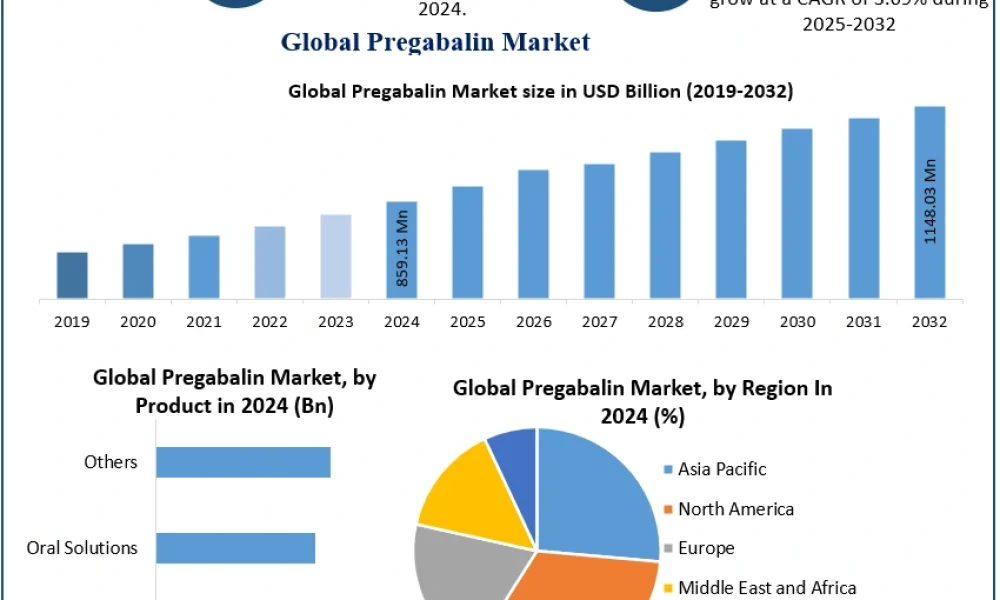
Pregabalin Market Overview:
Pregabalin Market is set to grow steadily from an estimated USD 1.65 billion in 2023 to approximately USD 2.18 billion by 2033, exhibiting a compound annual growth rate (CAGR) of around 2.82%. This expansion is primarily fueled by the rising prevalence of neurological conditions such as neuropathic pain, epilepsy, and generalized anxiety disorder, coupled with increasing awareness and healthcare infrastructure improvements worldwide.
Key Highlights & Insights
Market Size & Growth: The market is projected to grow from USD 1.65 billion in 2023 to USD 2.18 billion by 2033, at a CAGR of 2.82%.
Dominating Region: North America holds the largest market share, owing to advanced healthcare infrastructure, early drug adoption, and prevalent neurological disorder diagnoses.
Fastest Growing Region: Asia Pacific is the fastest-growing market with expanding healthcare access, increasing geriatric population, and rising burden of chronic neurological diseases.
Leading Segment: The neuropathic pain segment accounts for the largest application share, due to the growing population affected by diabetic neuropathy and postherpetic neuralgia.
Key Driver: Enhanced awareness and treatment options for neurological disorders, along with the introduction of advanced drug formulations, drive market growth.
► Get a sample of the report:https://www.maximizemarketresearch.com/request-sample/109027/
Recent Developments
2024-2025: Leading pharmaceutical companies including Pfizer Inc. (United States), Sun Pharmaceutical Industries Ltd. (India), and Lupin Limited (India) have launched generic pregabalin formulations, expanding market reach.
Research and Development efforts focus on developing extended-release formulations and combination therapies to improve efficacy and patient compliance.
Expansion of retail and hospital access in emerging economies through partnerships with government health programs.
Regulatory approvals for new formulations and dosage forms, such as oral solutions aimed at pediatric populations, have been obtained.
Market Dynamics
Growth Drivers:
Increasing prevalence of epilepsy, neuropathic pain, and anxiety disorders globally.
Rising geriatric population with heightened susceptibility to neurological disorders.
Growing awareness among healthcare practitioners and patients about treatment options.
Expansion of generic drug manufacturing improving affordability and accessibility.
Improvements in healthcare infrastructure and insurance coverage in emerging markets.
Challenges:
Patent expirations and competition resulting in price erosion.
Regulatory challenges and varying reimbursement policies across regions.
Potential side effects limiting pregabalin use in certain patients.
Availability of alternative therapies affecting market penetration.
Regional Analysis
North America: Market leader due to superior healthcare systems, greater diagnosis rates, and high drug adoption.
Asia Pacific: Fastest-growing region supported by increasing healthcare funding, large patient pool, and growing medical awareness.
Europe: Stable growth with established pharmaceutical market and regulatory compliance.
Latin America, Middle East, and Africa: Emerging markets with growing healthcare infrastructure investments and disease burden.
Product Segmentation
By Application: Neuropathic pain (largest), epilepsy, generalized anxiety disorder, and others.
By Dosage Form: Oral capsules (dominant), oral tablets, oral solution.
By Distribution Channel: Hospital pharmacies, retail pharmacies, online pharmacies.
By End User: Hospitals, specialty clinics, homecare settings.
Key Trends
Increasing availability of generic pregabalin to improve market accessibility.
Development of patient-centric formulations, including oral solutions for ease of administration.
Combination of pregabalin with other pharmaceuticals for comprehensive neurological disorder management.
Expansion of online pharmacy channels supporting wider drug distribution.
Growing research into alternative molecules that complement pregabalin therapy.
Frequently Asked Questions (FAQs)
Q1: What are the primary medical indications for pregabalin?
Pregabalin is mainly indicated for neuropathic pain, epilepsy, and generalized anxiety disorder.
Q2: Which region holds the highest market share for pregabalin?
North America leads the market because of better healthcare access and advanced therapeutic adoption.
Q3: What are the significant challenges facing the market?
Challenges include patent expirations, stringent regulatory requirements, and competition from alternative medicines.
Q4: How is the Asia Pacific market evolving?
Asia Pacific is rapidly growing due to rising healthcare investments, increasing disease prevalence, and expanding generic drug access.
Conclusion
The global pregabalin market reflects a balance of steady growth driven by established markets in North America and accelerating developments in Asia Pacific. Challenges from patent expiry and regional regulations remain, but advances in generic formulations, new dosage forms, and expanding healthcare infrastructure position the market favorably to serve the rising burden of neurological disorders worldwide. Sustained R&D and strategic market expansions will be key to future growth through 2033 and beyond.
◉ Get Market Research Latest Trends
♦ Global Citizen Services AI Market
♦ Maximize Market Research is launching a subscription model for data and analysis in the MMR Statistics
Contact Maximize Market Research:
3rd Floor, Navale IT Park, Phase 2
Pune Bangalore Highway, Narhe,
Pune, Maharashtra 411041, India
[email protected]
+91 96071 95908, +91 9607365656
About Maximize Market Research:
Maximize Market Research is a multifaceted market research and consulting company with professionals from several industries. Some of the industries we cover include medical devices, pharmaceutical manufacturers, science and engineering, electronic components, industrial equipment, technology and communication, cars and automobiles, chemical products and substances, general merchandise, beverages, personal care, and automated systems. To mention a few, we provide market-verified industry estimations, technical trend analysis, crucial market research, strategic advice, competition analysis, production and demand analysis, and client impact studies.




