
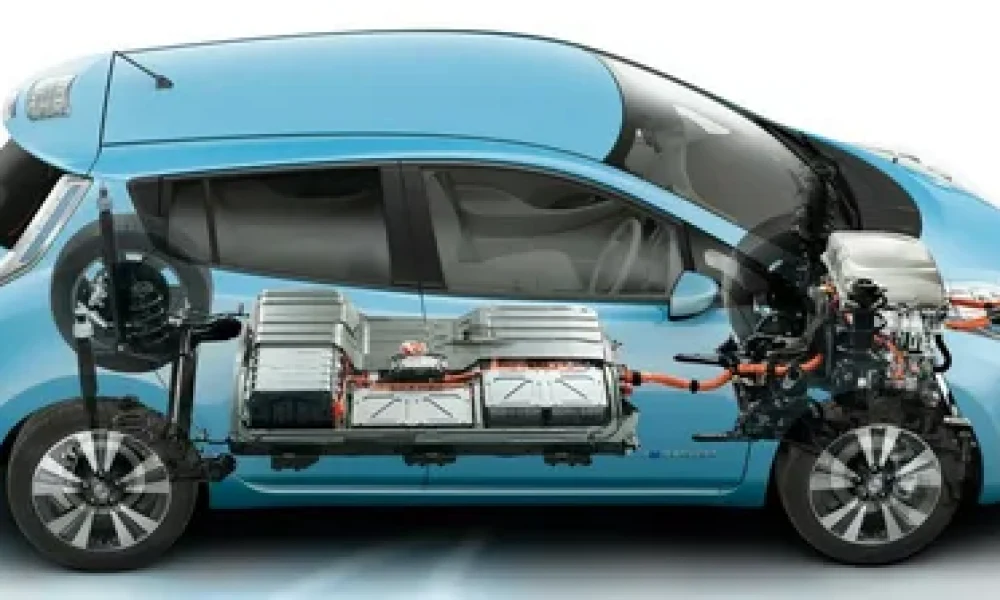
The hybrid vehicles market is entering a transformative decade, with global revenues projected to rise from USD 277,886.5 million in 2025 to USD 1,948,184.9 million by 2035, reflecting a powerful CAGR of 21.5%. This unprecedented expansion underscores the accelerating global shift toward sustainable mobility, reinforced by stringent emission regulations, improving powertrain efficiency, and rising consumer demand for fuel-efficient transportation.
Hybrid vehicles have emerged as the most scalable bridge between traditional internal combustion engines (ICEs) and full battery electric vehicles (BEVs), offering superior fuel economy, reduced CO₂ emissions, and lower total cost of ownership. As governments tighten tailpipe emission laws and enforce net-zero mobility frameworks, automakers are leveraging hybrid systems as a critical pathway to comply with regulatory expectations while maintaining production flexibility across global markets.
Hybrid and Plug-In Hybrid Powertrains Fueling Market Expansion
The market is broadly segmented into Hybrid Electric Vehicles (HEVs) and Plug-in Hybrid Electric Vehicles (PHEVs). HEVs rely on regenerative braking to recharge internal batteries, appealing strongly to regions with limited charging infrastructure. PHEVs, equipped for external charging, offer extended electric-only ranges of 30–60 miles, making them ideal for urban commuting and low-emission zones.
PHEV adoption continues to accelerate across Europe and China, driven by subsidies, congestion-zone incentives, and aggressive carbon-reduction policies. Leading manufacturers including Toyota, Volvo, BMW, and Hyundai are expanding PHEV lineups to address range-anxiety concerns and regulatory requirements across densely populated markets.
Meanwhile, HEVs remain the top choice in regions prioritizing reliability, maintenance efficiency, and fuel economy. Iconic models such as the Toyota Prius, Honda Insight, and Ford Escape Hybrid continue to dominate North America and Japan—markets with mature hybrid infrastructures and strong consumer confidence in gasoline-electric technology.
Subscribe for Year-Round Insights → Stay ahead with quarterly and annual data updates
https://www.futuremarketinsights.com/reports/sample/rep-gb-43
Powertrain Innovations Strengthening Market Competitiveness
Hybrid vehicles are categorized by powertrain configuration—parallel, series, and power-split systems. Among these, parallel hybrids lead global market share due to low integration costs, scalability, and suitability across passenger cars, SUVs, and light commercial vehicles (LCVs). Toyota, Honda, and Hyundai remain dominant adopters of this architecture, leveraging parallel hybrids to meet rising demand for mild and full hybrid variants across Asia-Pacific and North America.
Power-split hybrids, used extensively in models such as the Toyota Prius, Ford Escape, and Highlander, offer superior efficiency through intelligent power blending between engine and electric systems. Advances in onboard energy-management software and electronic controls are enabling these systems to become more responsive, efficient, and cost-competitive—supporting broader adoption across Europe, Japan, and the United States.
Regional Outlook: Asia-Pacific Leads Global Hybrid Adoption
The Asia-Pacific region remains the world’s largest and fastest-growing hybrid vehicle market. China continues to elevate PHEV adoption in Tier-2 and Tier-3 cities as part of a broader national electrification agenda, while Japan retains its global leadership in non-plug-in hybrid technology. India and South Korea are also expanding hybrid penetration across passenger and commercial segments, driven by fuel-economy needs, tax incentives, and rising urban congestion.
In North America, tightening fuel-efficiency mandates, tax credits for PHEVs, and expanding hybrid SUV lineups from Ford, Toyota, and Honda are reinforcing market growth. Cities such as Los Angeles, New York, and Toronto are increasingly adopting hybrids for taxi and delivery fleets to meet clean-air targets.
Europe continues to set the global pace for hybrid innovation, supported by stringent CO₂ emission norms and the EU Green Deal. Countries including Germany, France, and the Netherlands are adopting PHEVs across compact, midsize, and luxury segments—driven by aggressive emission-penalty structures and expanding low-emission zones.
Emerging markets across Latin America, the Middle East, and Africa are also integrating hybrids into public transport systems and government fleets as a practical alternative to BEVs in regions where charging infrastructure remains underdeveloped.
Market Challenges: Cost Barriers and Infrastructure Variability
Despite surging adoption, hybrid vehicles face price barriers in developing economies, where high-voltage battery systems increase vehicle prices by 15–20%. Limited availability of skilled hybrid service centers further affects resale values and ownership perceptions in price-sensitive markets.
PHEVs also face uneven regulatory support and limited charging infrastructure in parts of Asia and Latin America. Policy fragmentation continues to affect classification and incentives for plug-in hybrid models, slowing penetration in some mobility ecosystems.
Growth Opportunities: Fleet Electrification and Hybrid SUVs
Commercial fleet operators are accelerating hybrid integration to meet operational emission targets and reduce long-term fuel costs. In 2023, logistics companies globally committed to converting over 30% of LCV fleets to hybrid systems by 2030.
Simultaneously, hybrid SUVs and crossovers are emerging as high-value revenue contributors, blending strong torque, extended range, and lower emissions. Luxury manufacturers are increasingly integrating series and power-split hybrids to enhance performance and sustainability credentials.
Competitive Landscape: Toyota, Honda, and Hyundai Lead Global Market Share
The hybrid vehicles market remains moderately consolidated, with leading companies driving innovation in powertrain design, battery efficiency, and electrified mobility platforms.
| Company | Estimated Market Share |
| Toyota Motor Corporation | 20–24% |
| Honda Motor Co., Ltd. | 13–16% |
| Hyundai Motor Group | 10–13% |
| Ford Motor Company | 7–10% |
| General Motors | 5–8% |
| Others | 35–45% |
Toyota continues to dominate with its extensive hybrid lineup and leadership in power-split systems. Honda’s i-MMD architecture and Hyundai’s cost-effective hybrid platforms further strengthen market competition. Ford and General Motors are expanding hybrid offerings in SUVs, pickups, and commercial vehicles as part of broader carbon-neutrality strategies.
Personalize Your Experience: Ask for Customization to Meet Your Requirements
https://www.futuremarketinsights.com/customization-available/rep-gb-43
Outlook for 2025–2035
As global emission mandates tighten and EV infrastructure matures inconsistently across markets, hybrid vehicles will remain essential to international electrification strategies. With expanding fleet adoption, advancing energy-management systems, and growing integration with renewable-charging ecosystems, the hybrid vehicles sector is positioned to experience a decade of uninterrupted expansion and technological transformation.
About Future Market Insights (FMI)
Future Market Insights, Inc. (FMI) is an ESOMAR-certified, ISO 9001:2015 market research and consulting organization, trusted by Fortune 500 clients and global enterprises. With operations in the U.S., UK, India, and Dubai, FMI provides data-backed insights and strategic intelligence across 30+ industries and 1200 markets worldwide.
Why Choose FMI: Empowering Decisions that Drive Real-World Outcomes: https://www.futuremarketinsights.com/why-fmi



