
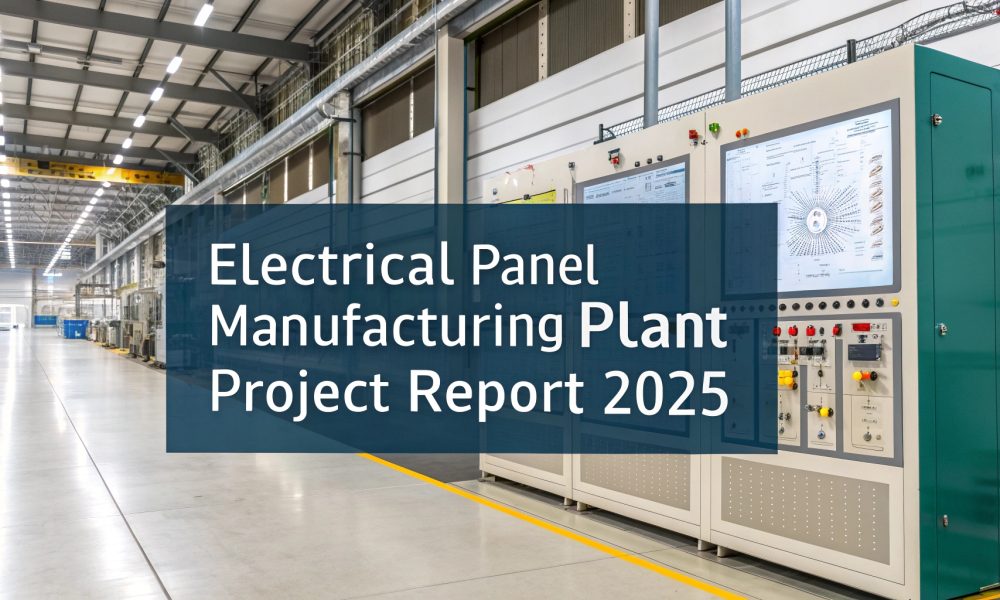
An electrical panel, also known as a distribution board or switchboard, is a crucial component in electrical systems that distributes and controls the flow of electricity within residential, commercial, or industrial facilities. It houses circuit breakers, fuses, and switches to ensure safe power management, protect electrical circuits, and prevent overloads or short circuits.
Establishing an electrical panel manufacturing plant involves designing, assembling, and testing various panel types, including control, distribution, and automation panels. The setup requires investment in sheet metal fabrication, wiring, assembly lines, and quality testing equipment. With rising infrastructure, industrial automation, and smart grid projects, the sector offers profitable opportunities for manufacturers and investors.
IMARC Group’s report, titled “Electrical Panel Manufacturing Plant Project Report 2025: Industry Trends, Plant Setup, Machinery, Raw Materials, Investment Opportunities, Cost and Revenue,” provides a complete roadmap for setting up an electrical panel manufacturing plant. It covers a comprehensive market overview to micro-level information such as unit operations involved, raw material requirements, utility requirements, infrastructure requirements, machinery and technology requirements, manpower requirements, packaging requirements, transportation requirements, etc.
This comprehensive business plan outlines every critical step involved in setting up a electrical panel manufacturing plant successful unit from understanding the industry landscape to planning for real-world challenges. It provides valuable insights into essential components such as electrical panel manufacturing plant setup, cost breakdown, machinery cost, operating cost, raw material requirements, utility needs, infrastructure setup, and packaging logistics.
Electrical Panel Industry Outlook 2025:
The electrical panel industry in 2025 is expected to witness robust growth, driven by rapid industrialization, urban development, and renewable energy integration. The increasing demand for efficient power distribution systems and automation solutions across sectors such as manufacturing, construction, and energy is fueling expansion. Additionally, government initiatives supporting electrification and smart infrastructure are creating lucrative prospects for both domestic and export-oriented manufacturers.
Key Insights for Electrical Panel Manufacturing Plant Setup:
Detailed Process Flow:
- Product Overview
- Unit Operations Involved
- Mass Balance and Raw Material Requirements
- Quality Assurance Criteria
- Technical Tests
Project Details, Requirements and Costs Involved:
- Land, Location and Site Development
- Plant Layout
- Machinery Requirements and Costs
- Raw Material Requirements and Costs
- Packaging Requirements and Costs
- Transportation Requirements and Costs
- Utility Requirements and Costs
- Human Resource Requirements and Costs
Request for a Sample Report: https://www.imarcgroup.com/electrical-panel-manufacturing-plant-project-report/requestsample
Capital Expenditure (CapEx) and Operational Expenditure (OpEx) Analysis:
Project Economics:
- Capital Investments
- Operating Costs
- Expenditure Projections
- Revenue Projections
- Taxation and Depreciation
- Profit Projections
- Financial Analysis
Profitability Analysis:
- Total Income
- Total Expenditure
- Gross Profit
- Gross Margin
- Net Profit
- Net Margin
Key Cost Components of Setting Up an Electrical Panel Plant:
- Land and Infrastructure Costs: Expenses for acquiring land, constructing production facilities, storage areas, and office spaces.
- Machinery and Equipment: Costs of metal fabrication machines, wiring tools, assembly stations, testing equipment, and quality control systems.
- Raw Materials: Procurement of components such as circuit breakers, switches, enclosures, wires, bus bars, and insulation materials.
- Labor and Workforce: Hiring skilled technicians, engineers, electricians, and administrative staff for production and operations.
- Utilities and Power Supply: Expenses for electricity, water, ventilation, and backup systems essential for manufacturing operations.
- Regulatory and Certification Costs: Fees for obtaining ISO, CE, and safety certifications to comply with electrical standards.
- Packaging and Logistics: Costs for protective packaging materials, labeling, and transportation to distributors and clients.
- Maintenance and Depreciation: Regular upkeep of machinery and replacement of tools to ensure consistent quality and efficiency.
- Marketing and Distribution: Budget for brand promotion, trade participation, dealer networks, and digital marketing campaigns.
- Working Capital: Funds for managing day-to-day expenses, raw material purchases, and operational contingencies.
Economic Trends Influencing Electrical Panel Plant Setup Costs 2025:
- Raw Material Costs: Fluctuating prices of copper, steel, and aluminum directly affect the cost of electrical components and enclosures.
- Energy and Utility Expenses: Increasing electricity and utility rates raise the operational costs of running manufacturing facilities.
- Technological Advancements: Integration of smart and automated systems adds to initial investment but improves long-term efficiency.
- Labor and Skill Costs: Demand for skilled electrical engineers and technicians impacts wage expenses.
- Regulatory Compliance: Meeting safety, energy efficiency, and quality certifications adds to setup costs.
- Market Demand Trends: Growth in construction, renewable energy, and industrial automation sectors drives production expansion needs.
- Logistics and Supply Chain Factors: Global supply fluctuations and higher transport costs affect raw material procurement and delivery schedules.
Challenges and Considerations for Investors in Electrical Panel Plant Projects:
- Regulatory Approvals: Complying with electrical safety standards, ISO certifications, and local industrial regulations can be time-consuming and costly.
- High Initial Investment: Significant capital is required for advanced machinery, automation systems, and skilled labor.
- Technological Upgradation: Keeping up with rapidly evolving electrical technologies and smart panel systems demands continuous R&D investment.
- Quality Assurance: Maintaining product reliability and performance consistency is crucial to meet industry expectations.
- Competition: The presence of established manufacturers and low-cost imports increases market competition.
- Supply Chain Risks: Dependence on imported electrical components can lead to delays and cost volatility.
- Market Demand Fluctuations: Economic slowdowns and project delays in construction or industrial sectors can affect demand.
- Workforce Training: Skilled technical staff are essential for efficient production, installation, and maintenance of panels.
Conclusion:
Setting up an electrical panel manufacturing plant presents a strong business opportunity driven by rising industrial automation, infrastructure expansion, and renewable energy projects. However, investors must carefully manage regulatory compliance, quality control, and technological upgrades to remain competitive. With strategic planning, skilled workforce development, and a focus on innovation, the venture can achieve sustainable growth and profitability in the evolving energy sector.
About Us:
IMARC Group is a global management consulting firm that helps the world’s most ambitious changemakers to create a lasting impact. The company excel in understanding its client’s business priorities and delivering tailored solutions that drive meaningful outcomes. We provide a comprehensive suite of market entry and expansion services. Our offerings include thorough market assessment, feasibility studies, company incorporation assistance, factory setup support, regulatory approvals and licensing navigation, branding, marketing and sales strategies, competitive landscape, and benchmarking analyses, pricing and cost research, and procurement research.
Contact Us:
IMARC Group
134 N 4th St. Brooklyn, NY 11249, USA
Email: [email protected]
Tel No:(D) +91 120 433 0800
United States: (+1-201971-6302)




