
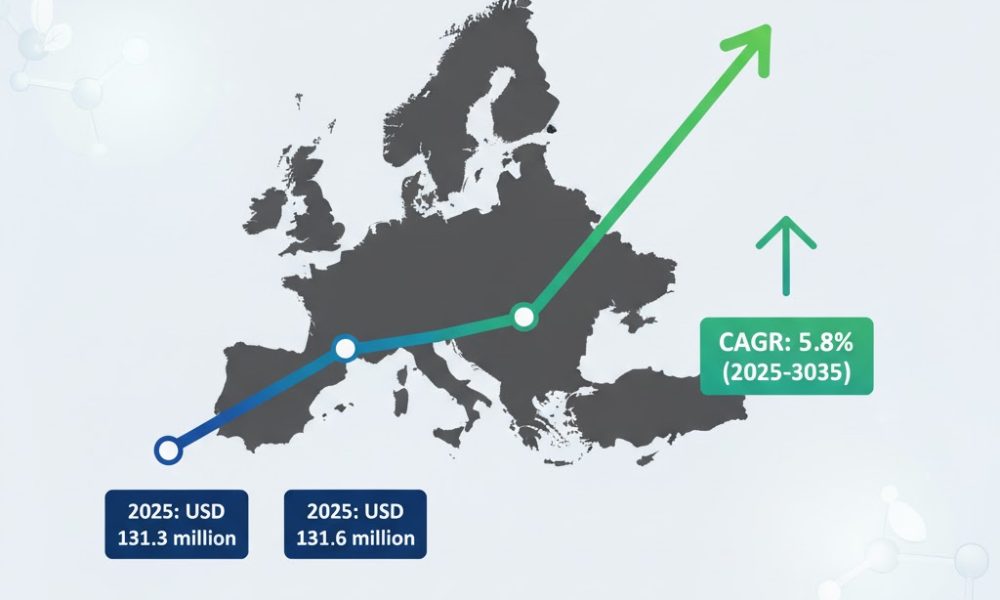
The Europe Opioid Use Disorder (OUD) Treatment Market is projected to attain a value of USD 267.7 million by 2035, expanding from USD 131.3 million in 2025, at a CAGR of 5.8% between 2025 and 2035. Market growth is being propelled by the rapid escalation of opioid misuse across the continent and the increasing adoption of medication-assisted treatment (MAT), supported by strong public health frameworks and government intervention.
Market Summary
Europe is facing an intensifying opioid dependency crisis, primarily driven by the misuse of prescription painkillers and illicit narcotics. Governments, NGOs, and healthcare organizations are implementing multifaceted strategies to address this public health emergency. MAT—integrating FDA-approved medications such as buprenorphine and methadone with behavioral therapies—has emerged as the cornerstone of treatment, improving patient adherence and recovery rates across clinical settings.
Access the comprehensive market report for detailed regional insights, competitive benchmarking, and technological advancements! Request Sample Report
Market Drivers
- Escalating Opioid Addiction Rates: The growing prevalence of opioid misuse continues to elevate the demand for evidence-based treatment programs.
- Government and NGO Initiatives: Robust policy frameworks, reimbursement models, and public awareness campaigns are increasing access to MAT and overdose prevention tools like naloxone.
- Advancements in Digital Health: Telemedicine and mobile-based digital therapeutics are bridging gaps in treatment accessibility, particularly in rural or underserved regions.
Market Challenges
Despite regulatory progress, significant barriers persist:
- Stigma and Social Barriers: Persistent stigma toward addiction treatment discourages patients from seeking help, especially in conservative regions.
- Funding Gaps: Limited healthcare funding and inadequate insurance coverage constrain program scalability.
- Regional Disparities: Unequal access to healthcare infrastructure across Eastern and Southern Europe limits uniform adoption of MAT protocols.
Key Trends
- Widespread Naloxone Distribution: Increasing availability through pharmacies and public programs has improved overdose prevention rates.
- Integration of Telehealth Platforms: Digital monitoring and app-based interventions are becoming critical tools for ensuring long-term treatment adherence.
- Focus on Long-Acting Therapies: The emergence of extended-release formulations, such as naltrexone injections, offers improved compliance and relapse prevention.
Segmental Insights
By drug class, the market is segmented into opioid antagonists (naloxone, naltrexone) and opioid agonists/partial agonists (methadone, buprenorphine).
By end user, hospitals and rehabilitation centers dominate adoption, while community health clinics and home-based care are gaining traction with the expansion of digital delivery models.
Regional Insights
- United Kingdom: Leads the European market with comprehensive national MAT programs, strong public health awareness, and widespread naloxone distribution.
- Germany: Demonstrates consistent growth through government-backed digital health initiatives and long-acting treatment adoption.
- France: Maintains high MAT penetration rates supported by NGO collaboration and public education.
- Southern and Eastern Europe: Gradual adoption due to cultural barriers and limited funding, yet NGOs are expanding reach via harm-reduction programs.
Purchase the full market report for comprehensive forecasts, regional analysis, competitive intelligence, and emerging trend evaluations! Buy Full Report
Competitive Landscape
The European OUD treatment market is moderately consolidated, with global leaders Indivior, Pfizer, and Alkermes commanding nearly 60% market share. Tier 2 participants such as Camurus, Mundipharma, and Accord Healthcare are focusing on injectable and combination therapies. Emerging digital health providers are gaining prominence by delivering AI-driven adherence solutions and virtual therapy models.
Market Outlook
The next decade will see Europe transition toward integrated, patient-centric OUD recovery systems. Governments are expected to invest in long-acting injectable formulations, digital therapeutics, and community-based care models. By 2035, Europe’s OUD treatment ecosystem will reflect a mature, evidence-driven framework—linking innovation, policy, and clinical best practices to reduce relapse rates and enhance population health outcomes.
Have a specific Requirements and Need Assistant on Report Pricing or Limited Budget please contact us – [email protected]
About Future Market Insights (FMI)
Future Market Insights, Inc. (FMI) is an ESOMAR-certified, ISO 9001:2015 market research and consulting organization, trusted by Fortune 500 clients and global enterprises. With operations in the U.S., UK, India, and Dubai, FMI provides data-backed insights and strategic intelligence across 30+ industries and 1200 markets worldwide.



