
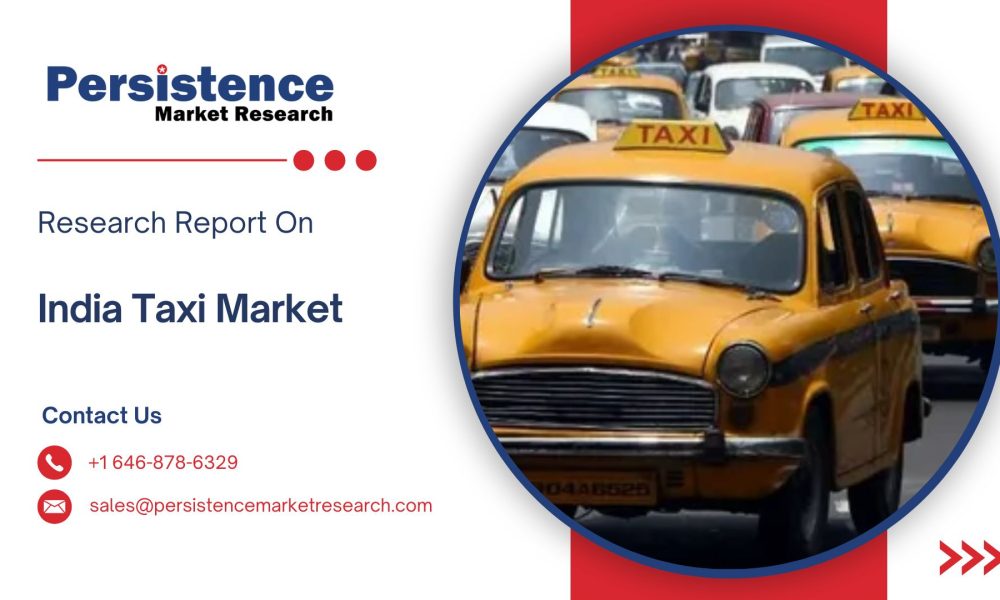
The India taxi market is witnessing significant growth, driven by rapid urbanization, rising disposable income, and an increasing demand for convenient transportation solutions. According to Persistence Market Research, the India taxi market size is projected to increase from US$ 21,071.7 million in 2025 to US$ 44,303.1 million by 2032, reflecting a CAGR of 11.2% during the forecast period. This growth highlights the robust expansion potential within the Indian mobility sector, fueled by technological advancements, digitalization, and evolving consumer preferences.
The market is characterized by increasing adoption of app-based taxi services, the penetration of electric and hybrid taxis, and the growing need for safe and reliable urban transportation. Metropolitan cities like Delhi, Mumbai, Bengaluru, and Hyderabad are emerging as the leading revenue-generating regions due to dense population clusters, high smartphone penetration, and well-developed road infrastructure. Additionally, the increasing influence of ride-hailing platforms such as Ola and Uber has transformed the traditional taxi market, providing convenience, real-time tracking, and competitive pricing.
The leading segment in the market is app-based taxi services, accounting for a significant share due to the convenience of smartphone applications, digital payments, and ride-hailing platforms. Geographically, Western India, particularly Maharashtra and Gujarat, dominates the market, attributed to the concentration of urban hubs and higher disposable incomes. Conversely, Eastern and Northern regions are witnessing gradual adoption due to growing awareness and infrastructure improvements. The India taxi market is also benefiting from government initiatives to promote electric vehicles, which is gradually reshaping the market landscape and enhancing sustainability.
Get | Download Sample Copy with TOC, Graphs & List of Figures @ https://www.persistencemarketresearch.com/samples/35215
Key Highlights from the Report
- The India taxi market is projected to grow at a CAGR of 11.2% between 2025 and 2032.
- App-based taxi services dominate the market due to their convenience, affordability, and digital integration.
- Western India emerges as the leading regional market, driven by high urbanization and disposable income.
- Adoption of electric and hybrid taxis is on the rise, supported by government subsidies and environmental initiatives.
- Rising smartphone penetration and digital payment solutions are fueling market growth in tier-2 cities.
- The COVID-19 pandemic accelerated the preference for private taxi services over public transport, boosting market demand.
Market Segmentation
The India taxi market can be segmented based on product type, service type, and end-user. By product type, the market is categorized into sedans, hatchbacks, SUVs, and electric taxis. Sedans and hatchbacks are highly preferred for their fuel efficiency and affordability, making them dominant choices in urban cities. Electric taxis are witnessing a gradual increase in adoption due to growing environmental concerns, government incentives, and low operational costs.
Service-based segmentation includes app-based services and traditional metered taxis. App-based taxis are the fastest-growing segment, offering convenience, cashless transactions, and easy ride-hailing through mobile applications. Traditional metered taxis continue to serve areas with lower smartphone penetration or regions where app-based adoption is still in the early stages. By end-user, the market caters to individual commuters, corporate clients, and tourists, with corporate travel services showing substantial growth due to partnerships between taxi providers and businesses.
Regional Insights
Western India, particularly Maharashtra, Gujarat, and Goa, leads the India taxi market due to a concentration of major cities, high economic activity, and elevated disposable income. Cities like Mumbai and Pune exhibit strong adoption of app-based taxis, with commuters preferring convenient and time-saving transport options. The region also benefits from government initiatives encouraging EV adoption, contributing to a greener taxi fleet.
Eastern and Northern India are witnessing emerging growth in taxi adoption, supported by improving infrastructure, increasing smartphone penetration, and awareness campaigns. Cities such as Kolkata, Lucknow, and Patna are showing promising uptake of app-based taxis, particularly among young professionals and students who prefer flexible and affordable mobility options. Tier-2 cities are gradually evolving into key growth areas for taxi operators looking to expand beyond saturated metro markets.
For customization options before purchasing: https://www.persistencemarketresearch.com/request-customization/35215
Market Drivers
The India taxi market is primarily driven by the increasing demand for convenient urban mobility solutions. With rising population density in major cities, traffic congestion has become a significant challenge, creating demand for efficient taxi services. App-based platforms offer ease of booking, real-time tracking, and competitive pricing, which appeals to urban commuters seeking flexibility. Additionally, rising smartphone penetration and digital payment infrastructure support the adoption of technology-enabled taxi services.
The growing emphasis on sustainability and environmental awareness is also a critical driver. The Indian government’s push for electric mobility and green transport initiatives has encouraged the incorporation of electric and hybrid taxis in the market. Fleet operators are gradually upgrading their vehicles to reduce carbon footprints, benefiting from tax incentives and subsidies. Furthermore, post-pandemic consumer behavior favors private taxis over public transportation due to health and safety considerations, further fueling market growth.
Market Restraints
Despite the robust growth trajectory, the India taxi market faces challenges that could impact expansion. High operational costs, including vehicle maintenance, fuel prices, and driver salaries, create pressure on profit margins, especially for small-scale operators. In addition, competition from ride-hailing platforms with dynamic pricing models can further strain traditional taxi services.
Regulatory challenges also pose restraints, as compliance with government mandates for vehicle registration, licensing, and emission standards can be complex and costly. Traffic congestion in urban hubs increases operational inefficiencies, leading to delayed services and reduced customer satisfaction. Lastly, fluctuations in fuel prices and limited availability of electric vehicle charging infrastructure in some regions restrict seamless fleet operations, affecting growth in emerging markets.
Market Opportunities
The India taxi market presents several lucrative opportunities for investors and market players. The growing adoption of electric vehicles offers a chance to modernize fleets and capitalize on government incentives while appealing to eco-conscious consumers. Companies integrating AI and machine learning for route optimization, fare calculation, and predictive demand analytics can enhance operational efficiency and customer experience.
Another opportunity lies in expanding services in tier-2 and tier-3 cities, where urbanization and disposable incomes are rising. Localized marketing and affordable fare structures can attract first-time users in these regions. Strategic partnerships between taxi operators and corporates for business travel, subscription-based rides, and loyalty programs present additional growth avenues. The rise of autonomous taxi prototypes and smart city initiatives in India also signals long-term prospects for innovation-driven expansion in the market.
Company Insights
Key players operating in the India taxi market include:
- Ola Cabs
- Uber Technologies Inc.
- Meru Cabs
- Savaari Car Rentals
- Mega Cabs
- FastTrack Taxi
Buy Now: https://www.persistencemarketresearch.com/checkout/35215
Frequently Asked Questions
➤ What are the main factors influencing the India Taxi Market 2025-2032?
➤ Which companies are the major sources in the India Taxi Market?
➤ What are the market’s opportunities, risks, and general structure?
➤ Which of the top India Taxi Market companies compare in terms of sales, revenue, and prices?
➤ How are market types and applications and deals, revenue, and value explored?
Future Opportunities and Growth Prospects
The India taxi market is poised for sustained growth over the next decade, driven by urbanization, technological advancements, and increasing consumer preference for convenient mobility solutions. Adoption of electric taxis, AI-enabled fleet management, and expansion into tier-2 and tier-3 cities will remain key growth strategies. Moreover, strategic collaborations, corporate tie-ups, and digitalization initiatives can unlock untapped market potential, creating long-term value for both operators and consumers.
With projected market growth from US$ 21,071.7 million in 2025 to US$ 44,303.1 million by 2032 at a CAGR of 11.2%, the India taxi market offers a promising landscape for investment, innovation, and expansion. Companies that capitalize on sustainability trends, customer-centric solutions, and technology-driven operations will be well-positioned to dominate this competitive market.




