
Market Overview
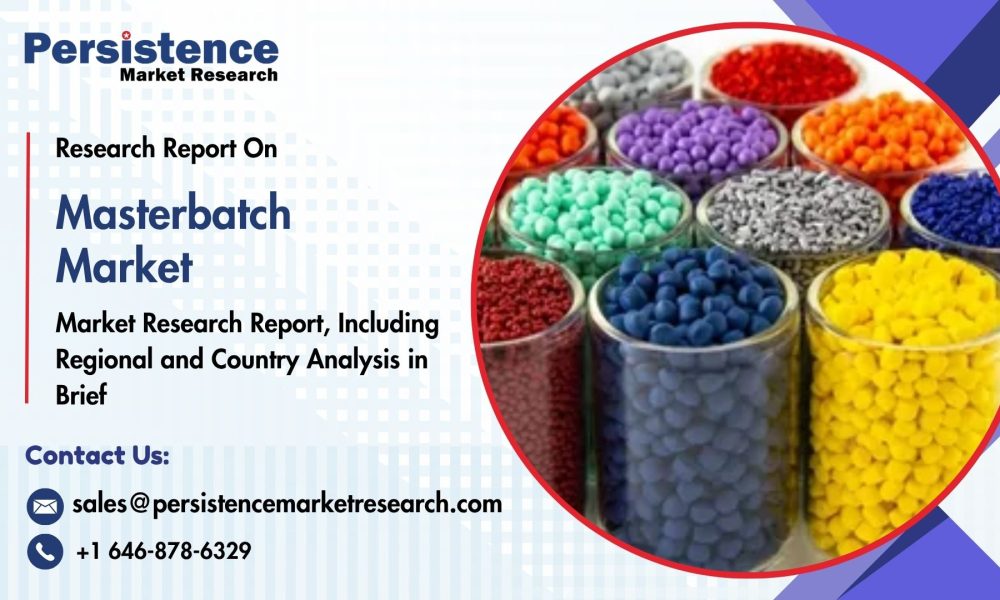
The global masterbatch market is witnessing steady growth as industries such as packaging, automotive, construction, and consumer goods increasingly adopt advanced plastic solutions to enhance functionality and aesthetics. According to the latest study by Persistence Market Research, the market size is projected to be valued at US$10.4 billion in 2025 and is estimated to reach US$15.7 billion by 2032, expanding at a CAGR of 6.1% during the forecast period. Masterbatch, a solid or liquid additive used for coloring or imparting specific properties to plastics, plays a pivotal role in modern manufacturing by providing cost-effective and customizable solutions for polymer processing.
The rising demand for lightweight, durable, and sustainable materials across multiple industries is fueling the adoption of masterbatch formulations. These additives enhance performance by imparting properties such as flame retardancy, UV stability, antimicrobial resistance, and improved mechanical strength. Moreover, the growing trend toward eco-friendly and recyclable plastics is creating fresh opportunities for masterbatch manufacturers to innovate in bio-based and sustainable product lines.
Get a Sample PDF Brochure of the Report (Use Corporate Email ID for a Quick Response): https://www.persistencemarketresearch.com/samples/2991
Market Dynamics
One of the primary factors driving the masterbatch market is the increasing demand for plastic products across packaging and automotive industries. In packaging, masterbatch provides vibrant colors, brand identity, and functional properties like barrier protection and anti-static behavior, which are vital for food, beverage, and pharmaceutical sectors. Similarly, in the automotive industry, masterbatch is extensively used for lightweight plastic components, reducing overall vehicle weight and contributing to fuel efficiency.
Furthermore, rapid urbanization and infrastructure development in emerging economies have boosted the demand for plastics in construction applications, thereby accelerating masterbatch consumption. The rising preference for cost-efficient and consistent coloring solutions compared to traditional compounding techniques further supports market growth.
On the other hand, the industry faces challenges such as fluctuating raw material prices and growing environmental concerns over plastic waste. Regulatory pressure to reduce single-use plastics may limit some applications, though it also paves the way for innovation in biodegradable and recyclable masterbatch solutions. Manufacturers that can align their product portfolios with sustainability goals are expected to gain a competitive edge in the market.
Market Segmentation
The global masterbatch market can be segmented based on type, carrier resin, application, and region.
By Type, the market includes color masterbatch, additive masterbatch, white masterbatch, black masterbatch, and specialty masterbatch. Among these, color masterbatch holds a significant share owing to its extensive use in packaging and consumer goods to achieve brand differentiation. Additive masterbatch is gaining traction due to its functional benefits, including flame retardancy, UV resistance, and antimicrobial properties.
By Carrier Resin, the market is segmented into polyethylene (PE), polypropylene (PP), polystyrene (PS), polyvinyl chloride (PVC), and others. Polyethylene and polypropylene dominate the segment, driven by their widespread use in flexible packaging, automotive components, and household goods.
By Application, packaging emerges as the largest segment, as industries demand visually appealing and functionally superior materials for food, beverage, and healthcare products. Automotive follows closely, with the growing adoption of lightweight plastics supported by masterbatch for interiors and exteriors. Construction, consumer goods, and agriculture also contribute significantly to market growth, with applications ranging from pipes and cables to durable plastic products.
By Region, North America and Europe are mature markets with steady demand for innovative and sustainable masterbatch solutions. Asia-Pacific, however, is projected to dominate global consumption, driven by rapid industrialization, expanding packaging demand, and increasing automotive production in countries such as China and India. The Middle East & Africa and Latin America are also emerging as promising markets due to rising infrastructure projects and growing consumer markets.
Competitive Landscape
The masterbatch market is highly competitive, with global and regional players striving to enhance their product offerings and expand their geographic presence. Companies are focusing on innovation in sustainable solutions, acquisitions, and strategic collaborations to strengthen their market position. The demand for recyclable and bio-based masterbatch has become a central theme in product development strategies.
Company Insights
✦ Clariant AG
✦ Ampacet Corporation
✦ A. Schulman Inc. (now part of LyondellBasell)
✦ PolyOne Corporation (now Avient Corporation)
✦ Cabot Corporation
✦ Plastiblends India Ltd.
✦ Penn Color Inc.
✦ Tosaf Compounds Ltd.
✦ Hubron International Ltd.
✦ RTP Company
These companies are investing heavily in research and development to create advanced masterbatch formulations that address sustainability concerns and meet regulatory standards. For instance, Avient Corporation and Clariant are leading the push toward bio-based and recyclable masterbatch products, while regional companies like Plastiblends India Ltd. are expanding their market presence in Asia to tap into high-growth opportunities. Strategic mergers and acquisitions have also become common, enabling companies to strengthen their technological expertise and global footprint.
For Customized Insights on Segments, Regions, or Competitors, Request Personalized Purchase Options @ https://www.persistencemarketresearch.com/request-customization/2991
Regional Insights
North America and Europe remain significant markets for masterbatch due to stringent quality standards and strong demand from the packaging and automotive industries. The presence of established multinational companies in these regions further drives product innovation and adoption.
Asia-Pacific is expected to dominate the market throughout the forecast period, primarily driven by high consumption of plastics in packaging, consumer goods, and construction. China, India, and Southeast Asia are emerging as key hubs for both production and consumption of masterbatch, supported by growing urbanization, industrialization, and rising disposable incomes. The demand for cost-effective and high-quality colored plastics in these regions is creating substantial opportunities for both local and international players.
The Middle East & Africa and Latin America are gradually gaining attention as emerging markets, with infrastructure growth and an expanding consumer base boosting demand for masterbatch products. Governments in these regions are also increasingly focusing on sustainable materials, which could open doors for bio-based masterbatch solutions.
Future Outlook
The future of the masterbatch market looks promising, with sustainability expected to remain at the forefront of industry trends. Innovations in biodegradable masterbatch, bio-based polymers, and advanced functional additives are set to redefine the market landscape. With increasing pressure from regulators and consumers for eco-friendly materials, companies that can integrate circular economy principles into their business models are likely to thrive.
Moreover, the growing demand for high-performance plastics in automotive, construction, and packaging industries will continue to support market expansion. Digital technologies and automation in masterbatch manufacturing will further improve efficiency, quality, and customization, helping manufacturers meet the evolving needs of their clients.
In conclusion, the global masterbatch market is on a steady upward trajectory, expected to grow from US$10.4 billion in 2025 to US$15.7 billion by 2032 at a CAGR of 6.1%. The demand is primarily driven by expanding applications in packaging, automotive, construction, and consumer goods, with Asia-Pacific leading the global consumption. While challenges such as raw material price volatility and environmental concerns persist, innovation in sustainable and functional masterbatch solutions offers ample opportunities for industry players. With strong competition and a dynamic regulatory landscape, the masterbatch market is poised for continued growth and transformation in the years ahead.
Explore the Latest Trending Research Reports:
About Persistence Market Research:
At Persistence Market Research, we specialize in creating research studies that serve as strategic tools for driving business growth. Established as a proprietary firm in 2012, we have evolved into a registered company in England and Wales in 2023 under the name Persistence Research & Consultancy Services Ltd. With a solid foundation, we have completed over 3600 custom and syndicate market research projects, and delivered more than 2700 projects for other leading market research companies’ clients.
Our approach combines traditional market research methods with modern tools to offer comprehensive research solutions. With a decade of experience, we pride ourselves on deriving actionable insights from data to help businesses stay ahead of the competition. Our client base spans multinational corporations, leading consulting firms, investment funds, and government departments. A significant portion of our sales comes from repeat clients, a testament to the value and trust we’ve built over the years.
Contact Us:
Persistence Market Research
G04 Golden Mile House, Clayponds Lane
Brentford, London, TW8 0GU UK
USA Phone: +1 646-878-6329
UK Phone: +44 203-837-5656
Email: [email protected]
Web: https://www.persistencemarketresearch.com




