
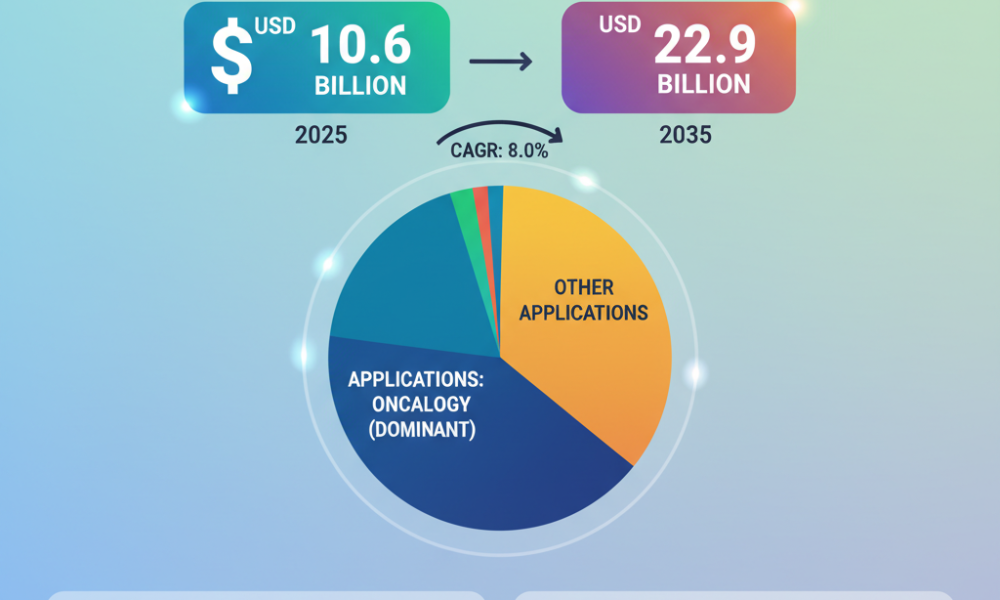
The global nuclear medicine radioisotopes market is experiencing significant growth and is projected to expand from USD 10.6 billion in 2025 to USD 22.9 billion by 2035, reflecting a compound annual growth rate (CAGR) of 8.0%. This growth trajectory underscores the rising adoption of nuclear medicine technologies across healthcare systems worldwide, particularly in oncology, where targeted diagnostic and therapeutic solutions are revolutionizing patient care.
Nuclear Medicine Radioisotopes Market Overview
Nuclear medicine radioisotopes are indispensable in the diagnosis and treatment of numerous medical conditions, including cancer, cardiovascular disorders, and neurological diseases. These radioisotopes, administered via radiopharmaceuticals, enable precise imaging, targeted therapy, and personalized medicine approaches that improve patient outcomes. The growing prevalence of chronic diseases, technological advancements in radiopharmaceuticals, and increasing demand for minimally invasive, effective treatments are key factors driving market expansion.
“Radioisotopes are central to modern diagnostics and targeted therapies,” said Dr. Ananya Rao, a leading nuclear medicine specialist. “Their ability to pinpoint abnormalities and deliver precise therapy makes them vital in oncology, cardiology, and neurology.”
Full Market Report available for delivery. For purchase or customization, please request here – https://www.factmr.com/connectus/sample?flag=S&rep_id=8311
Key Applications Driving Market Growth
Oncology Applications: Oncology remains the dominant application segment in the nuclear medicine radioisotopes market. The use of radiopharmaceuticals in cancer diagnosis and therapy has transformed the landscape of oncology treatment, offering precise, targeted, and effective interventions. Radioligand therapies, in particular, are gaining traction as they deliver radioactive isotopes directly to tumor cells, minimizing damage to surrounding healthy tissues. The global rise in cancer incidence continues to fuel demand, positioning oncology as the leading growth driver.
Diagnostic Isotopes: Diagnostic radioisotopes, widely used in positron emission tomography (PET) and single-photon emission computed tomography (SPECT), remain a cornerstone of nuclear medicine. These isotopes enable early disease detection, detailed imaging, and accurate monitoring of treatment efficacy. PET isotopes, such as fluorine-18 and gallium-68, provide high-resolution images that guide clinical decisions, while SPECT isotopes continue to play a critical role in cardiac and neurological assessments.
Cardiovascular and Neurological Applications: While oncology dominates, cardiovascular and neurological applications are witnessing steady growth. Radioisotopes help detect myocardial perfusion defects, brain tumors, and neurodegenerative disorders, supporting timely interventions and better patient outcomes. Increased awareness of these applications, combined with expanding healthcare infrastructure, is expected to drive adoption in emerging markets.
Competitive Landscape
The nuclear medicine radioisotopes market is highly competitive, with several key players actively pursuing strategic initiatives to expand their market presence. Companies are leveraging mergers, acquisitions, partnerships, and technological innovation to strengthen product offerings and global reach.
Eckert & Ziegler AG: Known for a broad portfolio of radioisotope-based solutions, the company continues to innovate in both diagnostic and therapeutic applications.
Sotera Health Company (Nordion Inc.): Specializes in supplying medical isotopes worldwide, ensuring a reliable supply chain for healthcare providers.
NECSA Ltd. (NTP Radioisotopes SOC Ltd.): A leading supplier of medical isotopes, NECSA plays a pivotal role in global market expansion, particularly in radiopharmaceutical development.
NorthStar Medical Radioisotopes LLC: Focuses on non-uranium-based isotopes, addressing supply chain challenges while delivering high-quality radioisotopes.
IRE ELiT: Engaged in the development and supply of medical isotopes, supporting both diagnostic imaging and targeted therapy applications.
Strategic Investments and Partnerships
Recent years have seen significant strategic investments and collaborations aimed at advancing nuclear medicine technologies:
Sanofi’s Investment in OranoMed: Sanofi invested $300 million for a 16% stake in OranoMed, a subsidiary of a nuclear fuel company. This partnership targets the development of radioactive lead isotopes for neuroendocrine tumors, emphasizing the growing focus on radiopharmaceutical innovation in oncology.
Eli Lilly’s Entry into Actinium-225 Production: Eli Lilly has invested $10 million in a supplier of actinium-225, an isotope crucial for radiopharmaceutical therapies. This initiative ensures a steady supply chain and supports the development of advanced cancer treatments.
Novartis’ Advancements in Radioligand Therapy: Novartis has achieved significant breakthroughs in targeted cancer therapy using radioligand technology, where radioactive isotopes are attached to ligands that bind to tumor cells. Early clinical results indicate promising efficacy, positioning the company as a market leader in innovative oncology solutions.
Regional Insights
North America dominates the nuclear medicine radioisotopes market due to advanced healthcare infrastructure, high adoption of nuclear medicine technologies, and significant investments in research and development. Europe also maintains a strong market position, with increasing applications in oncology and chronic disease management. Meanwhile, the Asia-Pacific region is emerging as a high-growth market, supported by expanding healthcare access, rising awareness of advanced diagnostic tools, and growing investments in nuclear medicine facilities.
Regulatory and Safety Considerations
Despite robust growth prospects, regulatory compliance and safety remain critical challenges. Companies must adhere to stringent standards for radiopharmaceutical production, transportation, and administration. Regulatory agencies in major markets, including the U.S. Food and Drug Administration (FDA) and the European Medicines Agency (EMA), play a pivotal role in ensuring product safety, efficacy, and quality. Market players are investing in quality assurance, clinical trials, and post-market monitoring to maintain regulatory compliance and patient trust.
Conclusion
The global nuclear medicine radioisotopes market is on a strong growth trajectory, projected to reach USD 22.9 billion by 2035. Technological advancements, increasing disease prevalence, and strategic investments by leading players are driving this expansion. Oncology applications remain the primary growth driver, while diagnostic isotopes continue to play a vital role in early detection and treatment monitoring.
As the industry evolves, stakeholders are advised to monitor emerging technologies, invest in research and innovation, and develop strategic partnerships to capitalize on growth opportunities. The focus on patient-centric, targeted treatments combined with robust diagnostic capabilities positions the nuclear medicine radioisotopes market as a key segment in the broader healthcare landscape.
With increasing adoption of radiopharmaceuticals and ongoing innovation in isotope production and delivery, the market offers considerable opportunities for companies and healthcare providers committed to advancing precision medicine and improving patient outcomes worldwide.
Nuclear Medicine Radioisotopes Market
https://www.factmr.com/report/telemedicine-market
Geriatric Medicines Market
https://www.factmr.com/report/4746/geriatric-medicines-market



