
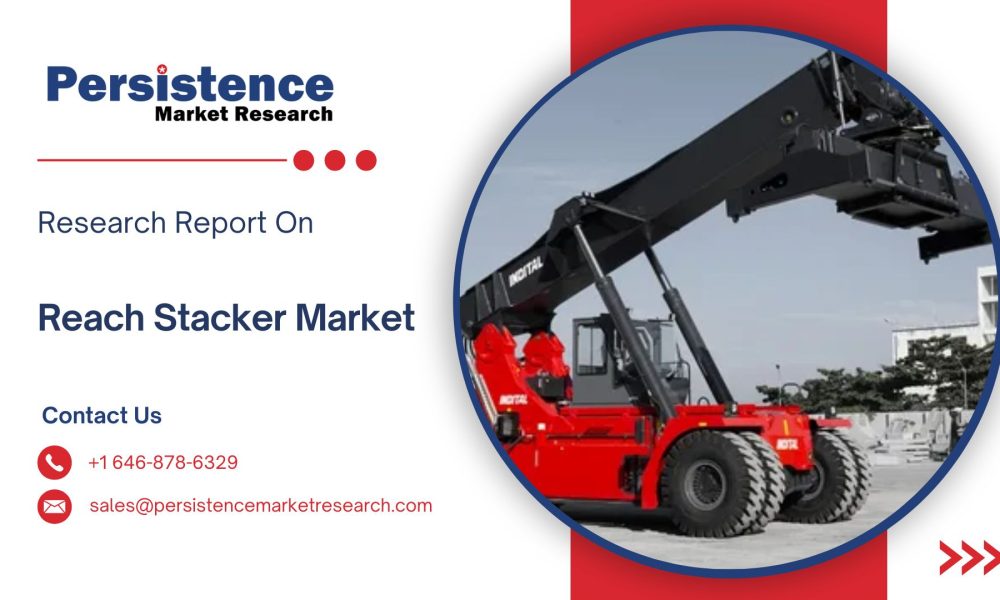
The global reach stacker market is poised for steady growth over the forecast period, with its market size expected to increase from US$2.8 billion in 2025 to US$4.2 billion by 2032. This growth trajectory corresponds to a compound annual growth rate (CAGR) of 4.5%, underscoring the expanding demand for advanced material handling equipment within logistics, shipping, and warehousing sectors worldwide. The increasing need for efficient container handling solutions, coupled with technological innovations and growing trade activities, is significantly propelling market expansion.
This growth is primarily driven by escalating global trade volumes that necessitate enhanced container handling capabilities. Additionally, increasing infrastructure development in emerging economies, modernization of port facilities, and rising demand for faster turnaround times in logistics chains are key contributors. Furthermore, the industry is witnessing a gradual shift towards adopting reach stackers equipped with advanced automation and digital monitoring systems, which enhance operational productivity and safety.
Request Sample Copy of Report: https://www.persistencemarketresearch.com/samples/34869
Segmentation Analysis
By Type
The reach stacker market is segmented into various types based on operational features and capacity, with diesel-powered reach stackers and electric reach stackers being the predominant categories. Diesel-powered reach stackers currently dominate the market owing to their high power output and suitability for heavy-duty, outdoor operations in ports and terminals. However, electric reach stackers are emerging as the fastest-growing segment due to increasing environmental regulations and the push for sustainable and zero-emission material handling equipment. Electric models are particularly favored in indoor or semi-enclosed warehousing environments where emissions and noise control are critical.
By Vehicle/Product/Service Type
Reach stackers serve multiple applications including container handling, bulk material movement, and intermodal yard management. Container handling remains the dominant application, driven by the expanding volume of maritime trade and containerization. The demand for flexible and versatile reach stackers that can handle varying container sizes and weights is growing. Additionally, service offerings such as fleet management solutions, equipment maintenance contracts, and operator training programs are increasingly integrated by manufacturers to offer holistic solutions and reduce downtime.
By Propulsion/Technology/Channel
The market segmentation by propulsion technology highlights the transition from conventional diesel engines to battery-powered and hybrid systems. While diesel remains the workhorse for outdoor heavy lifting, battery electric reach stackers are gaining ground due to reduced operating costs and compliance with stringent emissions standards. Hybrid reach stackers that combine internal combustion engines with electric motors are also being developed to optimize fuel efficiency and operational flexibility. Furthermore, digital channels including online equipment leasing and telematics-driven service platforms are enhancing customer access and after-sales support.
Regional Insights
Geographically, Asia Pacific is the largest and fastest-growing market for reach stackers, owing to the region’s booming manufacturing sector, rapid expansion of seaports, and increasing investment in logistics infrastructure. Countries such as China, India, and Southeast Asian nations are witnessing substantial growth in container throughput, necessitating advanced handling equipment. The increasing adoption of automated and electric reach stackers in these regions further accelerates market growth.
Europe and North America remain key mature markets characterized by high adoption of technologically advanced reach stackers, particularly electric and hybrid models, driven by strict environmental regulations and sustainability initiatives. Europe, in particular, is investing heavily in port modernization and green logistics, which is expected to sustain steady growth. In contrast, the Middle East and Africa are emerging markets showing increasing demand due to expanding trade corridors and infrastructural development projects.
Request Customization of Report: https://www.persistencemarketresearch.com/request-customization/34869
Unique Features and Innovations in the Market
Modern reach stackers distinguish themselves through a combination of enhanced automation, digital connectivity, and energy-efficient propulsion technologies. Innovations such as automated stacking systems, remote operation capabilities, and integrated sensor networks improve precision and reduce operator fatigue and error.
The incorporation of Artificial Intelligence (AI) allows predictive maintenance and operational optimization, minimizing equipment downtime and improving asset utilization. Internet of Things (IoT) connectivity facilitates real-time monitoring of fleet performance and environmental conditions, enabling data-driven decision-making. Furthermore, the advent of 5G connectivity promises ultra-low latency communication between machines and control centers, supporting autonomous reach stacker operations and enhanced safety protocols.
Energy-efficient technologies, including regenerative braking systems and battery management solutions, contribute to lower operating costs and environmental impact, aligning the reach stacker market with broader sustainability goals.
Market Highlights
Businesses and industries are increasingly adopting reach stackers due to their ability to enhance operational efficiency and reduce turnaround times in container handling and warehousing. The compact design and maneuverability of reach stackers make them ideal for confined spaces and stacked container yards, maximizing storage density and operational flexibility.
Regulatory pressures regarding emissions and workplace safety are significant drivers behind the shift towards electric and hybrid reach stackers. Companies are incentivized to reduce carbon footprints and comply with local and international environmental standards. Additionally, the total cost of ownership is becoming a crucial factor, with electric reach stackers offering cost advantages through lower fuel consumption and maintenance requirements.
The trend towards digitization and automation within supply chain management is also bolstering reach stacker demand, as these machines integrate seamlessly into smart port and warehouse ecosystems, contributing to the digital transformation of logistics operations.
Key Players and Competitive Landscape
The global reach stacker market is dominated by a mix of established industrial machinery manufacturers and specialized equipment providers. Leading companies such as Konecranes, Kalmar (a part of Cargotec), Hyster-Yale Materials Handling, and Liebherr maintain strong market positions through product innovation, strategic acquisitions, and expansive global distribution networks.
Konecranes emphasizes advanced automation technologies and sustainable electric reach stackers, leveraging its global service infrastructure to enhance customer value. Kalmar focuses on integrated port logistics solutions, including electric and hybrid reach stackers, aiming to support green logistics initiatives. Hyster-Yale prioritizes customization and operator safety features, expanding its presence in emerging markets through partnerships and localized manufacturing. Liebherr invests heavily in R&D to develop reach stackers with superior load-handling capacities and digital fleet management systems.
These companies continue to expand their product portfolios, improve service offerings, and pursue regional market penetration to capture growing demand, particularly in Asia Pacific and emerging economies.
Future Opportunities and Growth Prospects
The reach stacker market is expected to benefit from ongoing technological advancements and increasingly stringent environmental regulations that collectively shape the future of material handling. The rise of autonomous reach stackers integrated with AI and IoT capabilities presents significant growth opportunities by reducing labor costs and enhancing operational safety.
Expansion into untapped emerging markets with rising trade activities and infrastructure investments will offer additional avenues for market growth. Furthermore, innovations in battery technology and hybrid propulsion systems are likely to accelerate the adoption of electric reach stackers, contributing to sustainability and cost efficiency.
Regulatory frameworks promoting green logistics and emission reductions will continue to influence market dynamics, encouraging manufacturers and end-users to adopt eco-friendly equipment. In parallel, increasing digitization of supply chain and port operations will drive demand for intelligent, connected reach stackers capable of real-time data integration and remote monitoring.
Explore more related market insights and reports by visiting our website.




