
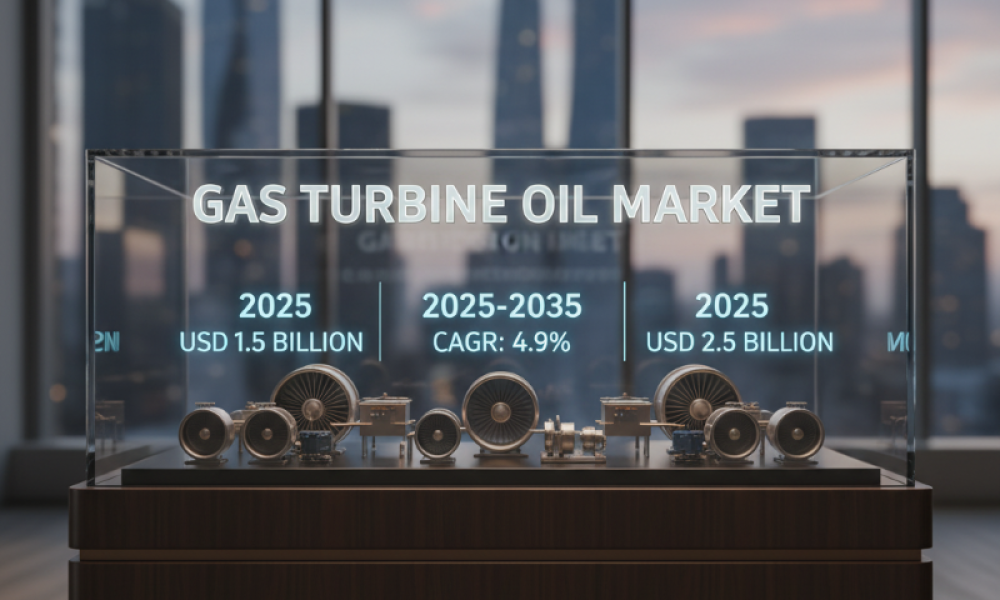
The gas turbine oil market, valued at approximately USD 1.5 billion in 2025, is projected to grow to USD 2.5 billion by 2035, representing a compound annual growth rate (CAGR) of 4.9%. This steady growth is fueled by the increasing reliance on gas turbines across power generation, oil & gas, and aviation sectors, which are seeking efficient lubrication solutions to maximize performance and minimize downtime.
Unlock detailed analytics – Request your personalized report now! https://www.futuremarketinsights.com/reports/sample/rep-gb-25769
Key Drivers of Market Growth
Gas turbines play a crucial role in energy generation, industrial operations, and aviation, particularly in regions with rising energy demands. The need for reliable turbine oils that provide long-lasting performance under extreme conditions is essential. The increasing demand for uninterrupted power supply, the expansion of energy infrastructure in developing regions, and the growing focus on sustainability are key factors pushing the growth of the gas turbine oil market.
As industries strive to reduce operational downtime and ensure maximum efficiency, gas turbine oil remains indispensable in enhancing the performance of turbines, minimizing wear, and ensuring regulatory compliance. A greater emphasis on predictive maintenance, coupled with the growing demand for energy-efficient operations, is likely to drive the adoption of premium turbine oils that can withstand higher temperatures, resist oxidation, and provide superior wear protection.
Market Segmentation and Product Insights
The gas turbine oil market is segmented by product, end-use, and geography. Mineral oil-based turbine oils, expected to hold 47.6% of the market share in 2025, remain the most widely used due to their cost-effectiveness and proven performance across a variety of turbine applications. While mineral oils continue to dominate, the market is witnessing a shift toward synthetic oils due to their superior performance in terms of oxidation resistance, heat stability, and wear protection. The growing adoption of synthetic oils is poised to become a defining trend as industries demand longer operational life from their turbines.
Regional Analysis
The gas turbine oil market is expected to see substantial growth in North America, Asia-Pacific, and Europe. Emerging markets in China and India are particularly significant, driven by industrialization and expanding power generation needs. China, with a projected CAGR of 6.6%, is leading the charge due to its rapid energy infrastructure development and the increasing adoption of gas turbines. India, with a growth rate of 6.1%, is witnessing similar trends, with government investments in energy infrastructure fueling demand for high-performance turbine oils.
Europe’s focus on energy efficiency and clean power generation is driving the demand for advanced turbine oils, with France and the UK seeing significant growth. The United States, though growing at a slower pace of 4.2%, continues to be a major consumer of gas turbine oils as part of its ongoing efforts to upgrade energy infrastructure and improve fuel efficiency.
Competitive Landscape: Major Players Driving Innovation
The competitive landscape of the gas turbine oil market is characterized by the dominance of major players like Exxon Mobil, Shell, BP, TotalEnergies, and Chevron, which provide high-performance oils designed to optimize turbine efficiency and reduce wear. These companies are focusing on enhancing the properties of their oils, such as thermal stability and oxidation resistance, to meet the evolving needs of industries that rely on gas turbines.
In addition to these key players, companies like Castrol, PETRONAS, and Lubrizol are also investing in new formulations that cater to the growing demand for efficient, high-performance oils in turbines. With a shift towards sustainable energy practices, companies are working on eco-friendly oils that minimize environmental impact while enhancing turbine lifespan.
The market is also witnessing expansion by companies like FUCHS, Afton Chemical, and Repsol, who are offering specialized solutions for the marine and offshore sectors, where turbines are exposed to extreme operating conditions. As demand for renewable energy sources rises, gas turbine oil providers are focusing on creating sustainable products to meet regulatory requirements and reduce emissions.
Download Brochure for Full Insights: https://www.futuremarketinsights.com/reports/brochure/rep-gb-25769
Conclusion: Future Outlook for the Gas Turbine Oil Market
The gas turbine oil market is poised for steady growth, driven by the increasing demand for reliable, high-performance oils in power generation, industrial applications, and aviation. As emerging markets expand and industrialization continues, the demand for gas turbines—and subsequently, turbine oils—is expected to rise. Technological advancements in turbine design, combined with growing efforts toward energy efficiency and reduced emissions, will continue to shape the evolution of this market.
While challenges such as the high cost and limited availability of synthetic oils persist, the market remains optimistic, driven by continued innovation and the adoption of advanced oil solutions that meet the rigorous demands of modern turbines.
About Future Market Insights (FMI)
Future Market Insights, Inc. (ESOMAR certified, recipient of the Stevie Award, and a member of the Greater New York Chamber of Commerce) offers profound insights into the driving factors that are boosting demand in the market. FMI stands as the leading global provider of market intelligence, advisory services, consulting, and events for the Packaging, Food and Beverage, Consumer Technology, Healthcare, Industrial, and Chemicals markets. With a vast team of over 400 analysts worldwide, FMI provides global, regional, and local expertise on diverse domains and industry trends across more than 110 countries.



