
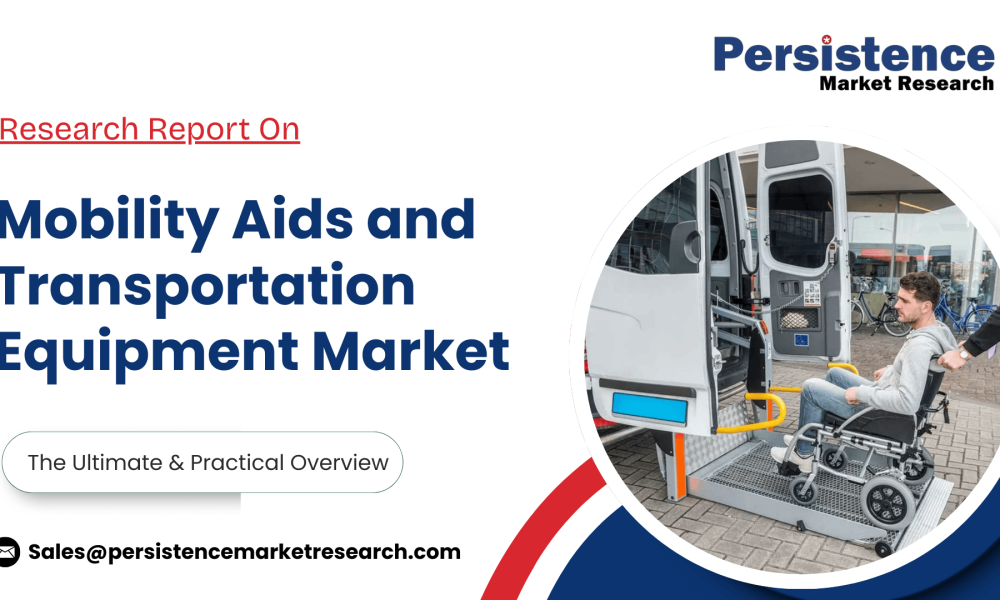
The global mobility aids and transportation equipment market is rapidly expanding, driven by increasing demands from an aging population, advancements in technology, and a growing focus on enhancing the quality of life for individuals facing mobility challenges. With a projected market value of US$7,352.0 million in 2025 and a forecasted growth to US$11,275.6 million by 2032, this sector is expected to grow at a Compound Annual Growth Rate (CAGR) of 6.3% during the forecast period (2025-2032). The market encompasses a wide range of products designed to improve accessibility and independence for people with disabilities, the elderly, and those recovering from surgery or injury.
Overview of the Market
The mobility aids and transportation equipment market includes a variety of products designed to assist individuals with limited mobility. These devices are crucial in sectors like healthcare, home care, and public transportation, improving quality of life for users while helping to prevent the physical and emotional burdens of immobility. The market is witnessing steady growth, primarily driven by the increasing prevalence of age-related mobility issues and technological innovations in mobility devices. Advanced features such as ergonomic designs, enhanced battery life, and smart mobility solutions like GPS tracking are reshaping consumer preferences, particularly among elderly individuals and those with severe mobility impairments.
According to Persistence Market Research, the market is divided into several key segments, including manual wheelchairs, electrically powered wheelchairs, mobility scooters, stair lifts, walking aids, and stretchers. Institutional sales, which account for 55% of the market share in 2025, continue to dominate, driven by the bulk procurement of mobility aids by hospitals, clinics, and rehabilitation centers. Retail sales, however, are growing rapidly as e-commerce platforms become increasingly accessible for individual consumers.
Key Highlights from the Report:
• The global mobility aids and transportation equipment market is projected to reach US$11,275.6 million by 2032.
• The fastest-growing product segment is electrically powered wheelchairs, driven by technological advancements.
• Institutional sales contribute 55% of the market revenue in 2025, fueled by hospital and clinic procurements.
• Manual wheelchairs account for 30% of the market share in 2025 due to their affordability and widespread usage.
• North America holds the largest market share, with 35% of the market, driven by an aging population and advanced healthcare infrastructure.
• Asia Pacific is the fastest-growing region, led by increasing healthcare awareness and government healthcare reforms in China and India.
Get a Sample Copy of Research Report (Use Corporate Mail id for Quick Response): https://www.persistencemarketresearch.com/samples/3363
Market Segmentation:
Product Type Insights
The market is primarily segmented by product type, with manual wheelchairs being the most dominant in terms of market share. They are expected to account for 30% of the market in 2025. The enduring popularity of manual wheelchairs is due to their affordability, simplicity, and wide availability, especially in developing regions. They are also preferred by healthcare institutions due to their durability and low maintenance.
On the other hand, electrically powered wheelchairs are the fastest-growing segment in the market. Driven by advancements in technology, these wheelchairs offer features like joystick controls, adjustable seating, and long-lasting batteries. They provide increased mobility and comfort, making them ideal for users with more severe mobility impairments. As the demand for technologically advanced solutions rises, electrically powered wheelchairs are gaining significant traction in developed markets, where seniors seek devices that offer both functionality and ease of use.
End-user Insights
The mobility aids and transportation equipment market is also segmented by end-user category. Institutional sales are the dominant end-user segment, accounting for 55% of the market share in 2025. This is due to bulk procurement by healthcare facilities, rehabilitation centers, and long-term care institutions that require high-quality, durable mobility aids such as stretchers, manual wheelchairs, and walking aids to support patient care.
However, retail sales are the fastest-growing segment, driven by the increasing availability of mobility aids through e-commerce platforms. Direct-to-consumer models, along with a rising preference for home-based solutions, are contributing to the growth of retail sales. Products such as mobility scooters, stair lifts, and walking aids are increasingly being sold directly to consumers, especially in developed markets where there is a growing interest in aging in place and enhancing the comfort of elderly individuals at home.
Regional Insights:
North America
North America remains the largest region in the mobility aids and transportation equipment market, holding a 35% market share in 2025. This is primarily driven by the United States, where an aging population, high healthcare expenditure, and favorable regulations such as the Americans with Disabilities Act (ADA) contribute to high demand for mobility aids. The region’s advanced healthcare infrastructure supports the widespread adoption of products like stair lifts, electrically powered wheelchairs, and mobility scooters. The aging U.S. population is increasingly reliant on these devices to maintain independence and mobility, further propelling market growth.
Europe
Europe is the second-largest region, accounting for 30% of the market share in 2025. Countries like Germany, France, and the United Kingdom are leading contributors to the market. Germany’s robust healthcare system and strong medical device industry support the demand for advanced mobility aids, including mobility scooters and electrically powered wheelchairs. Similarly, France’s universal healthcare policies encourage the use of mobility aids in both healthcare facilities and home settings, especially for elderly individuals. The UK’s National Health Service (NHS) also plays a pivotal role in driving the adoption of mobility aids in public healthcare settings, including manual wheelchairs and walking aids.
Market Drivers:
Rise in Aging Population
The most significant driver of growth in the mobility aids market is the aging population. As the global population ages, particularly in developed nations, a rising number of individuals experience age-related mobility challenges due to conditions like arthritis, osteoporosis, and reduced muscle strength. Consequently, there is an increasing need for mobility aids such as wheelchairs, walking aids, and scooters to help seniors maintain their independence and improve their quality of life. The rise in elderly care and rehabilitation services is also fueling demand for mobility aids in institutional settings.
Technological Advancements
Technological advancements in mobility aids are another key factor driving market growth. Innovations in electrically powered wheelchairs, mobility scooters, and smart technologies such as voice-activated controls, GPS navigation, and lightweight materials are making mobility aids more attractive to consumers. These technological advancements enable users to enjoy greater comfort, safety, and independence. As consumers increasingly demand more sophisticated products that cater to their unique needs, manufacturers are responding by incorporating high-tech solutions to improve both functionality and usability.
Market Restraints
High Costs of Equipment and Maintenance
Despite the benefits, the high cost of advanced mobility aids, such as electrically powered wheelchairs and mobility scooters, remains a significant restraint on market growth. These devices often require sophisticated components, such as advanced batteries, motors, and customizable features, which increase both production and retail costs. Furthermore, maintenance expenses—including battery replacements and repairs—can add to the financial burden. This limits accessibility to these products, particularly in low-income regions or among cost-conscious consumers.
Limited Access in Developing Economies
In many developing economies, the affordability of mobility aids remains a barrier. While there is a demand for manual wheelchairs and basic walking aids, the adoption of more advanced devices like mobility scooters and stair lifts is limited by lower disposable incomes and inadequate healthcare budgets. Government subsidies, insurance coverage, and healthcare reforms are essential to improving accessibility in these regions, but these factors can sometimes take time to implement.
Market Opportunities
Expanding Healthcare Infrastructure in Emerging Markets
Rapid urbanization and improving healthcare infrastructure in emerging markets such as Asia Pacific and Latin America present significant opportunities for market growth. As disposable incomes rise and healthcare awareness increases, demand for affordable and efficient mobility aids is surging. For instance, in countries like China and India, government initiatives aimed at improving healthcare access and supporting aging populations are expected to drive the adoption of mobility aids. These markets are particularly appealing for manufacturers focusing on cost-effective products that can cater to the specific needs of these regions.
E-commerce and Direct-to-Consumer Models
The rise of e-commerce and direct-to-consumer models offers significant growth potential for the mobility aids market. As more consumers seek convenience and cost savings through online retail platforms, manufacturers have the opportunity to expand their reach and provide products like stair lifts, mobility scooters, and walking aids directly to the consumer. This model is especially popular in developed markets, where consumers increasingly prefer home-based solutions that enhance independence.
Reasons to Buy the Report:
• Comprehensive insights into market size, forecasts, and growth potential.
• In-depth analysis of key market segments, including product type, end-user, and regional trends.
• Identification of emerging opportunities in developing regions such as Asia Pacific and Latin America.
• Detailed examination of technological innovations shaping the future of mobility aids.
• Competitive landscape and profiles of key players in the market.
Frequently Asked Questions (FAQs):
• How big is the global mobility aids and transportation equipment market?
• Who are the key players in the global market for mobility aids and transportation equipment?
• What is the projected growth rate of the mobility aids market from 2025 to 2032?
• What is the market forecast for mobility aids and transportation equipment by 2032?
• Which region is estimated to dominate the mobility aids and transportation equipment industry through the forecast period?
Company Insights:
Key Players
• Sunrise Medical
• Pride Mobility
• Invacare Corporation
• Permobil AB
• Drive DeVilbiss Healthcare
• OttoBock Healthcare
• Stryker Corporation
• Medline Industries
Recent Developments from the Market:
1. Sunrise Medical’s New Product Launches (2025)
In 2025, Sunrise Medical, a leading player in the mobility aids industry, unveiled several new products at its Elite Dealer Launch Event. Among these was the highly anticipated Magic XT4, an all-terrain powered wheelchair. This new model builds on the success of its predecessor, the Magic X8, which has been a favorite among users seeking robust, off-road mobility solutions. The XT4 features enhanced maneuverability and durability, specifically designed to meet the needs of individuals who require mobility solutions in diverse and challenging environments.
2. Sunrise Medical and Scoozy Collaboration (2024)
In a strategic move to further enhance mobility options, Sunrise Medical partnered with Dutch technology company Scoozy to launch the Sterling S800, a next-generation outdoor mobility scooter. The S800 features intuitive controls, including bike-like handlebars and a thumb throttle, making it easier for users to operate. One of its key advantages is its open-frame structure, made from 100% recyclable EPP (Expanded Polypropylene) material, making it an environmentally friendly choice. This scooter targets users seeking a balance of comfort, mobility, and sustainability.
Conclusion:
The mobility aids and transportation equipment market is experiencing significant growth, driven by a variety of factors, including an aging global population, advancements in technology, and rising demand for improved healthcare solutions. With innovations like electrically powered wheelchairs, mobility scooters, and smart features transforming user experiences, the market is poised for continued expansion. The market’s promising outlook is further supported by the growing interest in home healthcare solutions and government initiatives aimed at improving accessibility.
As regions like North America and Europe continue to dominate in terms of market share, emerging economies in Asia Pacific and Latin America present vast opportunities for growth. Companies operating in the market, such as Sunrise Medical, Pride Mobility, and Invacare, are adapting to consumer needs through technological advancements, strategic collaborations, and sustainable product development. These companies, along with new players entering the space, are likely to continue shaping the future of mobility aids and transportation equipment, enhancing the independence and quality of life for millions around the globe.
Key Takeaways:
The global mobility aids market is expected to grow significantly, with a 6.3% CAGR from 2025 to 2032.
Aging populations in developed regions and increasing healthcare awareness in emerging markets are the key drivers behind market growth.
Advances in technology, such as smart features and environmentally friendly materials, are reshaping consumer preferences.
The market is dominated by institutional sales, though retail sales are rapidly growing due to e-commerce.
In conclusion, stakeholders in the mobility aids and transportation equipment market, from manufacturers to healthcare providers, must stay attuned to technological developments and regional needs to leverage growth opportunities effectively. This will ensure that they remain competitive and continue providing innovative, high-quality solutions that meet the evolving demands of consumers worldwide.
Read Related Reports:
Nuclear Magnetic Resonance Spectrometers Market
Radiation Monitoring And Dosimeter Badges Market




