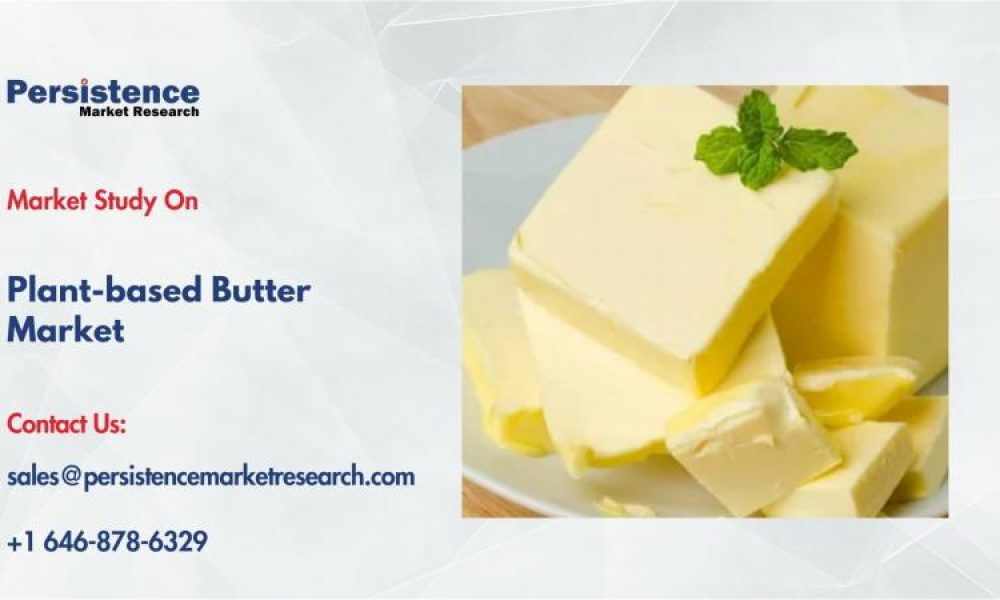
The global plant-based butter market size is likely to be valued at US$ 2.2 Bn in 2025 and is projected to reach US$ 3.1 Bn by 2032, registering a CAGR of 5.0% during the forecast period from 2025 to 2032. Growing health consciousness, increasing lactose intolerance prevalence, and the rising popularity of vegan diets are fueling the adoption of dairy-free alternatives like plant-based butter.
The market is witnessing steady growth as consumers seek healthier spreads made from natural ingredients such as nuts, seeds, and plant oils. With plant-based diets moving from niche to mainstream, the butter category is benefiting from a strong shift away from conventional dairy. Among product types, nut-based plant butters are emerging as the leading segment, owing to their rich nutritional value and versatility. Geographically, North America dominates the global market, supported by high consumer awareness, innovation in dairy alternatives, and the presence of leading brands committed to plant-based innovation.
Key Highlights from the Report:
- Global plant-based butter market expected to reach US$ 3.1 Bn by 2032.
- CAGR projected at 5.0% during 2025–2032.
- Nut-based butter segment leads due to nutritional benefits and versatility.
- North America dominates the market with high adoption of vegan products.
- Rising lactose intolerance drives demand for dairy-free butter alternatives.
- Clean-label and sustainable production trends boost consumer confidence.
Market Segmentation
The plant-based butter market can be segmented by product type, distribution channel, and end-user. By product type, nut-based butters including almond, cashew, and peanut butter lead the category, driven by their nutrient-rich profiles and wide application in baking, spreads, and snacks. Seed-based butters, such as sunflower and sesame, are also gaining momentum as allergen-free alternatives, appealing to health-conscious and allergic consumers alike. Plant-oil-based butters, derived from coconut, soy, or avocado oil, are expanding rapidly due to their smooth texture and ability to mimic dairy butter.
In terms of distribution channels, supermarkets and hypermarkets account for the majority of sales, as they offer wide product availability and brand visibility. Online retail is experiencing significant growth, driven by e-commerce convenience, doorstep delivery, and digital campaigns promoting plant-based lifestyles. Specialty health stores also contribute substantially, catering to vegan and organic product buyers.
By end-users, the household segment dominates consumption, as consumers increasingly prefer healthier spreads for daily use. The foodservice sector, including cafes, restaurants, and bakeries, is adopting plant-based butter in recipes and menu offerings to attract vegan and flexitarian customers. This growing acceptance across both retail and foodservice channels highlights the market’s versatile adoption.
𝐆𝐞𝐭 𝐚 𝐒𝐚𝐦𝐩𝐥𝐞 𝐏𝐃𝐅 𝐁𝐫𝐨𝐜𝐡𝐮𝐫𝐞 𝐨𝐟 𝐭𝐡𝐞 𝐑𝐞𝐩𝐨𝐫𝐭 (𝐔𝐬𝐞 𝐂𝐨𝐫𝐩𝐨𝐫𝐚𝐭𝐞 𝐄𝐦𝐚𝐢𝐥 𝐈𝐃 𝐟𝐨𝐫 𝐚 𝐐𝐮𝐢𝐜𝐤 𝐑𝐞𝐬𝐩𝐨𝐧𝐬𝐞): https://www.persistencemarketresearch.com/samples/31409
Regional Insights
North America leads the global plant-based butter market, with the United States being the largest contributor due to rising veganism, lactose intolerance cases, and strong distribution networks for dairy alternatives. Europe follows closely, with countries like Germany, the UK, and France witnessing robust demand supported by environmental consciousness and government support for sustainable food production. The Asia Pacific region is expected to register the fastest growth, driven by an expanding middle class, rapid urbanization, and growing awareness of plant-based diets in countries like China, India, and Japan. Latin America and the Middle East are gradually adopting plant-based spreads, with opportunities emerging in urban centers where consumer lifestyles are shifting toward healthier diets.
Market Drivers
One of the strongest drivers of the plant-based butter market is the global rise in health and wellness trends. Consumers are increasingly aware of the negative health implications of excessive dairy and saturated fat consumption, encouraging them to switch to plant-based spreads. The prevalence of lactose intolerance and dairy allergies also fuels demand for alternatives. Additionally, the growing vegan and flexitarian populations worldwide are steering demand toward dairy-free butter options. Environmental sustainability concerns further drive consumer preference for plant-based products, as they are associated with lower carbon footprints compared to traditional dairy production. The clean-label movement, emphasizing transparency, natural ingredients, and minimal processing, continues to boost market confidence.
Market Restraints
Despite strong growth prospects, the market faces challenges that may slow expansion. Price sensitivity remains a key barrier, as plant-based butter products are often priced higher than conventional dairy butter. This premium positioning can restrict adoption in price-conscious consumer segments, particularly in emerging markets. Taste and texture differences compared to traditional butter may also deter some consumers who are not fully accustomed to plant-based alternatives. Additionally, supply chain challenges related to sourcing raw ingredients such as nuts and specialty oils can create volatility in production costs and availability.
Market Opportunities
Significant opportunities exist for manufacturers to expand their offerings in the plant-based butter market. Innovation in flavor development, fortification with vitamins and minerals, and allergen-free alternatives can appeal to a wider audience. Partnerships with foodservice providers and bakery brands present avenues to integrate plant-based butter into mainstream diets. Emerging markets in Asia Pacific, Latin America, and the Middle East provide untapped potential, where rising disposable incomes and growing health awareness are creating demand for premium dairy-free spreads. Sustainability-focused packaging and certifications such as organic, non-GMO, and fair trade can also enhance brand differentiation and consumer trust.
Reasons to Buy the Report:
- Gain comprehensive insights into global market size, growth, and trends.
- Understand the competitive landscape and key players’ strategies.
- Identify high-growth segments and regional opportunities.
- Analyze key drivers, restraints, and opportunities shaping the market.
- Make informed business decisions with reliable forecast data through 2032.
Frequently Asked Questions (FAQs)
How Big is the Plant-Based Butter Market in 2025 and 2032?
Who are the Key Players in the Global Plant-Based Butter Market?
What is the Projected Growth Rate of the Market during 2025–2032?
What is the Market Forecast for Plant-Based Butter by 2032?
Which Region is Estimated to Dominate the Plant-Based Butter Industry through the Forecast Period?
Company Insights
- Upfield Group
• Conagra Brands
• Miyoko’s Creamery
• Califia Farms
• Danone S.A.
• Nestlé S.A.
• Valsoia S.p.A.
• Fora Foods
• Kite Hill
• Naturli’ Foods
Recent Developments:
- In 2024, Miyoko’s Creamery launched a new oat-based butter line targeting allergen-free consumers.
- Upfield announced a sustainability initiative to reduce emissions across its plant-based product portfolio by 2030.
The plant-based butter market is on a growth trajectory, supported by rising consumer health awareness, sustainability concerns, and the adoption of vegan diets across both developed and emerging markets. While pricing and taste challenges persist, opportunities in innovation, sustainability, and expanding foodservice partnerships will help shape the market’s future. As brands invest in clean-label offerings and regional expansion, plant-based butter is poised to establish itself as a mainstream staple in households and restaurants worldwide.
Explore the Latest Trending Research Reports: